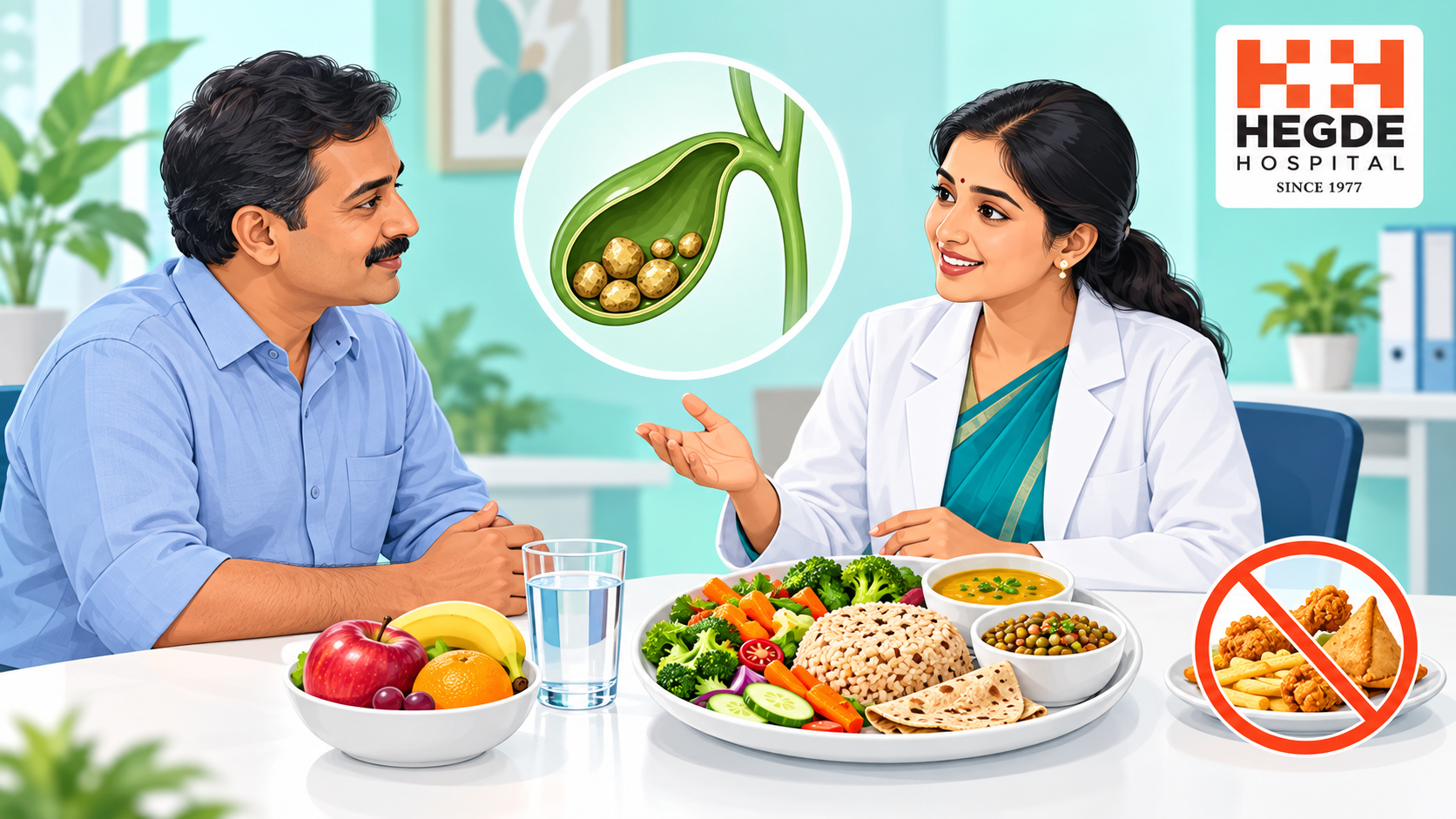
A balanced eating plan may help manage meal-related symptoms, but it does not dissolve gallstones. Food choices should protect nutrition while the treatment plan is decided with a clinician.
Your ultrasound report mentions gallstones, and you are unsure whether rice, eggs, milk or your usual curry is now off limits. Online food lists can be contradictory: one says avoid all fat, while another promises that a special diet will remove the stones. Neither gives a useful individual plan.
A gallstones diet should support balanced nutrition and, where relevant, reduce meal-related discomfort. It cannot replace assessment of the stones and symptoms. Whether gallstones were found incidentally or are associated with repeated pain makes a difference to the next step.
The direct answer
There is no single diet that dissolves existing gallstones. A balanced pattern with vegetables, fruit, whole grains and suitable protein foods is generally preferable to rigid bans or crash dieting. Some people find large or fatty meals trigger symptoms, but triggers differ. Choose a plan with your clinician that maintains adequate intake while the need for treatment is assessed.
How does food relate to the gallbladder?
The gallbladder stores bile, which helps digest fats. Eating stimulates it to empty. A meal-related pain pattern may be relevant in someone with gallstones, but bloating or burping alone does not establish that the stones are causing the symptoms.
Gallstones can be present without symptoms. If an ultrasound found them during another investigation, ask whether they are likely to explain your current complaint. Dietary decisions and treatment should reflect the clinical picture, rather than only the word “stones” on a report. Our gallstone symptom guide covers the broader assessment.
What can an everyday eating pattern look like?
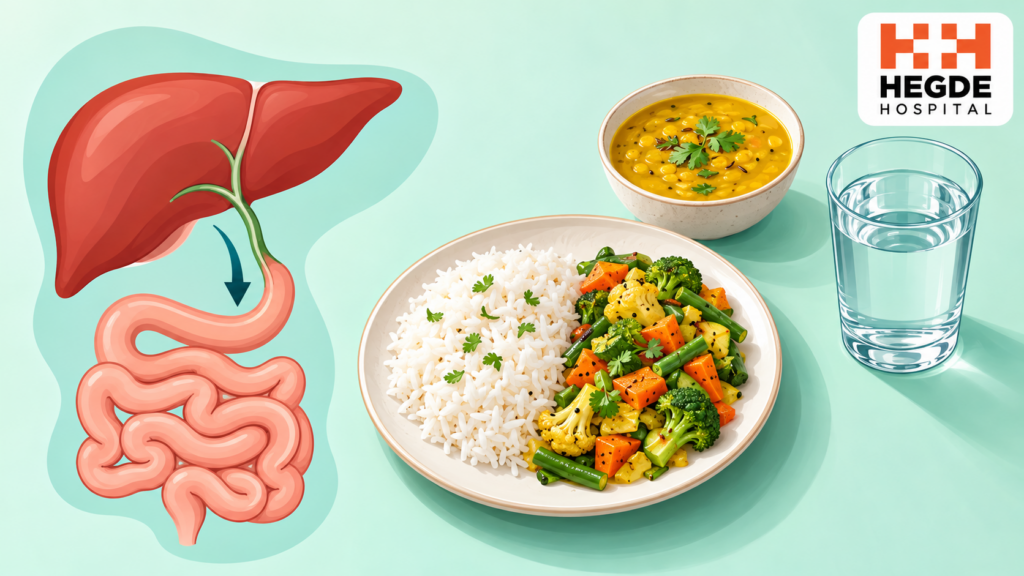
Include a variety of ordinary foods rather than building meals around one supposedly protective ingredient. Whole grains, vegetables, fruit and pulses can contribute fibre and other nutrients. Protein choices depend on your preferences and health; both vegetarian and non-vegetarian patterns can be planned.
Indian meals can be adapted through portion size and cooking method. A rice-and-dal meal with vegetables or a roti-based meal can fit a balanced plan. These are examples of meal components, not a prescription for every person. Existing diabetes, kidney disease, low weight or pregnancy may require different advice.
| Everyday choice | A possible discussion or adjustment |
|---|---|
| Frequently deep-fried snacks | Consider less oily preparation and how often they are eaten |
| A very large, rich meal | Review portion size and whether a simpler meal is better tolerated |
| Few vegetables or pulses | Build variety gradually within your usual eating pattern |
| Frequent sugary drinks or sweets | Review their place in the overall diet |
| Meals skipped to avoid pain | Tell the clinician; protect intake rather than continuing prolonged restriction |
Should all fat be avoided?
No. “Less saturated fat” and “no fat at all” are different instructions. Fat has a role in normal nutrition, and complete avoidance can make eating unnecessarily restrictive. A clinician or dietitian can help adjust the amount and type to your symptoms and needs.
If rich foods consistently bring discomfort, record the pattern and discuss a practical adjustment. Do not assume a food labelled healthy is tolerated in unlimited amounts, or that any meal containing fat will inevitably cause pain. Portion size and the whole meal matter as well as one ingredient.
Are rice, eggs, milk or spices universally forbidden?
No single ban fits everyone with gallstones. Rice or roti can be part of a balanced meal; preparation, accompanying foods and portion size matter. If eggs or dairy appear to bring symptoms, discuss the amount and preparation rather than assuming the entire food group must be excluded.
Spicy food may worsen a person's digestive discomfort, but it does not prove gallstones are the cause. Other problems, including reflux, can overlap. A short meal-and-symptom record helps a clinician separate these possibilities.
Avoid stopping many foods at once. If most meals seem to cause pain, or fear of eating leads to weight loss, arrange a review rather than trying progressively narrower diets. A dietitian can help maintain nourishment while the medical cause is assessed.
Why should rapid weight-loss diets be avoided?
Rapid weight loss and very low-calorie diets can increase gallstone risk. A weight-management plan, when needed, should be gradual and medically appropriate. Fasting or a severe diet is not a way to clear the stones.
Someone who is already underweight needs a different plan from someone seeking weight reduction. Tell the clinician about recent weight change and whether you are eating less because of discomfort. Do not make weight loss the default goal for every gallstone patient.
Can food changes replace treatment?
Reducing a trigger may improve comfort without removing the stones. Symptom improvement does not prove that stones have dissolved or that future problems are impossible. Incidental stones and symptomatic disease are managed differently; your clinician explains which situation applies.
When stones are considered the cause of recurring symptoms, a surgeon may discuss gallbladder removal. This treats a different question from day-to-day food tolerance. Ask how certain the team is that the pain comes from gallstones and what the proposed treatment can and cannot achieve. Our laparoscopic-surgery guide explains that general approach.
Food advice after gallbladder surgery is also a separate issue. Follow the treating team's instructions instead of assuming that a pre-operative diet must continue unchanged for life.
When should you contact a clinician?
Arrange a routine discussion about an incidental finding and the appropriate eating plan. Seek an earlier review for recurrent meal-related pain, reduced intake or unexplained weight loss. Persistent severe upper-abdominal pain, fever, yellow eyes or skin, or repeated vomiting needs immediate medical evaluation rather than further dietary experiments.
Bring the ultrasound report and a short record of symptoms to a Hegde Hospital consultation. Note where the pain occurs, how long it lasts and how it relates to meals. The useful outcome is a clear nutrition and treatment plan, not an unnecessarily long forbidden-food list.
Frequently asked questions
Can a gallstones diet dissolve the stones?
No ordinary food plan is proven to dissolve existing gallstones. Diet can support nutrition and may reduce some meal-related symptoms, but it should not replace assessment or a treatment discussion.
Do I need to stop eating rice?
Not automatically. Rice can be part of a balanced meal. The portion, cooking method and accompanying foods matter, and advice should reflect your other health conditions and symptom pattern.
Is a completely fat-free diet better?
Not routinely. Avoiding all fat can make the diet unnecessarily restrictive. Discuss a balanced amount and type of fat with a clinician or dietitian, especially if symptoms are limiting what you eat.
If pain improves with food changes, can I skip follow-up?
Improved comfort does not show that the stones are gone. Keep the agreed review and discuss whether the symptoms are likely to be gallstone-related and whether further treatment is needed.
Will I need the same restrictions after surgery?
Not necessarily. Recovery advice and longer-term food tolerance vary. Follow your treating team's plan and ask for review if ongoing digestive symptoms affect intake.