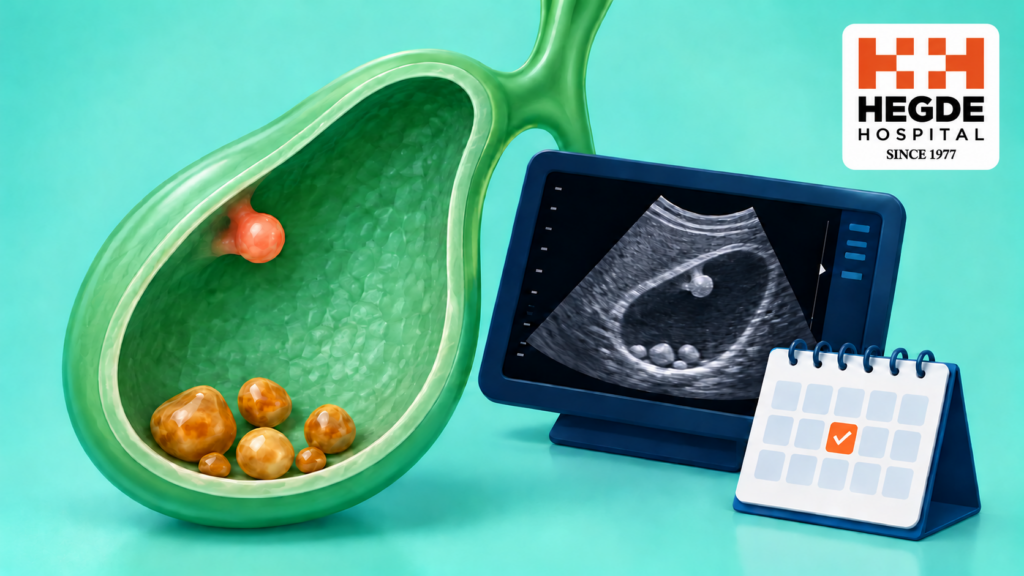
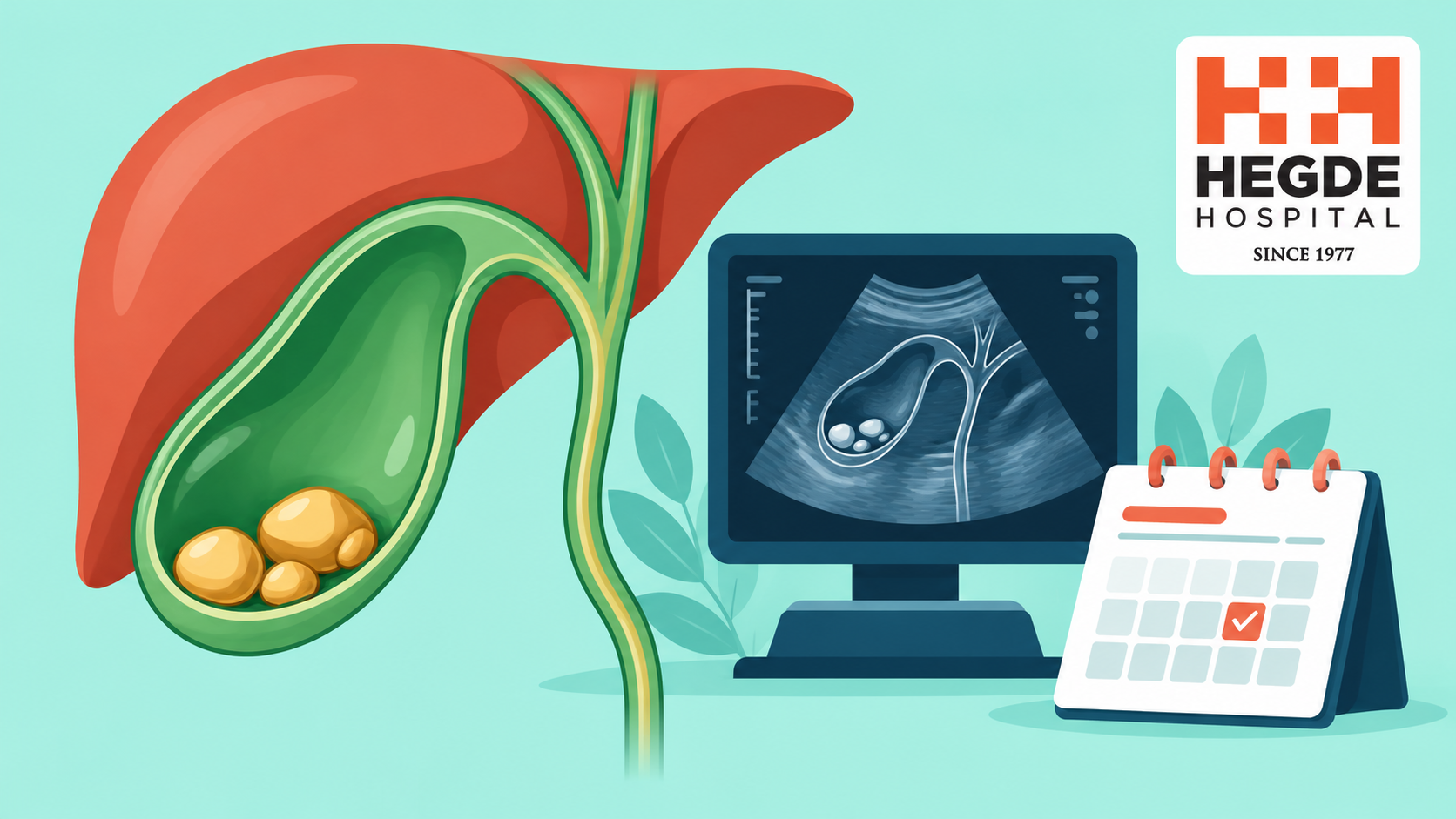
A scan showing gallstones does not automatically mean an operation. The stone's location, past symptoms and the rest of the report help guide the next step.
An ultrasound arranged for another reason shows gallstones, but you feel well. It is natural to wonder whether an operation is necessary before any pain starts. A relative may have needed surgery for a similar report, but their symptoms and scan findings may have been different.
The important question is whether the stones are truly causing no symptoms and are confined to an otherwise normal gallbladder. A stone in the common bile duct follows a different pathway, even when there is no pain at the time of the scan.
The direct answer
Asymptomatic gallstones in a normal gallbladder with a normal biliary tree generally do not need treatment unless symptoms develop. Observation is an established management choice after clinical review. It does not mean that the stones have disappeared or that future symptoms are impossible.
This advice is for an incidental finding in a person who is well. It does not replace assessment of previous pain, an abnormal gallbladder wall, a separate growth, or a stone in a bile duct. Those details can change the recommendation.
What makes a gallstone genuinely asymptomatic?
The gallbladder is a small pouch beneath the liver that stores bile. Gallstones are hardened deposits within that system. A stone may be found incidentally while an ultrasound is investigating an unrelated concern. The report alone cannot tell whether every previous stomach complaint was caused by it.
Tell the doctor about earlier episodes of pain in the upper middle or right side of the abdomen, including episodes that stopped on their own. Being comfortable today does not automatically make a previously symptomatic stone a silent stone. A history of jaundice or a previous stone-related complication also matters.
Gas, belching and a feeling of fullness are less specific. They may occur for many reasons and do not prove that a gallstone is responsible. Our gallstone symptom guide explains the broader condition; this page focuses on the decision after a symptom-free scan finding.
Why does the location of the stone matter?
| Finding | What needs clarification | Usual discussion |
|---|---|---|
| Stones inside an otherwise normal gallbladder, no relevant symptoms | Confirm the history and complete report | Observation is usually appropriate |
| Previous characteristic pain with gallbladder stones | Whether pain fits gallstone disease | Planned surgical assessment may be appropriate |
| A common bile duct stone or suspected obstruction | Duct findings and relevant blood tests | Specialist assessment; the silent-gallbladder rule does not apply |
| Another abnormality, such as a polyp or wall change | What the abnormality represents | A separate, individual assessment |
The common bile duct carries bile towards the intestine. Do not interpret the words “biliary calculus” or “stone” without checking the exact location with the clinician. Ask whether the report describes the gallbladder, the duct, or uncertainty that needs clarification.
Why not remove every gallbladder with stones?
Many incidentally found gallstones never cause a problem. An operation has potential benefits when there is a clear indication, but it also involves anaesthesia, recovery and risks such as bleeding, infection or bile duct injury. For uncomplicated silent gallbladder stones, routine preventive surgery usually offers too little benefit to justify those risks.
Observation balances those possibilities. It should include an explanation of what has been found and what change would trigger another review. Neither “every stone needs surgery” nor “a painless stone can always be ignored” is a reliable rule for an individual patient.
What should be checked at the first review?
Bring the complete scan report, any earlier scans and a short account of abdominal symptoms. Include previous operations and important medical conditions. The doctor will consider the history, examination and the report together rather than decide from the number of stones alone.
Ultrasound and liver blood tests are commonly used when gallstone disease is suspected. Further imaging is conditional, particularly if there is concern about a bile duct stone or an unexplained abnormality. Every symptom-free person does not need a collection of additional scans.
Ask these practical questions: Are the stones only in the gallbladder? Is the gallbladder otherwise normal? Are the bile ducts normal? Could any past symptoms have been related? Is there a separate reason for a specialist opinion? These questions are more useful than comparing your scan with another person's operation story.
Does observation require regular repeat scans?
A repeat-scan schedule is not automatically needed for everyone with uncomplicated silent gallstones. Ask whether your own findings require follow-up imaging, what it is intended to check and when to return. A separate finding may need its own monitoring plan.
Keep the report available and seek review if the symptom pattern changes. An individual recommendation can differ when other health problems, uncertain imaging or particular surgical considerations are present. If surgery is advised despite no symptoms, ask the clinician to explain the specific reason, expected benefit and alternatives.
Can diet remove a silent gallstone?
Food choices do not reliably dissolve an existing gallstone. General healthy eating and gradual, appropriate weight management support overall health, but should not be presented as a stone-removal treatment. Avoid a crash diet or severe restriction adopted simply because a stone appeared on a scan.
The separate gallstones diet guide discusses food choices without promising a cure. A detailed diet plan is different from the observation-versus-surgery decision. No medicine, supplement or home-remedy programme should be started from an online article.
When should the plan be reviewed sooner?
Arrange a routine appointment to interpret a new incidental report while you are well. If upper-abdominal pain starts or keeps returning, seek prompt medical review rather than assuming it is ordinary gas. The situation may no longer meet the definition of asymptomatic gallstones.
Severe persistent abdominal pain, fever, yellow eyes or skin, or repeated vomiting require urgent medical assessment. These are brief safety limits to an observation plan, not instructions for managing a complication at home.
Questions to take to a consultation
Write down when any pain occurred, where it was felt, how long it lasted and whether it returned. If you have never had pain, say that clearly. Bring the actual report instead of a cropped image containing only the stone measurement.
If a planned operation becomes appropriate, the surgeon can explain its scope and recovery. The laparoscopic surgery guide provides general background; it is not a reason to operate on a symptom-free finding. You can review the hospital's doctors or request an appointment to discuss the report.
Frequently asked questions
Does no pain today mean the stones are asymptomatic?
Not necessarily. Previous characteristic pain or a prior complication matters even if it has settled. Give the doctor the full symptom history before applying advice intended for silent gallbladder stones.
Does the number of gallstones decide whether I need surgery?
No. Stone count alone is not a treatment decision. Symptoms, location, gallbladder and duct findings, overall health and any separate abnormality must be considered together.
Is a painless bile duct stone managed like a silent gallbladder stone?
No. A common bile duct stone needs specialist assessment even when discovered without pain. The recommendation to observe uncomplicated asymptomatic gallbladder stones should not be extended to duct stones.
Will removing the gallbladder definitely cure gas and bloating?
No. These complaints have several possible causes. If they are not caused by gallstones, they may persist after surgery. The relationship between symptoms and the scan needs assessment first.
Can I continue normal activities while observing silent gallstones?
An incidental uncomplicated finding does not usually require avoiding ordinary daily life. Follow any advice given for your individual health and arrange review if symptoms appear. Agree on the follow-up plan with the clinician who has reviewed your report.