Most people can return to a balanced diet after gallbladder removal. Smaller meals and changes based on tolerance may help when digestion is unsettled.
After gallbladder surgery, a familiar plate of rice, dal or roti can suddenly raise questions. Should you avoid oil completely? Is milk allowed? Must every meal be liquid for weeks?
Diet after gallbladder removal usually centres on returning to a varied, balanced pattern that you tolerate. The surgeon's discharge instructions come first, particularly if the operation was complicated or another digestive condition affects what you can eat.
The direct answer
Most people do not need a lifelong special or fat-free diet after their gallbladder is removed. In early recovery, smaller meals may feel easier. If rich or oily meals cause loose stools or bloating, reducing the fat in each meal temporarily and rebuilding variety gradually may help.
Persistent diarrhoea, worsening discomfort or difficulty eating should be reviewed rather than managed by cutting out more foods. This is an after-removal guide. For food choices while stones are still present, see our separate gallstones-diet article.
How does digestion work without the gallbladder?
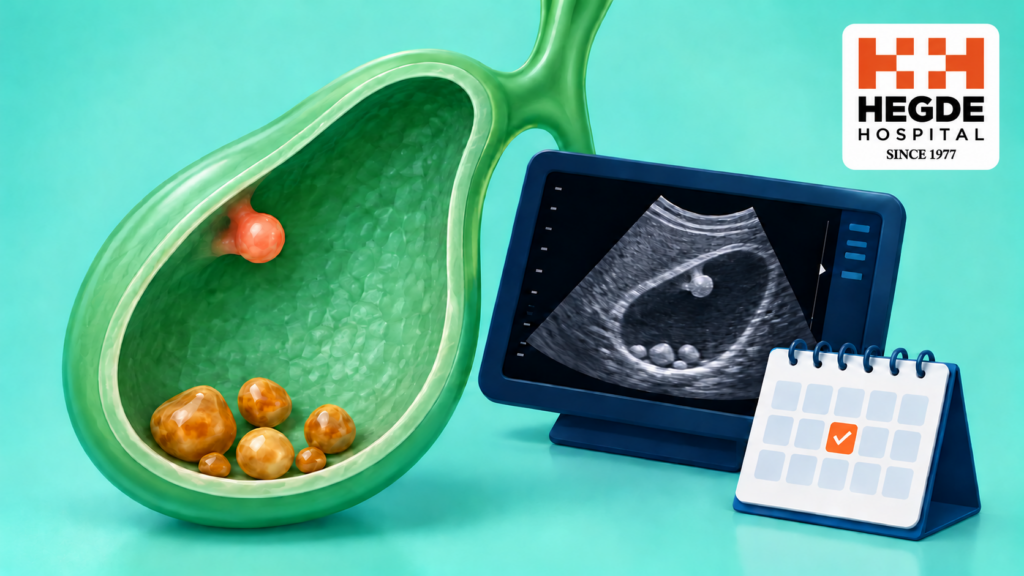
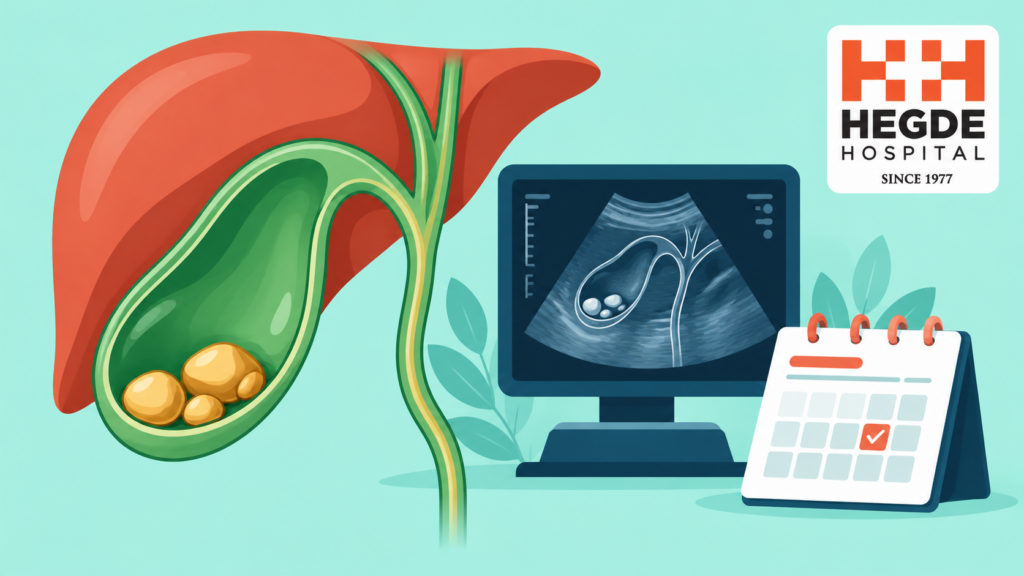
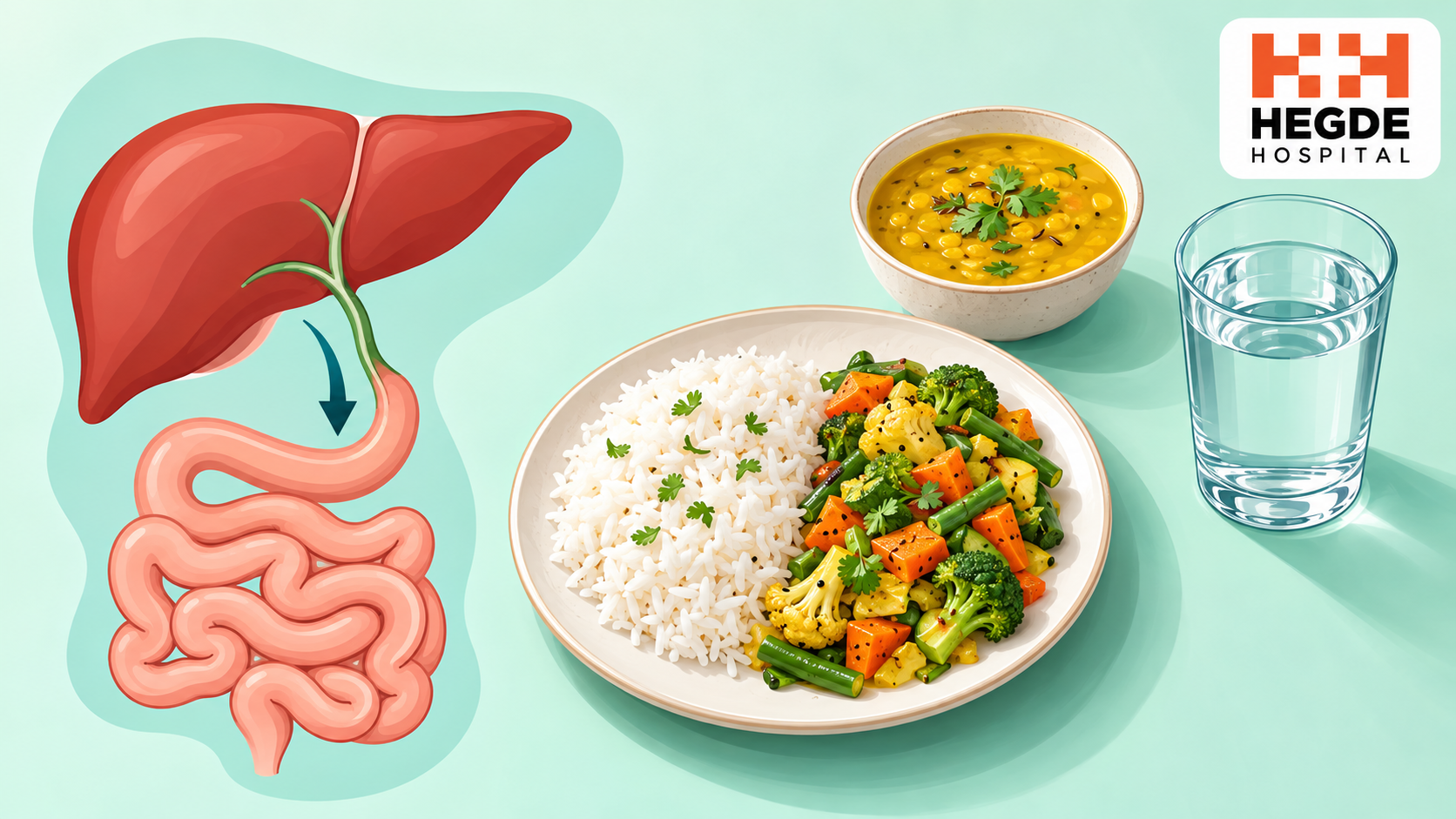
The liver makes bile, a fluid that helps digest fat. The gallbladder stores it and releases it when needed. After removal, bile continues to reach the intestine from the liver, but there is no gallbladder reservoir.
Your body can still digest food, including fat. Some people notice that a large, fatty meal causes discomfort or looser stools. Others tolerate their usual food without much change. Gallbladder removal does not automatically mean that protein cannot be digested or that all dairy and oil must be permanently excluded.
What can you eat in the first days?
Follow the care team's advice about when to start food and drink. Once eating is allowed, small portions of familiar food may be easier than a heavy meal. Food texture and progression depend on nausea, appetite and the details of your surgery. A fixed online day-by-day menu cannot account for those differences.
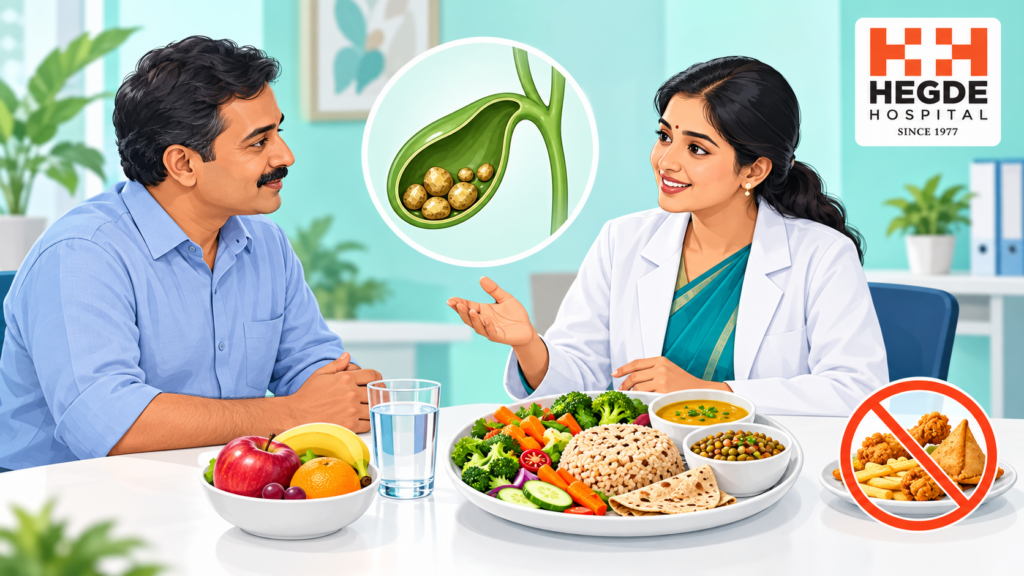
Ordinary foods such as rice or roti, dal, cooked vegetables and a suitable protein food can form a balanced meal. Prepare them with modest amounts of added oil and choose a portion you tolerate. These are food examples, not treatments or a prescribed menu. There is usually no reason to live only on clear liquids after the team has allowed normal food.
Which food changes may help?
| If this causes discomfort | A practical option to discuss or try within discharge advice |
|---|---|
| One large meal | Spread food across smaller meals |
| Deep-fried snacks or a rich oily gravy | Choose a less oily preparation and a smaller portion |
| A sudden large increase in bran, beans or raw vegetables | Increase food fibre gradually |
| Milk, strong coffee or very sweet food repeatedly worsens stools | Record the pattern and adjust that item, rather than banning every food group |
You do not need special expensive products to eat well. The meal's size, cooking method and combination can matter more than the name of one ingredient. A small amount of food tolerated once does not prove that every larger serving will feel the same.
Should you avoid all fat, milk or spicy food?
No universal lifetime ban applies. A balanced diet includes some fat. If a large fat load worsens diarrhoea, smaller amounts spread across meals may be more comfortable. Long-term severe restriction can make it harder to maintain adequate nutrition.
Milk or spicy food may bother some people but not others. Observe whether a particular item repeatedly affects you; do not assume every symptom comes from it. A dietitian can help preserve nutrition if several foods seem difficult, especially when your weight is falling or you have another condition requiring a specific diet.
How should fibre be reintroduced?
Food fibre can help regular bowel function, but a sudden increase may add gas or cramps. Gradually include vegetables, fruit, pulses and whole grains according to tolerance. The useful amount and pace vary with your current eating pattern.
Avoid replacing meals with one “safe” food for a long period. If diarrhoea makes you afraid to eat, seek advice about both the symptom and a balanced food plan. General fluid advice also needs to respect any restrictions already given for heart or kidney disease.
Why might loose stools continue?
Changes in bile flow can contribute to loose stools after surgery. Symptoms often settle, but persistent diarrhoea can have more than one explanation. It should not be automatically labelled as normal recovery, bile-related diarrhoea or irritable bowel syndrome without review.
Keep a short record of stool frequency, whether it happens after meals, foods involved, abdominal discomfort and any weight change. Tell the clinician when surgery took place and whether symptoms existed beforehand. That information helps determine whether examination, investigations or further care are needed. Do not start treatment based on a general article.
When should you contact the surgical team?
Use the planned follow-up to discuss food tolerance and ask how to broaden meals. Arrange an earlier review if diarrhoea persists, worsens, disrupts daily activities or is accompanied by weight loss or weakness.
After surgery, fever, yellow eyes or skin, increasing abdominal pain, repeated vomiting or inability to eat or drink need prompt qualified medical evaluation. Severe or rapidly worsening illness needs immediate evaluation. Do not explain these signs only as food intolerance.
What does a normal long-term diet look like?
Aim for variety: a carbohydrate food, suitable protein foods, vegetables or fruit, and modest amounts of fat. Return to foods in manageable portions rather than trying every rich item at once. Your existing diabetes, allergy or other dietary plan still matters.
Diet is only one part of recovery. Wound care, activity and return to work depend on the operation and your surgeon's advice. Our laparoscopy guide explains the broader procedure; it does not replace your individual instructions.
Frequently asked questions
Can I eat rice and roti after gallbladder removal?
Usually they can be part of a balanced meal once the care team has allowed normal food. Portion size, added fat and your tolerance matter; neither food is automatically forbidden.
Do I need a fat-free diet forever?
No. Most people do not need lifelong fat avoidance. If fatty meals trigger loose stools, discuss smaller amounts and temporary adjustments instead of removing all fat indefinitely.
Is diarrhoea after surgery always caused by bile?
No. Bile flow may contribute, but there are other possible causes. Persistent or worsening symptoms need assessment, especially with weight loss or weakness.
Must I avoid dal because it causes gas?
Not necessarily. A small portion may be tolerated, and food fibre can be increased gradually. If one preparation repeatedly causes discomfort, discuss alternatives rather than excluding all pulses permanently.
When can I return to my usual meals?
There is no single date for everyone. Follow discharge guidance and broaden portions and variety as tolerated. Ask for review if eating remains difficult instead of forcing a fixed schedule.
Plan your follow-up
Bring your discharge summary and a short meal-and-symptom record. Ask whether your symptoms fit expected recovery, what needs investigation and whether a dietitian would help. Explore hospital services or the doctor directory, and book a follow-up appointment for advice matched to your surgery and health history.