
A single raised reading is not always the whole picture. Learn how repeated clinic or home measurements help confirm blood pressure and guide a planned review.
Your blood pressure was high at a routine appointment, yet the machine at home gives a lower number. Or the reverse happens: clinic readings look acceptable while home records are repeatedly raised. Neither pattern should be dismissed simply because one reading looks better.
High blood pressure is usually confirmed using properly taken, repeated measurements, often with home readings or a monitor worn through the day. One routine reading does not ordinarily establish a lasting diagnosis. Very high readings or concerning symptoms require a different, prompt assessment rather than waiting to finish a home record.
Understand the two numbers first
The upper number, called systolic pressure, reflects pressure when the heart contracts. The lower number, diastolic pressure, reflects pressure between beats. Either number can be raised; both do not have to cross a threshold together.
Pressure changes during daily life. Recent activity, anxiety, pain, talking during measurement, a full bladder or an unsuitable cuff can affect the result. This does not mean that every high reading is due to stress. Repeated measurements with good technique help distinguish a temporary influence from a persistent pattern.
Why clinic and home results may differ
| Pattern | What it can mean | What helps clarify it |
|---|---|---|
| Raised in clinic, lower outside | A white-coat effect may contribute | A structured home record or daytime monitoring |
| Lower in clinic, raised outside | Masked hypertension is possible | Review of reliable out-of-clinic readings |
| Raised in both settings | Persistent hypertension becomes more likely | Confirmation and overall risk assessment |
| Widely varying readings | Technique, timing or a genuine variation may matter | Cuff check, consistent recording and clinical review |
A home device is useful only when it is suitable for you and used correctly. An irregular heartbeat, a very large or small arm, or difficulty applying the cuff may require advice about the device and measurement method.
How to obtain a useful home reading
Choose a validated upper-arm monitor with a cuff that fits your arm. Ask the clinic to check your technique and, where appropriate, compare the device with a clinic measurement. A phone application or wrist device should not automatically be assumed to provide an equivalent measurement.
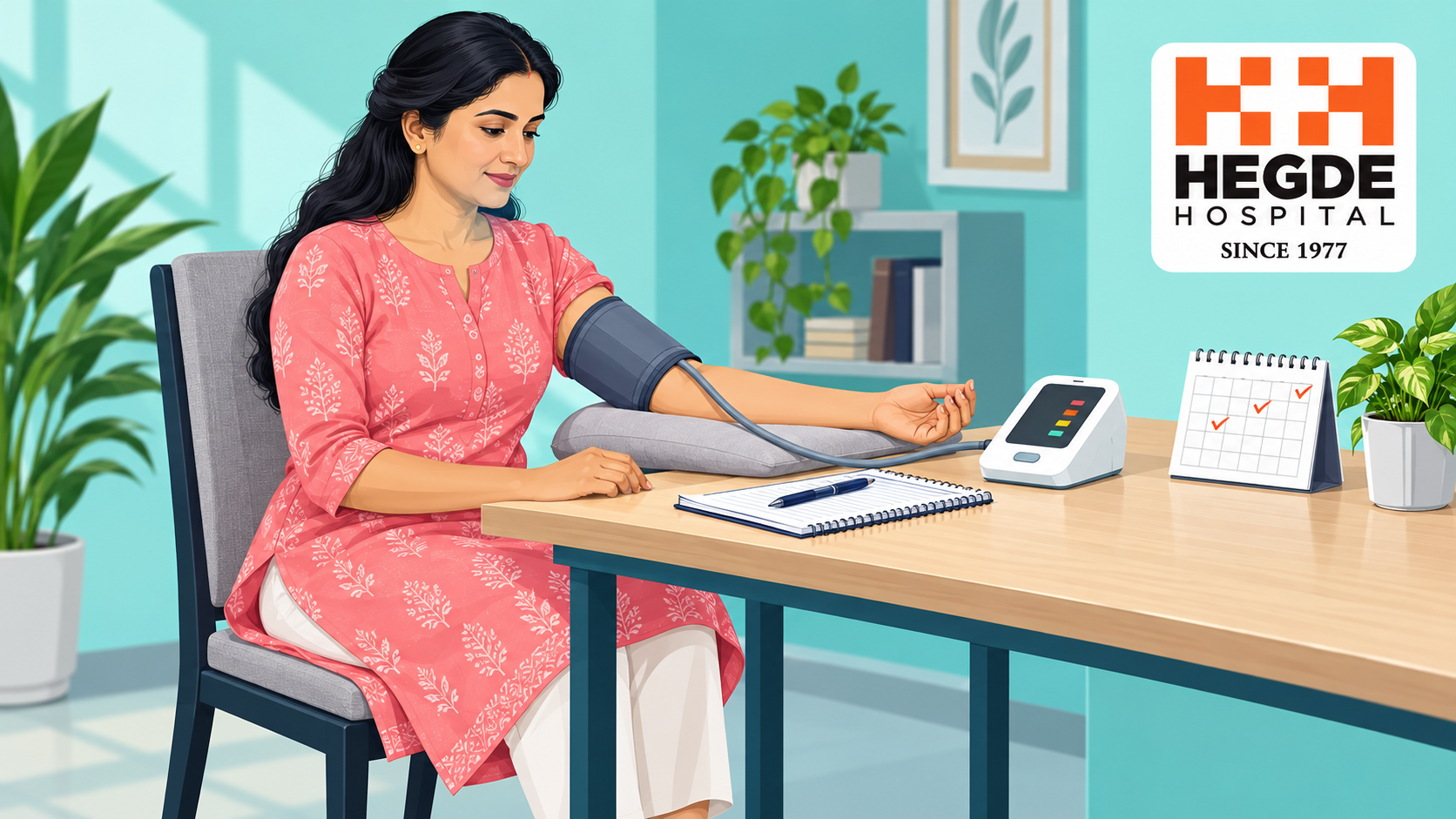
Avoid exercise, smoking and caffeinated drinks for about 30 minutes beforehand. Empty your bladder and sit quietly for at least five minutes. Support your back, keep your feet flat and uncrossed, and rest your arm so that the cuff is at heart level. Place the cuff on a bare upper arm and avoid talking while it measures.
When instructed to take paired readings, leave at least a minute between them. Record the date, time and both numbers, along with unusual circumstances. Do not repeatedly measure until you obtain a number you prefer. Equally, do not record only the highest result.
Your clinician may request morning and evening measurements over several days, commonly four to seven, and explain which readings to use in the average. The exact schedule and whether to exclude the first day's readings should be agreed before starting. A list of isolated screenshots is less useful than a consistent record.
Which readings suggest hypertension?
Common Indian and UK diagnostic approaches use a clinic pressure of 140/90 mmHg or above and a home or daytime average of 135/85 mmHg or above as confirmation thresholds. Reaching either the upper or lower number matters. These figures describe a diagnostic approach; they are not a universal treatment target for every patient.
Some guidelines use different categories, including lower thresholds. Age, diabetes, kidney disease, pregnancy and other clinical circumstances can change how a result is assessed. Avoid comparing a home average with an unrelated chart without checking which setting and guideline that chart describes.
Bring the full record to your doctor. A monitor worn during normal daily activity may be suggested when clinic and home readings disagree or a clearer daytime pattern is needed. It is not required for every person.
What happens after confirmation?
The next step is a discussion of overall health and the appropriate care plan. This may include family history, sleep, activity, tobacco or alcohol use, current treatments and conditions that can influence blood pressure. Kidney function, urine testing, glucose, cholesterol or a heart tracing may be appropriate depending on the assessment.
Testing is selected for a reason; a scan or extensive laboratory package is not automatically necessary. Ask what each test is expected to clarify and when the results will be reviewed. If glucose is also borderline, our prediabetes blood-test guide explains that separate finding.
Agree on follow-up rather than reacting to one number
Ask which arm to use, how often to measure after the initial assessment, what your personal goal is and which readings should prompt contact. If you already receive treatment, do not stop it or alter it because of a single home measurement. This article does not prescribe medicines, doses or home remedies.
A systolic reading of 180 or more, or a diastolic reading of 120 or more, needs prompt medical assessment even if you feel well. Severe chest pain, breathlessness or new weakness requires urgent qualified evaluation. Do not postpone such assessment to complete a routine diary; no emergency-management instructions are provided here.
For stable, non-urgent assessment, bring your monitor and records to Hegde Hospital's Metabolic Clinic. You can book an appointment to review the pattern and plan the next steps.
Frequently asked questions
Does one high clinic reading mean I have hypertension?
Usually a routine raised reading needs confirmation with repeated reliable measurements. Very high readings or concerning symptoms need prompt assessment and should not be managed as an ordinary home-recording exercise.
Is the upper number more important than the lower number?
Both matter. A raised systolic or diastolic value can affect assessment, even when the other number is below the relevant threshold. Your clinician interprets the pattern and overall risk.
Can normal clinic readings exclude high blood pressure?
Not always. Some people have raised pressure outside the clinic. Reliable home records or daytime monitoring may identify this masked pattern when there is a reason to suspect it.
Should I check repeatedly whenever I feel anxious?
Repeated checking without an agreed plan can produce a confusing record. Follow the schedule given by your clinician and report symptoms or concerning results according to the advice you receive.
Are diagnostic thresholds the same as my treatment goal?
No. A threshold used to establish a diagnosis and an individual goal during care serve different purposes. Your doctor considers your health, measurement setting and relevant guidance when agreeing on a goal.