
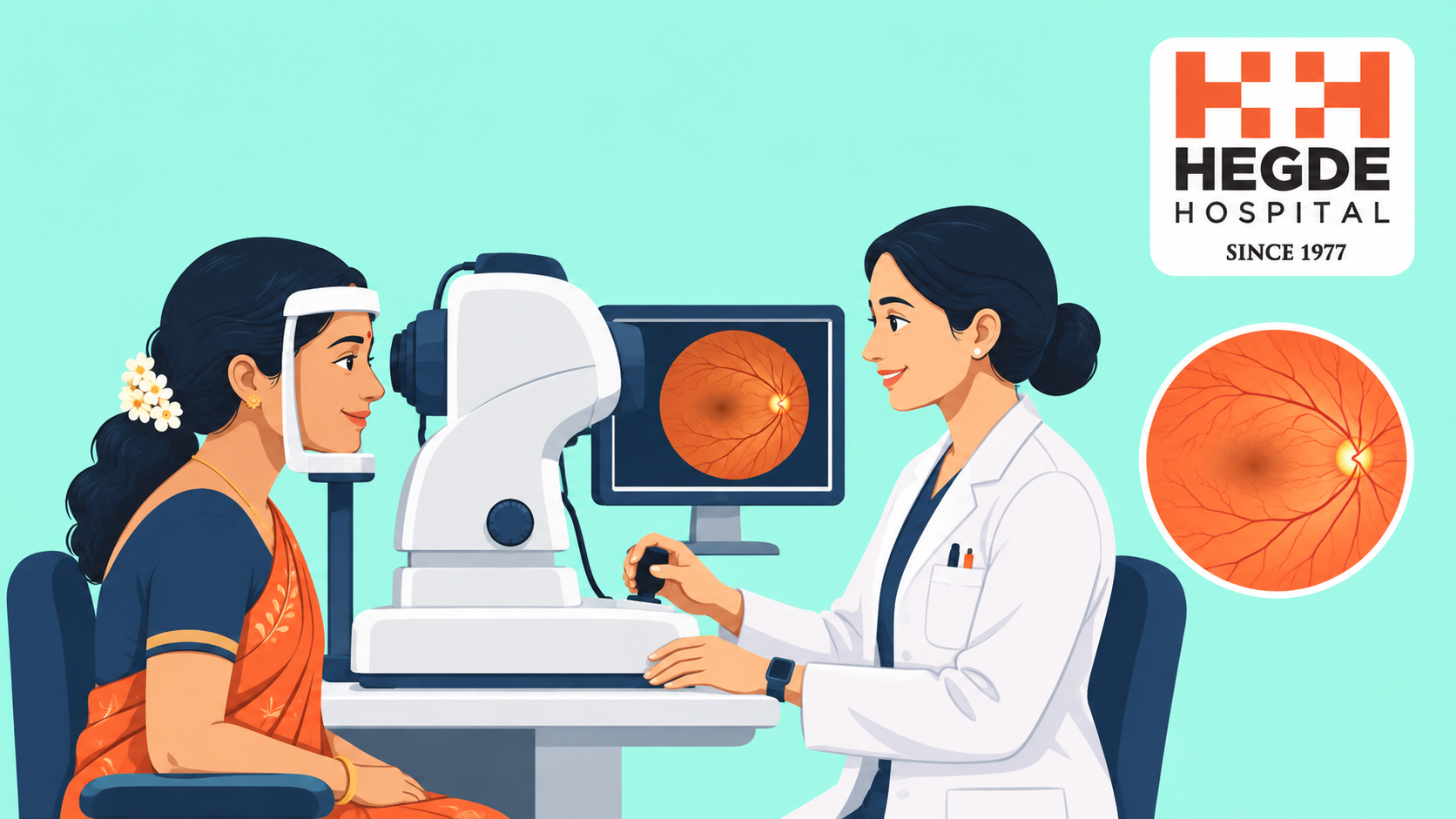
Diabetes can affect the retina before sight changes are noticeable. A routine eye assessment asks a different question from checking your glasses prescription.
You can read messages, recognise faces and manage your usual work. When the diabetes team recommends an eye check, it can feel unnecessary because your sight seems unchanged.
Routine checks are useful precisely because some diabetes-related changes begin before vision becomes noticeably different. They help an eye professional decide whether monitoring or further care is needed.
The direct answer
Diabetes can damage small blood vessels in the retina, the light-sensitive tissue at the back of the eye. Early diabetic retinopathy may have no symptoms. Seeing clearly today does not exclude these early changes.
A retinal assessment is different from a glasses or sight test. Both can be useful, but a normal prescription check does not necessarily mean that the retina has been assessed for diabetes-related disease.
What can an eye check look for?
The eye professional assesses for diabetes-related changes and other relevant eye problems. Depending on the setting, this may involve looking inside the eyes after widening the pupils, taking retinal photographs, or arranging selected additional imaging.
Not everyone needs every test. A routine photograph, a full eye examination and a specialist scan answer different questions. Ask what is included and whether the result requires a separate appointment. The first diabetes review guide places eye checks within the wider care plan.
When should the first check happen?
The starting point depends on the type and duration of diabetes and your clinical circumstances. If you have newly diagnosed type 2 diabetes, discuss arranging the baseline eye assessment rather than waiting for blurred vision. For type 1 diabetes, the timing should be agreed with the diabetes team.
Ongoing review is often annual, but the interval can differ when previous findings, risk and local arrangements justify a different plan. An eye professional may recommend earlier follow-up when changes are present. A screening timetable used in another country is not a personal timetable for every patient in Hyderabad.
What should I bring and ask before attending?
Bring previous eye reports, your glasses and relevant diabetes information. Explain any change in vision, previous eye treatment and the date of the last retinal assessment. Ask whether pupil-widening drops are expected and how to plan transport.
If drops are used, vision can remain blurred and bright light uncomfortable for a while. Do not drive until your sight has returned to normal and it is safe to do so; follow the eye service's instructions. Ask in advance if travel or work arrangements will be affected.
How are results used?
| Possible outcome | Useful question to ask |
|---|---|
| No diabetes-related changes seen | When is the next assessment due? |
| Changes that need monitoring | How soon should the eyes be reviewed, and by whom? |
| Findings requiring specialist assessment | How will the referral and follow-up be arranged? |
| Images not clear enough to interpret | What examination or repeat assessment is needed? |
An unclear photograph is not a normal result. Likewise, a reassuring result today does not remove the need for future checks. Keep the written result and confirm that the diabetes team receives relevant findings.
Can better glucose readings replace the eye visit?
No. Managing glucose, blood pressure and other relevant health risks supports eye health, but it does not replace looking at the eyes. Eye and diabetes care should work together. Do not change treatment independently because of an eye result or one glucose reading.
If changes are found, treatment is not automatically required immediately. Some findings need monitoring; others need timely specialist care. The decision depends on the examination. Early care can reduce the risk of further damage, but no check or treatment can guarantee a particular visual outcome.
Which symptoms should not wait for routine screening?
Discuss new or worsening blur or other persistent vision changes promptly with an eye professional. Sudden loss of vision, a new curtain-like shadow, flashes with a sudden increase in floating spots, or severe eye pain requires urgent medical assessment.
This article is about routine diabetes follow-up, not management of an acute eye problem. If you are unsure when your check is due, ask your diabetes clinician to help arrange an appropriate eye-care referral. Confirm where the recommended examination can be arranged. The Metabolic Clinic can discuss your wider diabetes review.
For help coordinating your diabetes review, request an appointment, bringing your previous results and the date of your last eye assessment.
Frequently asked questions
Do I need an eye check when I can see clearly?
Yes. Early diabetes-related retinal changes may not affect noticeable vision, which is why an agreed routine assessment matters.
Is a glasses test enough?
Not necessarily. Ask whether the retina was examined for diabetes-related changes, rather than assuming this was included.
Will every visit need drops?
The examination method varies. Ask the eye service what to expect and plan travel if pupil-widening drops are likely.
Can a normal result end future follow-up?
No. Keep attending at the interval recommended for your findings and risk, even if today's result is reassuring.
Should I wait for the next check if my vision changes?
No. New symptoms need assessment according to their severity; sudden major changes need urgent medical evaluation.