
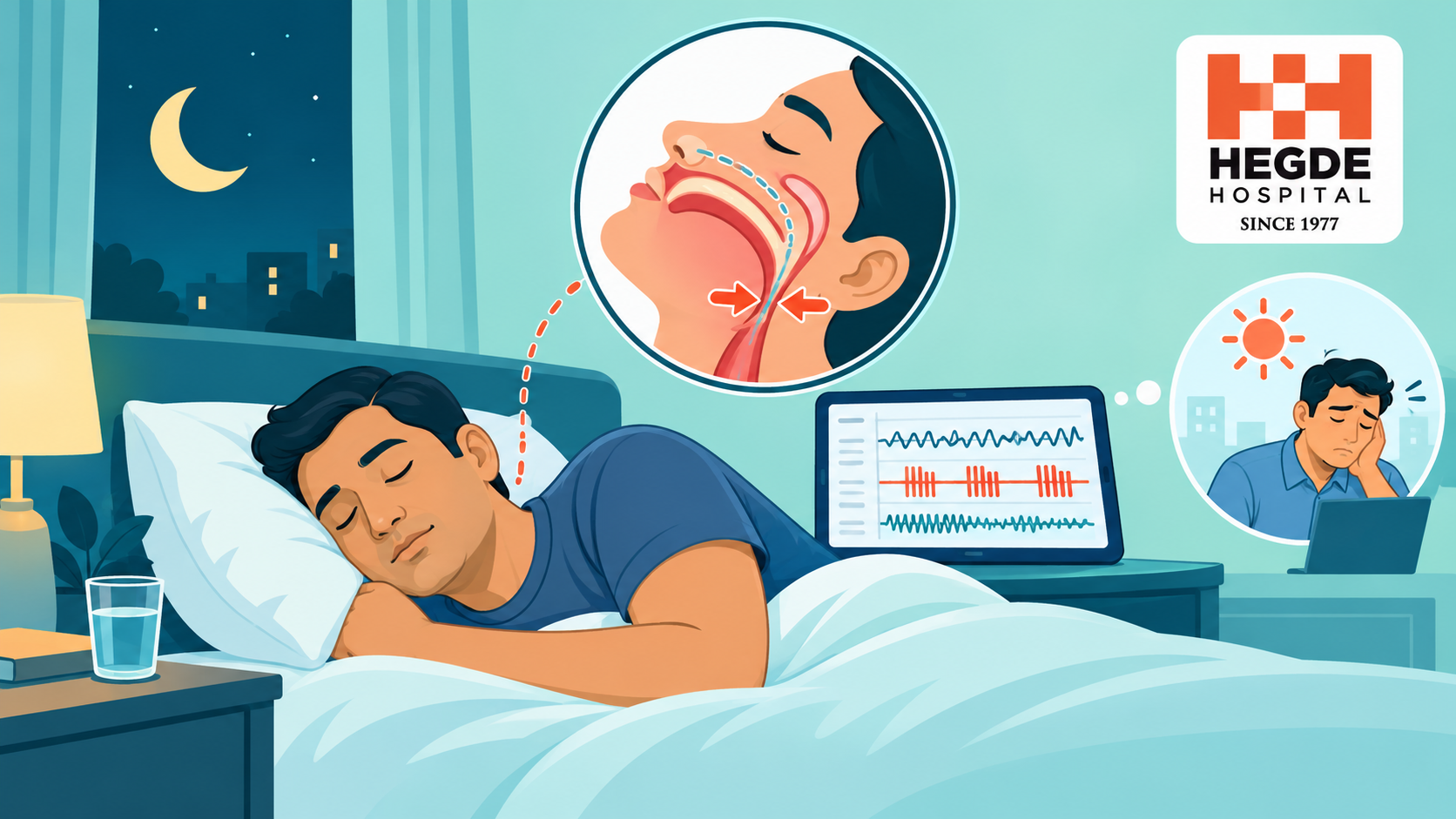
Snoring alone cannot diagnose sleep apnoea. Breathing pauses, unrefreshing sleep and daytime symptoms help determine who needs a sleep assessment.
Someone at home says your snoring stops, then starts again with a gasp. You may think you slept all night, yet wake unrefreshed or struggle to stay alert in the afternoon.
These observations deserve a conversation with a clinician. They do not prove sleep apnoea, but they are more useful than judging the condition by snoring volume or an audio recording alone.
The direct answer
Obstructive sleep apnoea happens when the upper airway repeatedly narrows or closes during sleep. Sleep becomes disrupted, sometimes without the person remembering awakenings. A sleep study helps confirm the problem and its severity. Questionnaires and consumer devices can provide clues, but neither a high score nor a reassuring watch reading substitutes for assessment.
Which symptoms should you describe?
Repeated loud snoring, witnessed pauses, gasping, morning headaches and waking without feeling rested are relevant. Some people feel sleepy during the day; others describe fatigue, poor concentration or repeated night-time waking instead. A person does not have to notice every symptom to benefit from evaluation.
Explain your usual sleep hours, shift work and whether there is enough opportunity to sleep. Other sleep disorders and medical conditions can also cause tiredness. If someone shares the room, their description of the breathing pattern can help, with your permission.
Excess weight can increase risk, but body size alone cannot confirm or exclude the condition. The clinician will consider airway structure, health history and associated conditions. There is no single appearance that identifies everyone with sleep apnoea.
How is ordinary snoring different?
| Observation | What it can tell you | What it cannot tell you |
|---|---|---|
| Snoring | Airflow is producing noise | Whether repeated airway obstruction is present |
| Witnessed breathing pauses | A reason to arrange assessment | The severity or exact type of sleep disorder |
| Daytime sleepiness | Sleep or health may be affecting alertness | That sleep apnoea is the only cause |
| A questionnaire or watch result | A clue to discuss with the clinician | A reliable diagnosis or exclusion on its own |
Sleep apnoea can coexist with high blood pressure and other metabolic conditions. These associations support a careful review; they do not establish that one condition caused the other in an individual.
What happens before a sleep study?
A consultation usually reviews symptoms, sleep habits, medical history, existing treatments and occupational risk. The clinician may examine the mouth and airway and assess relevant health measures. A short sleep diary can show sleep timing, awakenings and daytime alertness.
Screening questionnaires help organise this information. They should not be used alone to dismiss symptoms simply because a sleepiness score is low. Additional tests are selected when another condition could contribute; there is no universal blood-test package for snoring.
Tell the clinician if you drive professionally, operate machinery, are pregnant or are awaiting major surgery. These circumstances can affect how quickly a sleep assessment should be arranged. The evaluation should also consider other explanations, including insufficient sleep, rather than assuming the diagnosis at the first mention of fatigue.
Is testing done at home or in a sleep laboratory?
A clinician may arrange a home respiratory study that records breathing-related signals overnight. Some people need a more detailed laboratory study, which can record sleep and other signals as well. The choice depends on the clinical question, other conditions, practical considerations and earlier results.
An oxygen reading alone has limitations: it may not distinguish sleep apnoea from other causes of reduced oxygen. A negative or technically poor home result may need further assessment if symptoms remain significant. Ask whether enough usable recording was obtained and whether the result fits your usual sleep.
The report helps establish the type and severity of the problem, but treatment decisions also consider symptoms, safety, health conditions and preferences. Do not select a device or change settings from a number found online.
What care options may follow a confirmed diagnosis?
The clinician may discuss support for weight and sleep-related health alongside a device that keeps the airway open, a fitted oral appliance or selected specialist procedures. The most appropriate approach depends on severity and individual circumstances; not every snorer needs the same treatment.
Positive airway pressure uses air delivered through a mask to help prevent airway collapse during sleep. It needs an appropriate assessment, fitting and follow-up. An oral appliance is fitted with dental input when suitable; an ordinary mouthguard is not equivalent. Surgery is considered selectively rather than as a guaranteed answer for all snoring.
Care should include practical support when an approach is uncomfortable or difficult to use. A mask leak, persistent symptoms or an appliance problem is a reason to contact the treating team, not evidence that every option has failed.
Why does follow-up matter?
Review considers daytime alertness, sleep quality, device use where relevant and whether breathing events are adequately controlled. The team may reassess equipment fit, residual symptoms and other sleep problems. Improvement in snoring alone is not always enough to show the condition is controlled.
Do not stop an established plan solely because weight or symptoms have changed; ask whether reassessment is needed. For initial review, the metabolic and internal-medicine pathway can help direct appropriate specialist assessment. Book a consultation with your sleep record and any earlier test reports.
When should assessment be prioritised?
Arrange a consultation for recurring pauses, unrefreshing sleep or persistent daytime symptoms. Sleepiness while driving or in safety-critical work needs prompt medical advice; do not drive while sleepy. Severe new breathing difficulty or chest symptoms need immediate qualified evaluation rather than a routine sleep appointment.
Frequently asked questions
Does loud snoring always mean sleep apnoea?
No. Snoring can occur without sleep apnoea. Witnessed pauses, sleep quality, daytime symptoms and a clinical assessment help decide whether a sleep study is appropriate.
Can a thin person have obstructive sleep apnoea?
Yes. Weight is one risk factor, but airway structure and other factors also matter. A person should not be ruled out solely because they are not overweight.
Can a smartwatch rule it out?
No. Consumer sleep and oxygen readings are not a substitute for a clinically selected sleep study. Discuss persistent symptoms even when a device appears reassuring.
What if the home test is normal but symptoms continue?
Return to the clinician. Recording quality, the type of test and other explanations should be reviewed, and a more detailed study may be appropriate in selected cases.
Does a diagnosis mean lifelong use of one device?
Not necessarily. Treatment and review depend on the condition and response. Changes should follow a supervised reassessment rather than stopping a plan because snoring seems better.