
Understand what piles banding follow-up checks, why treatment may be staged and when persistent symptoms need reassessment before another session.
You had rubber band treatment for internal piles, but the surgeon has mentioned another visit. Does that mean the first treatment failed? Often it does not. A review may check healing, assess the symptoms that remain and decide whether another area needs treatment.
This guide concerns planned follow-up after clinician-performed banding. The findings at your examination and your discharge instructions take priority over a general timetable.
The direct answer
Rubber band ligation treats suitable internal haemorrhoids by reducing the blood supply to the treated tissue. Several areas may need attention, and they are not always treated together. A further session can be part of a staged plan. Persistent or returning symptoms still need reassessment; another band is not automatically the right answer.
What should the review check?
Tell the surgeon whether bleeding, protrusion or discomfort has improved, stayed the same or changed. Explain the amount and timing of bleeding, difficulty passing stool and whether symptoms affect work or sleep. Bring the treatment record and discharge advice if the review is with a different clinician.
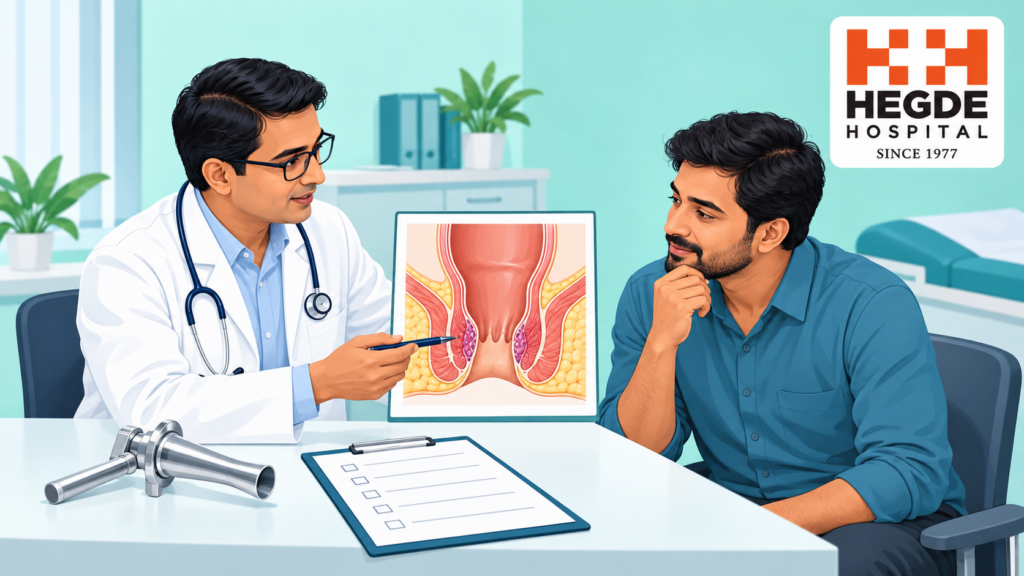
The clinician may examine the area and, when appropriate, use a short viewing instrument to assess internal tissue. Consent, comfort and the reason for examination should be discussed. The piles examination and anoscopy guide explains that assessment in more detail.
A review considers healing as well as symptom relief. Not seeing the band pass does not establish that treatment failed. Likewise, a quieter few days do not prove that every cause of bleeding has been addressed.
Why might another session be discussed?
There may be more than one symptomatic area, or the clinician may prefer to treat a limited area at each visit. The response to the first treatment helps guide the next decision. A repeat session should follow assessment of the remaining internal piles and the healing tissue.
There is no universal number of sessions or interval that suits everyone. The size and position of the piles, symptoms, examination findings, earlier treatment and bleeding risks can change the plan. Ask whether the next appointment is for examination alone or might include treatment, and what preparation is actually required.
What can banding not treat?
Banding is intended for suitable internal piles. It is not a treatment to apply to external lumps yourself. Large prolapsing piles, a substantial external component or symptoms caused by another condition may need a different approach.
Our non-surgical piles overview discusses the wider decision. If surgery is being considered, use the existing laser versus conventional surgery guide for that separate comparison. Repeat banding is not evidence that one surgical method will be universally better.
What if symptoms return later?
Symptoms can recur after an initially helpful treatment. The review should confirm whether piles are still the explanation and whether the original type of treatment remains suitable. Do not assume that all new bleeding is from the previously treated piles.
Discuss difficulties with stool passage and the bowel-care plan you were given. Bring a current treatment list, particularly anything that affects bleeding. Do not stop or restart prescribed treatment based on an article or someone else's banding experience.
When should you contact the team sooner?
Use the discharge contact for increasing pain, new swelling or discharge, fever, difficulty passing urine or bleeding outside the pattern explained to you. Severe pain with fever or feeling very unwell, heavy continuing bleeding or faintness needs immediate medical evaluation. Do not wait for a scheduled review in these circumstances.
For an otherwise stable recovery, confirm the planned review date and the activity and work advice relevant to you. A personal plan is more useful than trying to match someone else's recovery day by day.
For appointment coordination, contact the team or request a consultation.
Frequently asked questions
Does a second session mean the first one failed?
No. Treating different internal areas in stages can be planned. Your response and examination determine whether another session is appropriate.
Should I see the band come out?
Not necessarily. People may not notice it passing. Symptoms and examination are more useful than searching for the band.
Can banding remove an outside lump?
It is used for suitable internal piles. An external lump needs its own assessment and should never be banded at home.
Can I choose the repeat-treatment date myself?
Agree it with the treating team. Healing, remaining symptoms and the proposed treatment determine the interval.
If bleeding returns, should I simply book another band?
Arrange a review first. The clinician should establish the cause and whether repeat banding is suitable before deciding on treatment.