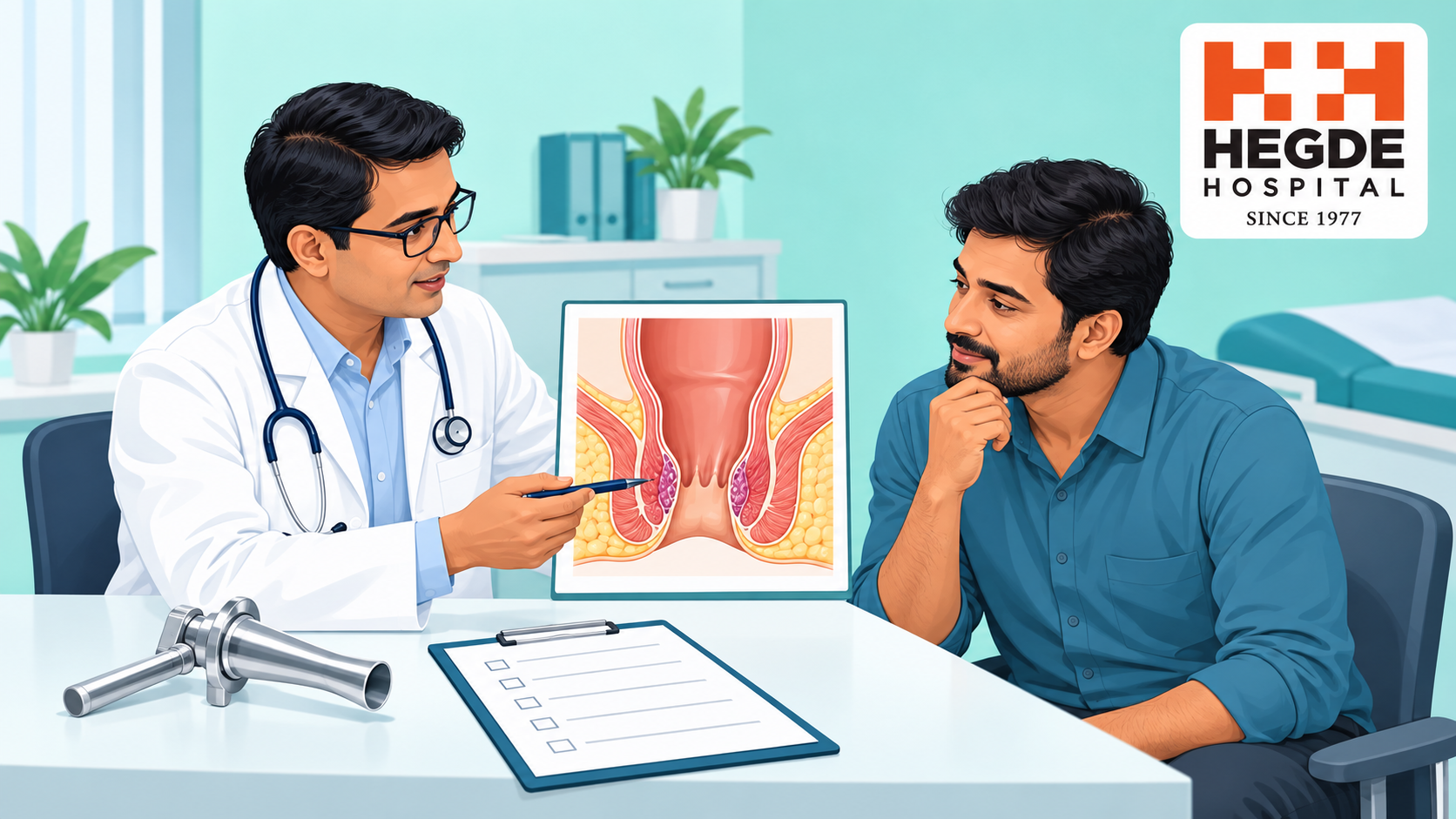
A piles consultation starts with understanding the symptoms and examining their cause. Anoscopy may help the doctor see internal piles before discussing treatment.
You have noticed a lump or bleeding and booked an appointment for suspected piles. It is reasonable to wonder what the examination involves, whether it will hurt and whether treatment must happen that day.
An examination helps establish what is causing your symptoms. Booking a consultation does not mean you have agreed to a procedure or operation.
The direct answer
The doctor usually starts with your history, then offers an examination with your consent. Looking at the outside, a gentle gloved-finger examination and a short internal view using an anoscope answer different questions. Not everyone needs every step at the first visit. Findings guide treatment choices; a device name such as laser cannot replace that assessment.
What will the doctor ask?
Describe when symptoms started, bleeding, discomfort, itching, discharge and whether a lump appears during a bowel movement. Explain whether it returns by itself. Mention constipation, loose stools, previous procedures and difficulty controlling stool. Bring earlier reports and a list of current treatments, allergies and medical conditions.
Explain what is disrupting everyday life. A small amount of frequent bleeding and a large intermittent prolapse are different problems. Neither can be fully assessed from a photograph or an online symptom checklist.
How are privacy and consent handled?
The clinician should explain the reason for each step and what it may feel like. Ask for privacy, a covering and a chaperone. Tell the team about a previous painful examination or anything that makes the visit difficult. Agree how to request a pause or stop; you do not need to continue through unacceptable pain.
The examination may be modified or deferred when pain or tenderness makes it unsuitable. Further assessment can then be planned. Do not assume that a difficult examination means an operation is necessary.
What is anoscopy?
An anoscope is a short instrument that allows the clinician to view the anal canal and lowest part of the rectum. It can help identify internal piles that are not visible from outside. Pressure or discomfort can occur; a promise that it is always painless would be misleading.
Anoscopy is different from colonoscopy, which examines much more of the large bowel. Preparation and any pain-control plan depend on your appointment. Ask the clinic for instructions rather than fasting, using bowel-clearing products or stopping prescribed treatment yourself.
How do the findings change treatment?
The doctor considers internal versus external disease, prolapse, bleeding, tenderness and other findings together. The piles grading guide explains why grade describes prolapse rather than simply how much bleeding occurs.
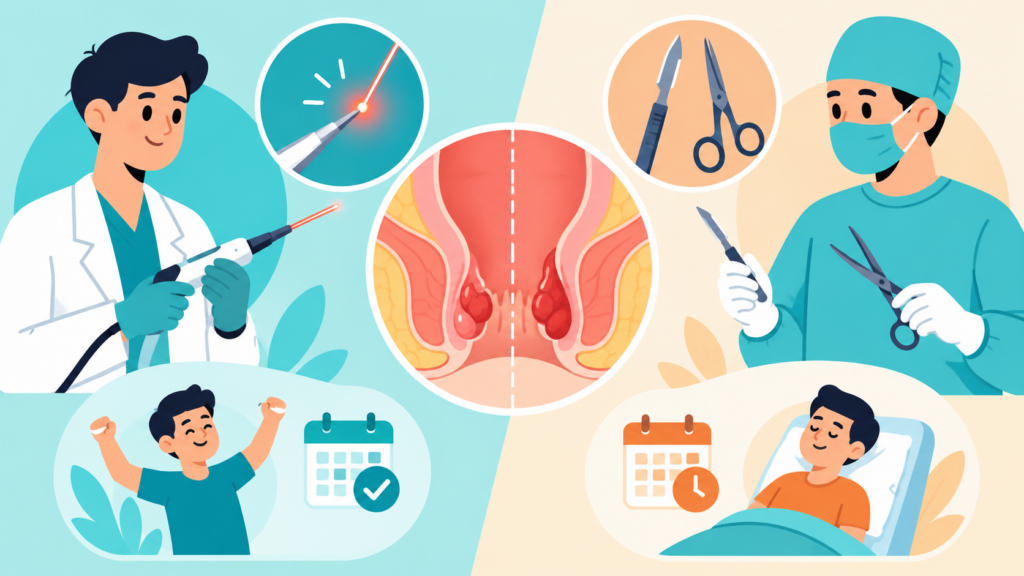
Some patients are offered clinician-guided non-operative care; selected internal piles may suit an office procedure. Other anatomy may require a surgical discussion. Our existing laser and conventional surgery comparison covers those trade-offs after assessment. Anoscopy itself does not commit you to either option.
What happens after the examination?
Ask what was found, whether it explains all your symptoms and what remains uncertain. Visible piles do not establish that every episode of bleeding comes from them. Other investigations are considered according to the history and findings; they are not automatically needed for everyone.
Agree who will explain any test results and when to return. Ongoing or changing symptoms deserve review. Heavy bleeding with faintness or severe worsening pain requires urgent medical evaluation rather than waiting for a routine visit.
Frequently asked questions
Can internal piles be diagnosed just by looking outside?
Not reliably. Internal tissue may need a closer examination. The clinician explains which examination is appropriate for your symptoms.
Does everyone need an anoscopy at the first appointment?
No. History, comfort and examination findings determine whether it is useful and appropriate at that visit.
Must I agree to treatment immediately?
No. Ask about the findings, alternatives, risks and next steps before deciding on a proposed procedure.
Is anoscopy the same as colonoscopy?
No. Anoscopy views a short lower section. Colonoscopy examines the large bowel and has different preparation and indications.
What should I bring?
Bring previous reports, a current-treatment list and a short symptom history. Ask the clinic beforehand about individual preparation instructions.
Use the appointment service to arrange a routine review and discuss what examination your symptoms need.