
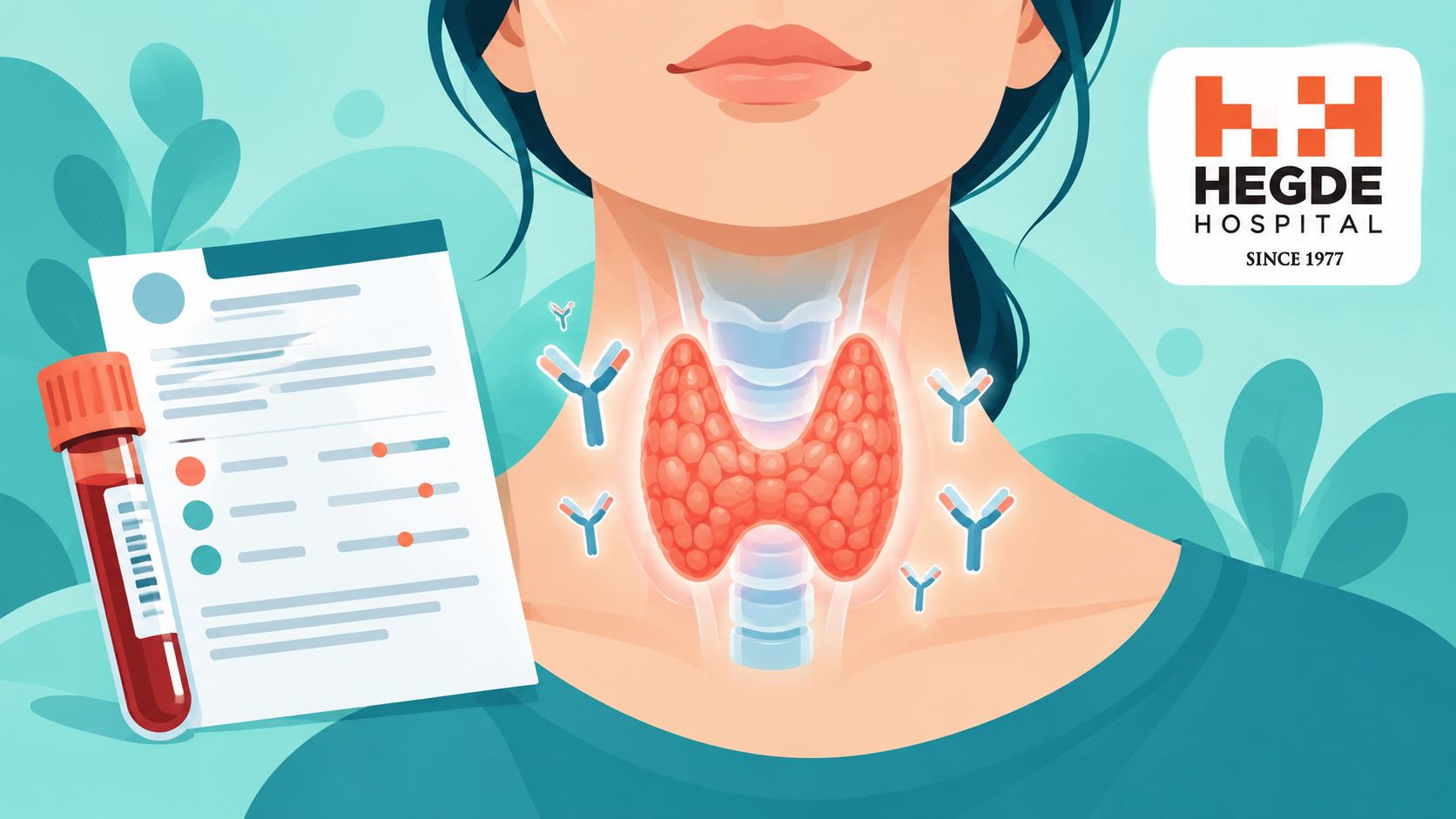
A positive thyroid antibody result and an underactive thyroid are different findings. Learn how symptoms, TSH and free T4 guide the next step in Hashimoto thyroiditis.
An antibody result on a thyroid report can raise a practical question: if the test is positive but thyroid hormone levels are normal, does treatment need to start immediately? Another person may have tiredness and a raised TSH but no visible neck swelling. These situations need different decisions.
Hashimoto thyroiditis is an autoimmune condition affecting the thyroid. Understanding the cause, the gland's current function and the plan for follow-up helps you discuss the report without treating one number as the whole diagnosis.
The direct answer
Hashimoto thyroiditis can gradually reduce thyroid hormone production, but some people have normal thyroid function for a long time. Positive antibodies alone do not automatically require thyroid hormone treatment. Clinicians assess symptoms, TSH, free T4, examination findings and circumstances such as pregnancy before deciding between monitoring and treatment.
What happens in Hashimoto thyroiditis?
The thyroid is a small gland at the front of the lower neck. It produces hormones involved in energy use and several body functions. In Hashimoto thyroiditis, the immune system reacts against thyroid tissue. This is called an autoimmune process: the body's defence system responds to its own tissue.
The process can occur slowly. There may be no symptoms at first, and the gland may still make enough hormone. If production falls, the resulting condition is hypothyroidism, or an underactive thyroid. Hashimoto describes a possible cause; hypothyroidism describes how the gland is functioning. They are related terms, but they do not mean exactly the same thing.
Which symptoms can occur?
When hormone production becomes insufficient, people may notice persistent tiredness, feeling unusually cold, constipation, dry skin, changes in hair, or heavier or irregular menstrual periods. Some notice gradual weight change. These symptoms are not specific enough to diagnose Hashimoto thyroiditis by themselves.
The thyroid may enlarge, causing a feeling of fullness at the front of the neck. Enlargement is called a goitre and is often painless. A person can also have Hashimoto thyroiditis without obvious swelling. A distinct lump, changing voice or swallowing difficulty deserves separate assessment rather than being assumed to be part of the same condition.
Our guide to underactive and overactive thyroid symptoms explains the broader symptom patterns. If thyroid function is normal but symptoms continue, a clinician should consider other explanations instead of attributing everything to antibodies.
What do TSH, free T4 and antibodies show?
TSH is a signal from the pituitary gland that helps regulate thyroid activity. Free T4 is a measurement of available thyroid hormone. These tests address the gland's present function. Antibody tests, commonly against thyroid peroxidase, help identify an autoimmune cause in the appropriate clinical setting.
| Report finding | What it can tell the clinician | Usual decision to discuss |
|---|---|---|
| Positive antibodies with normal TSH and free T4 | Autoimmune thyroid involvement may be present while hormone production remains adequate | A monitoring plan rather than automatic treatment |
| Raised TSH with normal free T4 | A mild or subclinical underactive pattern may be present | Confirmation, context and an individual treatment decision |
| Raised TSH with low free T4 | An underactive thyroid pattern is more evident | Clinician-directed treatment and follow-up |
This table is an orientation, not a self-diagnosis tool. Laboratory reference ranges, previous results, illness, pregnancy and other health factors affect interpretation. A mildly abnormal result should not be treated as identical to a persistent pattern. See our thyroid blood-test guide for the difference between a laboratory range and an individual decision.
If antibodies are high, should they be repeated often?
Repeated antibody measurements usually do not guide routine treatment or show whether thyroid function is adequately controlled. A higher antibody number is not a direct measure of symptom severity, the amount of hormone needed, or the urgency of treatment. Following thyroid function and the clinical picture is generally more useful.
Ask which result will change the plan and when it should be repeated. Keeping dated reports makes a trend easier to review. Monitoring intervals depend on the findings and your circumstances; there is no single testing timetable suitable for every reader.
Is an ultrasound or biopsy always needed?
An ultrasound shows the gland's structure rather than measuring hormone production. It may help when examination finds swelling or a lump, when the diagnosis remains uncertain, or when blood results and clinical findings do not fit together. A positive antibody result does not mean everyone needs a scan.
Biopsy is not a routine test for every person with Hashimoto thyroiditis. A separately identified nodule may need its own ultrasound-based assessment and, in selected cases, sampling. The decision depends on the nodule and other findings, not simply on an antibody result. Bring the full report rather than only a cropped image of one value.
How are monitoring and treatment chosen?
If thyroid function is normal, a clinician may recommend periodic review without thyroid hormone treatment. If hypothyroidism develops, treatment aims to restore an appropriate hormone level. Decisions about mild abnormalities are individualized and may consider persistence, symptoms, age and pregnancy plans.
The aim is appropriate thyroid function and wellbeing, not making an antibody number disappear. Follow-up checks whether the plan is working and whether symptoms have another cause. Some people require long-term care. Do not change an existing prescribed treatment because a new antibody result looks higher or lower.
No special food plan has been established as a cure for Hashimoto thyroiditis. Broad food exclusions can add unnecessary restrictions. Discuss persistent digestive symptoms or a separate diagnosed condition on its own merits. Thyroid-related weight changes also need realistic expectations rather than attributing every weight change to this diagnosis.
When should review happen sooner?
Arrange routine review for an unexplained antibody result, ongoing compatible symptoms or follow-up that has been missed. Tell your clinician promptly if you are pregnant, planning pregnancy, or develop a growing neck swelling, persistent voice change or swallowing difficulty. Thyroid decisions in pregnancy need specific assessment.
Severe new breathing or swallowing difficulty needs immediate qualified medical evaluation. This is a safety boundary, not the usual course of a stable Hashimoto consultation.
What should you bring to an appointment?
Bring previous TSH, free T4 and antibody reports with dates and laboratory ranges, any relevant scan, a symptom timeline and details of existing prescribed treatment. Mention family thyroid disease and other autoimmune conditions. Useful questions include: is thyroid function currently normal, does this finding explain my symptoms, which test should be followed, and what change would make the plan different?
You can review Hegde Hospital's doctors and book an appointment for an assessment suited to your findings.
Frequently asked questions
Can Hashimoto thyroiditis be present with normal TSH?
Yes. Autoimmune thyroid involvement can be detected before hormone production becomes insufficient. Normal thyroid function and positive antibodies can coexist. The next step is a clinician-agreed monitoring plan, not treatment based only on antibodies.
Does a positive antibody test mean thyroid cancer?
No. An antibody result identifies an immune response and is not a cancer diagnosis. A distinct thyroid nodule or changing neck symptoms require their own assessment; those decisions are based on examination and appropriate structural tests.
Can Hashimoto thyroiditis affect men or younger people?
Yes. It is more commonly recognized in women, but it can affect men and younger people too. Age and sex alone neither confirm nor exclude the diagnosis. In children, symptoms and growth should be reviewed by a paediatric clinician.
Will reducing the antibody number improve every symptom?
The antibody number is not the main routine treatment target. Thyroid function, symptoms and other possible causes of ill health matter more. Persistent symptoms with appropriate hormone levels warrant reassessment rather than assumptions based on antibodies.
Should a family member automatically have every thyroid test?
A family history can be relevant, but it does not mean every relative needs a full panel or ultrasound. A clinician can decide whether testing is useful based on symptoms, personal history and circumstances. Tell them about the family history during routine care.