TSH and FT4 help assess how the thyroid is working. Their meaning depends on the laboratory range, symptoms and clinical circumstances; one flagged number does not determine treatment.
A thyroid report arrives with a number marked high or low. You may feel well, or you may have been tested because of tiredness, weight changes or a fast heartbeat. It is tempting to read the flag as a diagnosis, but a laboratory result needs the right clinical context.
Thyroid blood tests help assess hormone function. They are different from an ultrasound, which looks at the gland's structure. Understanding that distinction can help you ask useful questions without choosing treatment from a report alone.
The direct answer
TSH is a signal from the pituitary gland telling the thyroid to make hormone. FT4 measures the unbound part of the thyroid hormone called T4. Reading the two together often gives a clearer picture than a single result. The laboratory reference range, symptoms, previous results and medical circumstances all matter.
What is the difference between TSH and FT4?
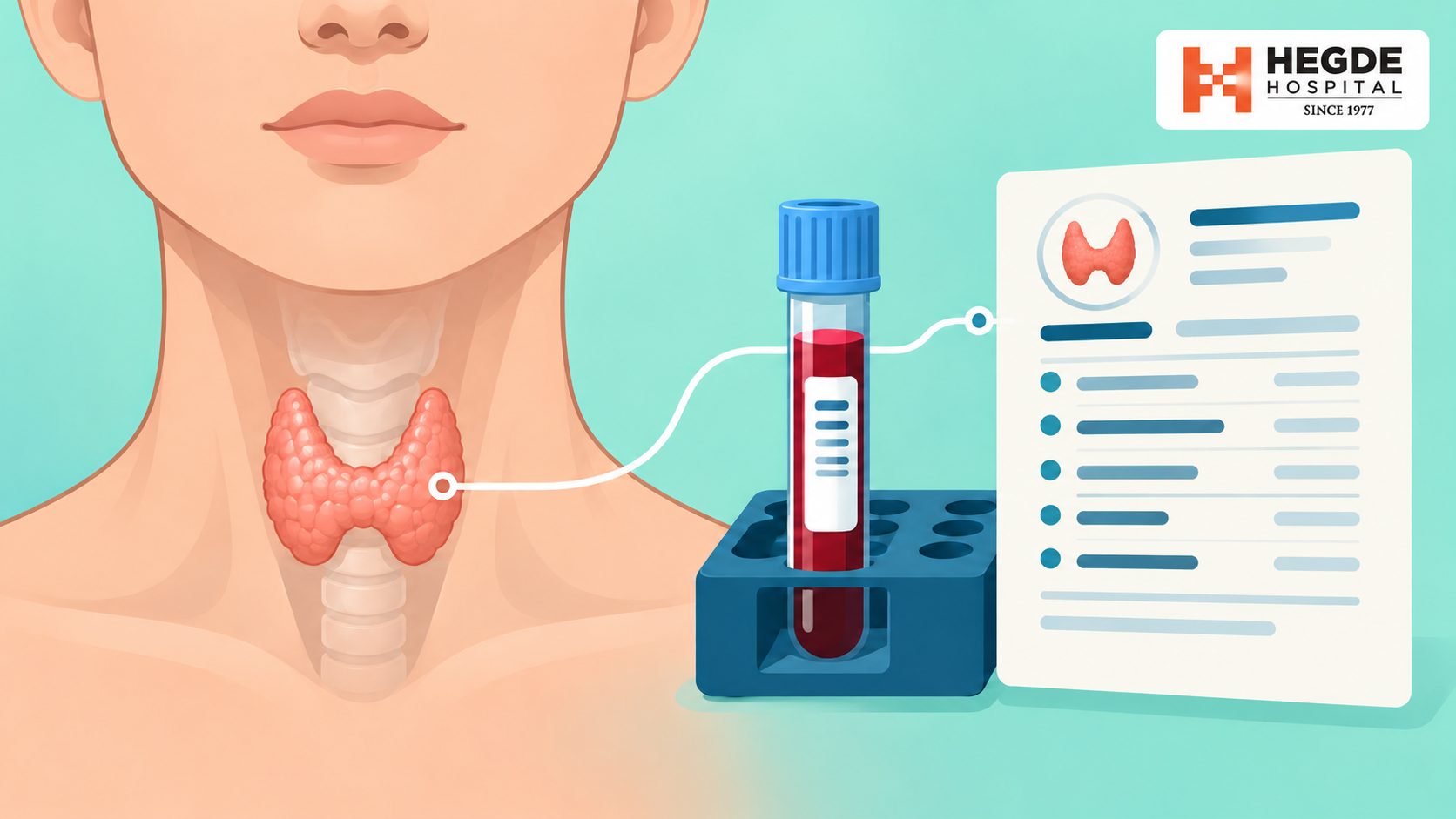
The thyroid is a small gland in the lower front of the neck. Its hormones help regulate many body functions. The pituitary gland, located at the base of the brain, adjusts the TSH signal according to the hormone levels it senses.
When the thyroid makes too little hormone, TSH commonly rises. When there is too much thyroid hormone, TSH commonly falls. This feedback pattern is useful, but there are exceptions, including problems involving the pituitary gland. That is why interpretation is more than checking whether a number is inside a box.
FT4 means free T4—the fraction not attached to blood proteins. Total T4 includes both attached and unbound hormone. These are different tests and should not be compared using the same reference range.
What do common result patterns suggest?
| Result pattern | What the clinician may consider |
|---|---|
| Raised TSH with low FT4 | An underactive thyroid arising from the thyroid gland itself |
| Low TSH with raised FT4 | An overactive thyroid pattern |
| Raised TSH with FT4 in range | A mild or subclinical underactive pattern; context and confirmation matter |
| Low TSH with FT4 in range | A mild overactive pattern or another explanation; further assessment may be needed |
| Low or in-range TSH with low FT4 | A pattern requiring careful interpretation, including possible pituitary or illness-related factors |
This table describes possibilities, not a diagnosis. It does not provide a threshold for starting treatment. Some results need repeat testing or additional assessment before a decision can be made.
Why is there no single normal range for everyone?
Different laboratories use different methods and reference ranges. Read the range printed next to your own result and check the unit. Do not compare a free-hormone result with a total-hormone result, or compare numbers expressed in different units.
Pregnancy, age, recent illness and the reason for testing can affect interpretation. Children's results need age-appropriate assessment. This article focuses on understanding routine adult reports and does not set pregnancy targets or children's treatment thresholds.
If you have previous reports, take the full reports to the appointment. A change over time may be more useful than a screenshot containing only the latest flagged value.
Does everyone need T3 and antibody tests?
No. A doctor chooses the initial tests according to the symptoms and history. In many adults, TSH is the starting test, with FT4 added when appropriate. T3 can be useful when an overactive thyroid is suspected, including situations where FT4 does not explain a low TSH.
Antibody tests may help identify why the thyroid is affected. They answer a different question from the hormone levels. An antibody result alone does not show exactly how much hormone the thyroid is producing, and repeating every antibody test is not automatically useful.
Ordering the largest panel is not necessarily the clearest route. Ask which clinical question each test is intended to answer.
What should you tell the doctor before testing?
Share your symptoms, previous thyroid history, current prescriptions and any non-prescription products you use. Some products can affect thyroid function or interfere with the test method. Do not stop a prescribed treatment or decide the blood-sample timing on your own; follow the doctor and laboratory's instructions.
Mention recent illness, pregnancy or plans for pregnancy when relevant. Preparation may also depend on other blood tests collected at the same visit. If instructions are unclear, ask before attending rather than guessing whether to fast.
Does an abnormal result mean treatment must start today?
Not always. A mildly abnormal result may need confirmation and review of possible influences. A clearly abnormal hormone pattern with relevant symptoms needs a different discussion. The decision depends on more than the size or colour of the flag.
The clinician may discuss the likely cause, whether additional testing is needed and when to repeat the measurement. Ask what result or symptom would change the plan. A repeat-test interval should be chosen for your circumstances rather than taken from a general internet schedule.
Can blood tests rule out a thyroid lump?
No. Thyroid function and thyroid structure are related but separate questions. A person can have normal hormone levels and still have a neck lump needing examination. Conversely, an abnormal hormone result does not automatically mean an ultrasound is necessary.
The doctor decides about imaging or other structural assessment from the examination and history. A neck swelling or persistent swallowing difficulty should be discussed directly rather than assumed to be explained by a normal blood result.
When should you arrange a consultation?
Arrange a review for an abnormal report, persistent symptoms or questions about ongoing thyroid care. Take the complete report and previous results. Pregnancy, a new neck swelling or worsening symptoms may call for an earlier appointment.
Severe or rapidly worsening symptoms, such as significant breathlessness, chest pain or fainting, need urgent medical evaluation. This report guide does not provide emergency management instructions.
Frequently asked questions
Is TSH a thyroid hormone?
TSH is made by the pituitary gland and signals the thyroid. T4 and T3 are thyroid hormones. The distinction explains why TSH often moves in the opposite direction to thyroid hormone levels.
Is FT4 the same as total T4?
No. FT4 measures the unbound fraction, while total T4 includes hormone attached to proteins. Use the range for the test actually performed.
Can a normal TSH explain all tiredness?
No. Tiredness has many possible causes. A clinician considers the broader history and examination rather than attributing every symptom to the thyroid.
Should I repeat the test immediately at another laboratory?
Discuss the reason for repeating it first. A repeat may be helpful, but timing and laboratory-method differences affect comparison. Bring both complete reports if testing has already been repeated.
Can I choose treatment from the high or low flag?
No. The flag identifies a result outside the laboratory range; it does not establish the cause or a treatment plan. Review it with a qualified clinician.
Next step
For information about specialist care available at the hospital, see the services directory. An abnormal hormone report and a neck lump ask different clinical questions, so explain both if they apply to you.
Use the Hegde Hospital doctor directory to find an appropriate clinician, or book an appointment. Bring your reports and a short symptom history. The most useful outcome is a clear explanation of what the results mean for you and what follow-up is needed.