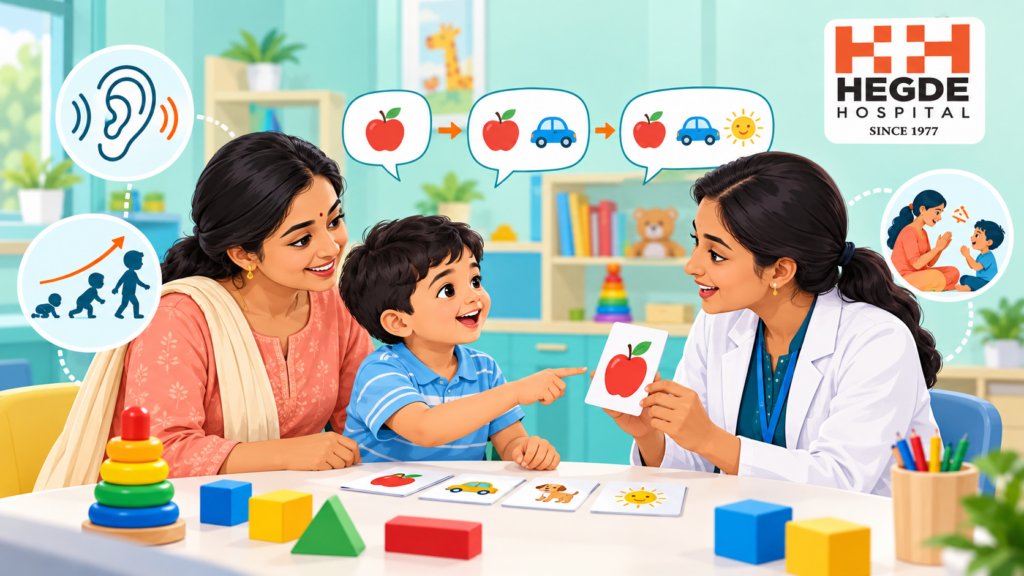
One behaviour does not diagnose autism. A child's pattern of communication, play and development helps guide screening, specialist assessment and useful support.
Perhaps your child rarely brings a toy to share, does not consistently respond when called, or becomes very distressed by a small change in routine. You may also have noticed delayed speech. These observations deserve a calm conversation with a paediatrician; they do not establish autism on their own.
Autism is a developmental condition that can affect social communication, interaction, interests and responses to the environment. Children have different strengths and support needs. An assessment should help the family understand those needs rather than reduce a child to a list of things they cannot do.
The direct answer
Seek a developmental review if you are concerned about a persistent pattern in communication, play or behaviour. A screening questionnaire identifies whether a closer assessment is needed; it cannot confirm a diagnosis. Autism is diagnosed through developmental history and professional observation, not a single blood test or scan.
Which observations are useful to discuss?
Notice how your child shares interest, uses gestures, responds to people and plays, as well as how many words they use. Some children may infrequently point to share something interesting, have difficulty with back-and-forth interaction or respond inconsistently to their name. Repetitive movements, strongly repeated play patterns, difficulty with changes or unusual responses to sounds and textures may also be relevant.
No single observation proves autism. Similar concerns can occur with hearing differences, language delay or other developmental conditions. Some autistic children use many words or make eye contact. The presence of a particular skill does not settle the question either way. Avoid repeatedly testing a child or insisting on eye contact to see whether they “pass”.
Describe examples from ordinary situations: what happens during play, meals, family interaction or preschool. Tell the clinician what the child enjoys and does well. This helps explain both strengths and difficulties across settings rather than relying only on behaviour during a short appointment.
Is speech delay the same as autism?
No. Speech or language delay can have several causes and can occur with or without autism. The clinician looks at understanding, gestures, shared attention, play, hearing and overall development, not just the number of spoken words. The speech-delay guide explains why hearing and communication assessment matter.
| Step | Purpose | What it cannot do alone |
|---|---|---|
| Ongoing developmental monitoring | Records skills and family concerns over time | Does not provide a diagnosis from a milestone list |
| Structured screening | Identifies a pattern that may need closer assessment | Does not confirm or exclude autism with certainty |
| Specialist developmental assessment | Combines history, observation and suitable assessment tools | Does not predict every future ability or support need |
General developmental milestones provide context. They should not be used to dismiss a parent's concern because a child walks on time or has one advanced skill.
When should screening or referral happen?
Discuss concerns when they arise rather than waiting for a later birthday or for school to begin. The American Academy of Pediatrics recommends autism-specific screening at 18 and 24 months, but a concern at another age still warrants review. Ask your child's clinician how developmental checks and referrals are arranged locally.
Loss of previously acquired words, social engagement or motor skills needs prompt paediatric assessment. Tell the doctor clearly what the child used to do and what has changed. Regression has more than one possible explanation, so it should not simply be labelled autism without evaluation.
What happens at an assessment?
A paediatrician may begin by reviewing pregnancy and birth history, development, hearing, medical history and family observations. Depending on the findings, the child may be referred to a team with developmental, psychological, communication or occupational expertise. The exact pathway depends on the child's needs and the services available.
Specialists may observe play and interaction, speak with caregivers and use structured tools. Hearing assessment can be important when responses or language are uncertain. Other medical tests are selected for specific findings; a routine scan or a large blood-test package does not diagnose autism. Assessment may take more than one visit, especially if information differs between home and preschool.
Bring records, previous hearing or developmental reports, brief examples and preschool observations if available. Use the languages your family normally speaks when describing the child's communication. Ask how the assessment will account for hearing, language and the child's comfort, and who will explain the findings and next steps.
Can useful support begin before a final diagnosis?
Yes. Identified communication, daily-living or developmental needs can be addressed while diagnostic assessment continues. The plan should have practical goals, suit the child's strengths and involve the family. Support may include communication work, help with everyday participation and guidance for caregivers or preschool staff.
Do not accept a guarantee that a programme will “cure” autism or make every child develop in the same way. Ask how goals are chosen, whether the child is comfortable and how progress is reviewed. Support should respect the child, not punish differences or make eye contact the sole measure of success.
The hospital's paediatric service can be a starting point for review and appropriate referral. At your appointment, ask for a clear follow-up plan even when the diagnosis remains uncertain. A child's support needs deserve attention throughout the process.
Frequently asked questions
Does not responding to a name prove autism?
No. Hearing, attention, language and developmental differences may all affect responses. A persistent concern should be assessed in the context of the child's wider communication and development.
Can a child who talks or makes eye contact be autistic?
Yes. Autistic children have a wide range of skills. Speaking or making eye contact does not rule out autism; a specialist considers the whole developmental pattern and support needs.
Does a positive screening result mean a diagnosis?
No. It means further assessment may be appropriate. A diagnosis requires developmental history, professional observation and suitable assessment, including consideration of other explanations.
Is there a blood test or brain scan that confirms autism?
No single blood test or scan diagnoses autism. Tests may sometimes be selected for another medical question or associated finding, but they do not replace developmental assessment.
Should we wait until school starts before asking for help?
No. Discuss concerns when they arise, and seek prompt review if skills are lost. Support for identified developmental or communication needs can begin before the final diagnostic process is complete.