Tennis elbow can affect people who never play tennis. A careful assessment links the location of pain with gripping tasks and guides an individual recovery plan.
Lifting a cup, turning a key or carrying a shopping bag should be ordinary tasks. When each grip brings pain to the outside of your elbow, even light work can become frustrating.
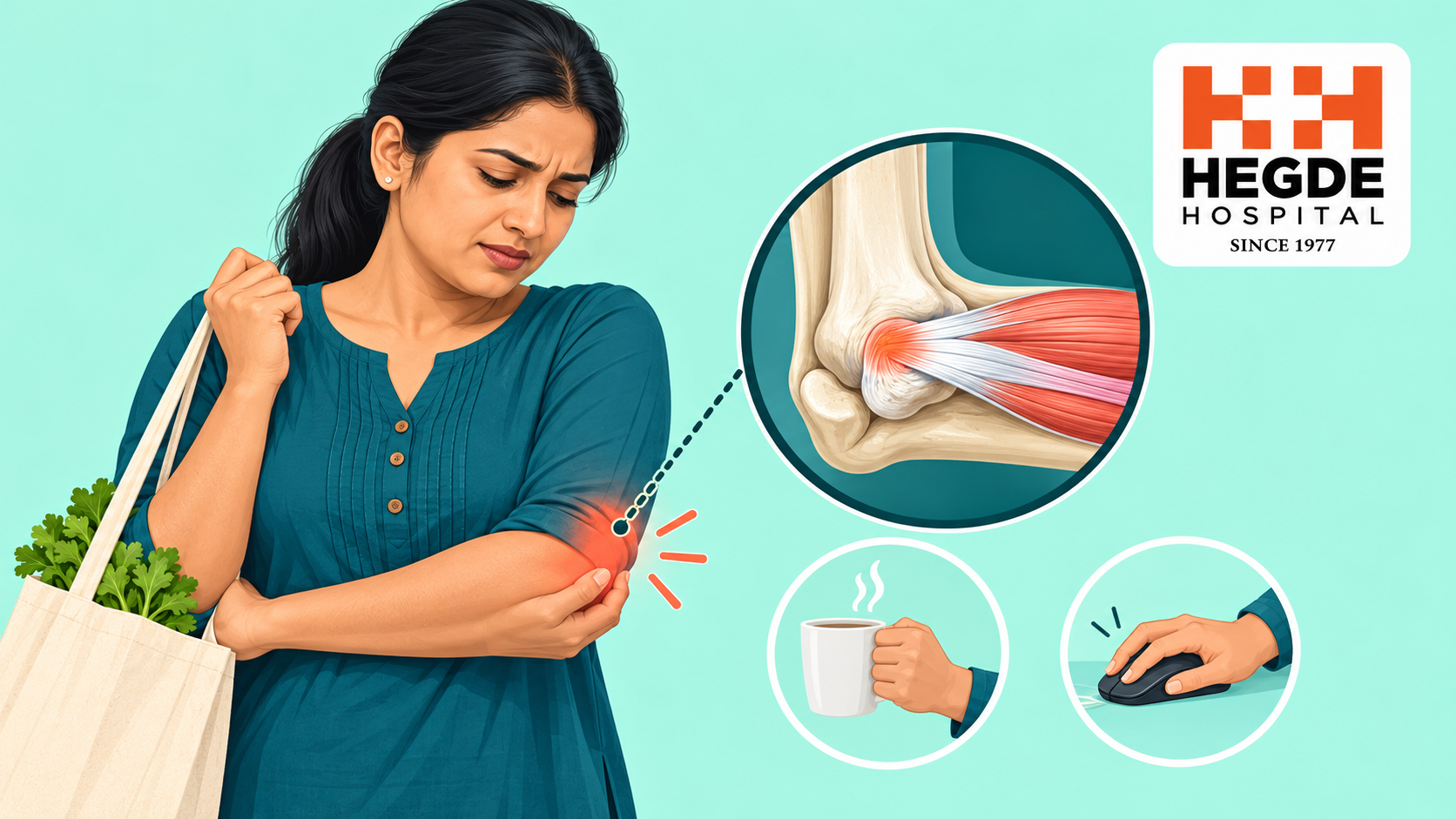
Tennis elbow is one possible explanation, including in people who have never held a racquet. The name describes a tendon problem around the outer elbow; it does not replace an examination when the pattern is unusual or symptoms persist.
The direct answer
Tennis elbow affects the tendons that attach forearm muscles to the outside of the elbow. Repeated gripping and wrist work can overload this area. Diagnosis is usually based on the history and examination. Most people begin with non-surgical care and a gradual rehabilitation plan; scans and operations are reserved for selected situations.
What does tennis elbow usually feel like?
Pain is commonly centred over the bony prominence on the outer elbow and may extend into the forearm. Gripping, lifting with the palm facing down, twisting a tool or moving the wrist can reproduce it. The grip may feel weaker because using it hurts.
Symptoms often develop over weeks rather than after one memorable injury. Manual work, cooking, painting, repeated computer tasks and racquet sports can all be relevant. Sometimes there is no obvious trigger. Symptoms in the dominant arm are common, but either arm can be affected.
Tell the clinician whether pain is mainly at the inner elbow, starts in the neck, or comes with tingling. Those details may suggest another or an additional problem. Avoid repeatedly testing a painful grip to prove a diagnosis yourself.
How is it different from other arm problems?
| Main pattern | What the clinician considers |
|---|---|
| Outer elbow pain with gripping or wrist use | Tennis elbow and nearby tendon problems |
| Pain on the inner side of the elbow | A different tendon attachment problem |
| Tingling, numbness or pain travelling from the neck | Possible nerve involvement or referred pain |
| Marked stiffness, swelling or pain after an injury | Joint or injury-related causes needing a different assessment |
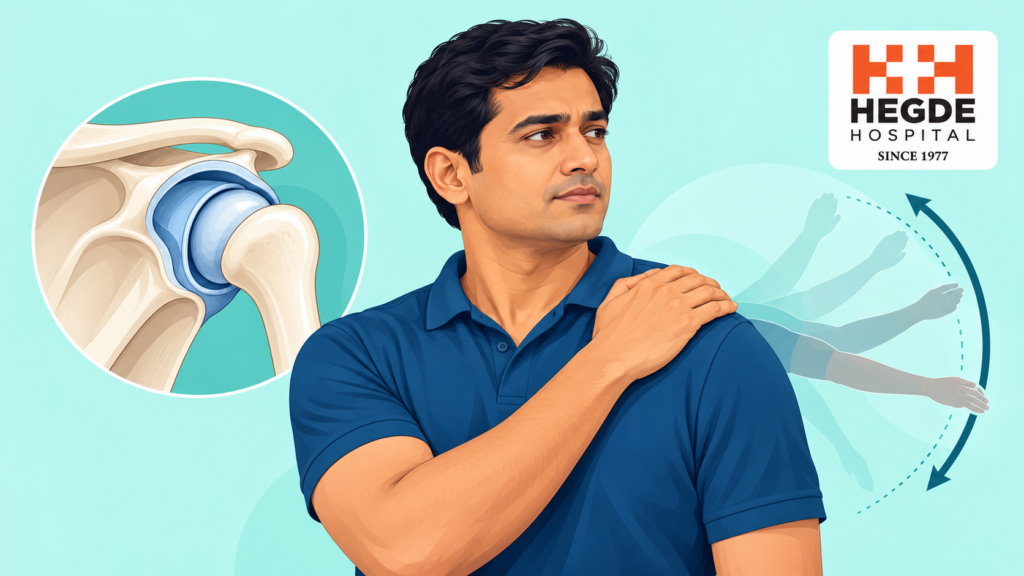
This comparison helps describe symptoms; it cannot confirm the cause at home. Shoulder stiffness is a different complaint, explained separately in our frozen shoulder guide.
What happens during the consultation?
Expect questions about where pain began, which tasks aggravate it, earlier injuries and the effect on sleep or work. A clinician may gently press around the outer elbow and assess the wrist, fingers, elbow movement and grip. Examination can include the neck and nerve function when symptoms suggest another source.
Bring details of your job rather than only its title. For example, explain how often you carry loads, use tools or perform the same wrist movement. A short account of the task that became difficult is often more useful than a list of internet diagnoses.
Do I need an X-ray or scan?
Many typical cases do not need imaging to establish the initial diagnosis. An X-ray can help investigate a possible bone or joint cause. Ultrasound or MRI may be considered when the diagnosis is uncertain, symptoms persist despite an appropriate plan or another injury is suspected.
A scan showing tendon change does not, by itself, determine how much pain you should have or which procedure you need. Test results should be interpreted with your symptoms and examination. Nerve tests are selected for a suspected nerve problem, not routinely for everyone with outer elbow pain.
What treatment can be discussed?
The first plan usually combines review of painful work demands, symptom management selected by a clinician and progressive rehabilitation. A physiotherapist can decide which movements and strengthening are appropriate for your stage. This is different from copying a forceful stretching routine or continuing through increasing pain.
A support strap or brace may suit some people, but fit, purpose and duration should be discussed. It does not repair every cause of elbow pain. Similarly, injections or other procedures are not guaranteed shortcuts. Ask what benefit is expected, how long it may last, what uncertainty remains and how rehabilitation fits around it.
Surgery is generally discussed only for persistent, limiting symptoms after a substantial trial of suitable non-surgical care, often many months, with the diagnosis reconsidered first. The decision depends on your situation rather than a fixed deadline or the mere presence of a scan abnormality.
How long can recovery take?
Improvement is often gradual. Some people improve over several weeks, while tendon symptoms can continue for months and occasionally beyond a year. Recovery time varies with symptom duration, repeated loading, other conditions and response to rehabilitation.
Use practical goals: holding a cup, turning a handle and completing a work task comfortably. Your clinician or therapist can agree how activity is progressed and when to reassess. A brief pain-free period is not always a reason to jump immediately back to the heaviest task.
When should I get reviewed sooner?
Book a routine assessment if outer elbow pain is not settling or is disrupting daily work. Seek earlier review for increasing weakness, numbness, substantial swelling or persistent night pain. A hot swollen joint with fever, or major pain after an injury, needs prompt medical evaluation rather than an assumption of tennis elbow.
At follow-up, explain which tasks improved and which still cause difficulty. If the plan is not working, the diagnosis and loading demands may need another look. You can review the hospital specialties, find the appropriate clinician and request an appointment.
Frequently asked questions
Can tennis elbow happen without playing tennis?
Yes. Everyday gripping, tool use and repeated wrist activity can contribute. The condition is named after a familiar sporting association, not a requirement to have played that sport.
Does a weak grip mean a tendon has snapped?
Not necessarily. Pain can limit gripping. Sudden loss of function, an injury or progressive weakness needs examination because it can have a different explanation.
Is MRI needed before physiotherapy?
Usually not in a typical presentation. The clinician can often make an initial diagnosis through examination and reserve imaging for uncertainty, another suspected cause or symptoms that do not improve.
Can I keep working during recovery?
Often some work can continue, but the task and symptom pattern matter. Discuss temporary adjustments and a gradual return with the clinician or therapist instead of following a universal rest period.
Does persistent pain mean I need surgery?
No. Persistent symptoms call for reassessment of the diagnosis and earlier treatment. Surgery is considered for selected people after appropriate non-surgical care, with benefits and risks discussed individually.