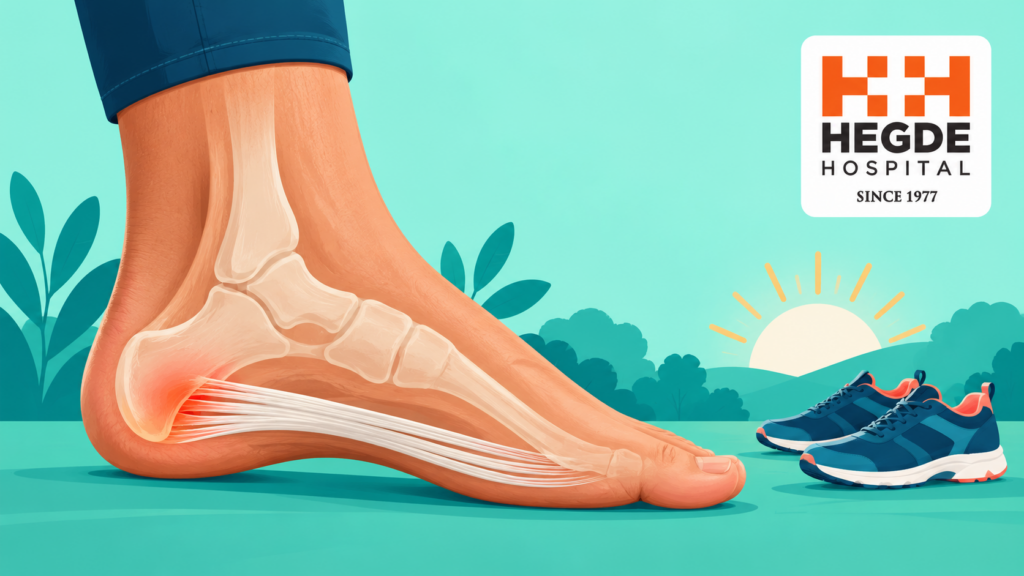
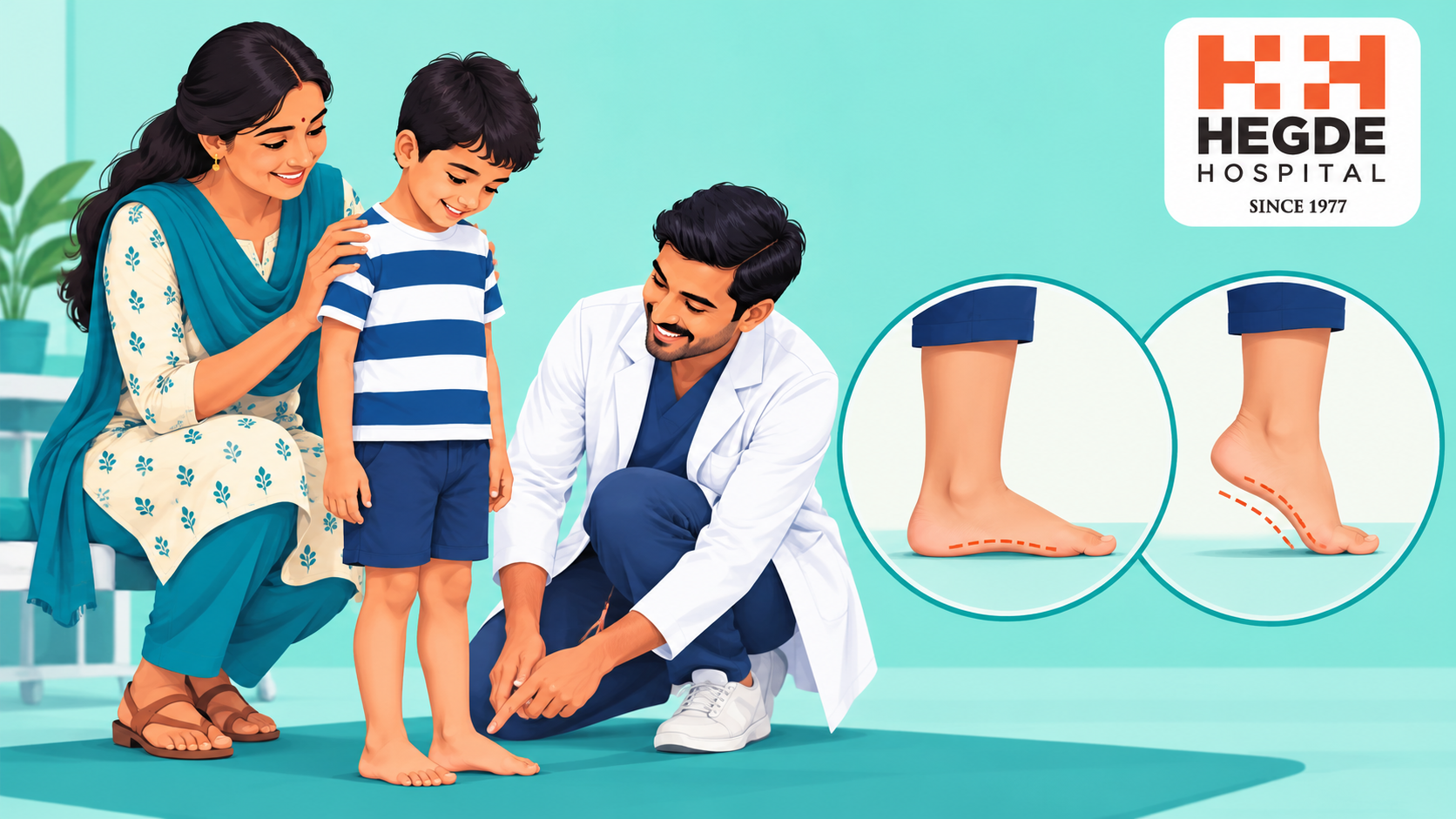
A low foot arch is often a normal childhood variation. Pain, stiffness, one-sided changes and difficulty playing matter more than a footprint alone.
You notice that most of your child’s sole touches the floor or that their ankles seem to lean inward. A relative suggests corrective shoes, while another says the child will grow out of it. The useful first question is whether the feet are flexible, comfortable and working normally.
Flat feet describe a low or absent arch along the inner side of the foot when standing. Many young children have this appearance as part of normal development. A footprint or photograph alone cannot show whether a child needs treatment.
The direct answer
Painless flexible flat feet usually need no treatment. In a flexible foot, the arch becomes visible again when the child sits without bearing weight or rises onto the toes during the clinician’s examination. The child can generally walk, run and play comfortably.
Pain, stiffness, a change affecting only one foot or difficulty keeping up with everyday activities deserves assessment. Special shoes or inserts do not create an arch in an otherwise healthy, painless flexible foot. The aim of care is comfort and function rather than making every foot look identical.
Is there one age when the arch must appear?
Arches develop over the childhood years and the timing varies. Some children continue to have low arches into later childhood or adulthood without pain or limitation. An age alone is therefore not a reason to label a comfortable foot abnormal.
Ask about your child’s walking, running and participation rather than comparing only their feet with siblings. If concerns extend beyond foot shape to walking development, the child developmental milestones guide can help you prepare questions for a broader review. Flat feet alone do not establish developmental delay.
How are flexible and stiff flat feet different?
| Finding | What it may mean | Usual next step |
|---|---|---|
| Both feet are flexible and painless | Common normal variation | Reassurance after an appropriate examination |
| Flexible feet with persistent discomfort | Tight tissues or another contributor may be present | Assess symptoms and activity, then choose support if needed |
| Arch stays absent and the foot is stiff | A different structural problem may be present | Specialist assessment; imaging may be appropriate |
| One foot changes or the two feet are very different | Requires an explanation | Arrange an individual assessment |
Do not force a painful child onto tiptoes to test the arch. The examination should be suitable for their age and comfort. A new limp should not be dismissed as simply flat feet.
What will the clinician ask and examine?
Describe where it hurts, when discomfort begins and whether the child avoids running or asks to be carried more often. Mention previous injury, longstanding medical conditions, family history and any change in walking. Bring the shoes the child wears most frequently.
The clinician observes standing and walking, checks movement and flexibility, looks for a tight heel cord and assesses tenderness or uneven wear. The knees, hips, muscle function or neurological signs may also be examined when relevant. The child’s symptoms guide the assessment; shoe wear by itself does not confirm disease.
Does every child need an X-ray?
No. Typical painless flexible flat feet are usually assessed clinically. Weight-bearing X-rays may be considered for a stiff, painful or unusual foot or when a structural cause is suspected. Further imaging depends on what the examination finds.
Ask what an investigation would change. Repeated scans solely to monitor the shape of comfortable feet are not usually necessary. If reports have already been obtained, bring them so the clinician can avoid unnecessary duplication.
When might insoles or physiotherapy help?
For a child with discomfort, a clinician may recommend footwear advice, selected exercises or an insole to improve comfort. Tight heel cords may need a specific rehabilitation plan. Supports are chosen for symptoms and function; they do not permanently build an arch.
Custom devices are not automatically better or necessary. Ask what problem a proposed support is intended to address, how fit will be checked as the child grows, and when its benefit will be reviewed. Do not begin a corrective exercise routine or buy braces solely on the basis of an online footprint comparison.
Surgery is rarely needed for flexible flat feet. It is considered only in selected persistent painful or stiff cases after specialist assessment and discussion of alternatives, limitations and risks. Appearance alone is not a reason for an operation.
Can the child continue school and sport?
A child with painless flexible feet can generally remain active without restrictions based only on arch shape. Pain that changes walking or participation needs assessment. The clinician can decide whether a temporary activity adjustment or a supervised return is appropriate.
For review, agree on a practical goal such as comfortable school walking or joining a preferred game. A scheduled follow-up should assess pain, participation, footwear fit and whether any recommended support has helped. Frequent appointments are not automatically needed for a comfortable normal variation.
When should you seek medical attention sooner?
Arrange review for persistent pain, stiffness, one-sided changes, repeated limping or difficulty running and jumping. Sudden refusal to walk, fever with a hot swollen foot or significant injury requires urgent medical assessment. These should not be attributed to flat feet without examination.
Frequently asked questions
Will flat feet always cause future knee or back problems?
No. Many people with flexible low arches have no pain or activity limitation. A foot shape alone cannot predict future problems. Current symptoms and function are more useful reasons to seek advice.
Do special shoes make an arch grow?
They do not create an arch in a painless flexible foot. Footwear should fit comfortably and suit activity. If pain is present, the clinician may recommend support for comfort rather than promise permanent correction.
Is a flat footprint enough for a diagnosis?
No. A footprint cannot assess flexibility, tenderness, movement or the child’s ability to walk and play. Those findings help distinguish a normal variation from a condition needing care.
Does a child with no pain need to stop running?
Usually not when examination confirms painless flexible flat feet. Restriction based only on appearance is generally unnecessary. New pain or a change in participation should prompt a review.
Which doctor should assess painful or stiff flat feet?
A paediatric clinician can assess the concern and arrange paediatric orthopaedic review when needed. Pain, stiffness, an unusual one-sided finding or a persistent limp may warrant specialist evaluation.
Discuss your child’s symptoms through hospital services, check the doctor directory or book a consultation. Explain what the child finds difficult rather than requesting correction of the arch alone.