
Motion తర్వాత నొప్పి, మంట ఎందుకు? Fissure లక్షణాలు
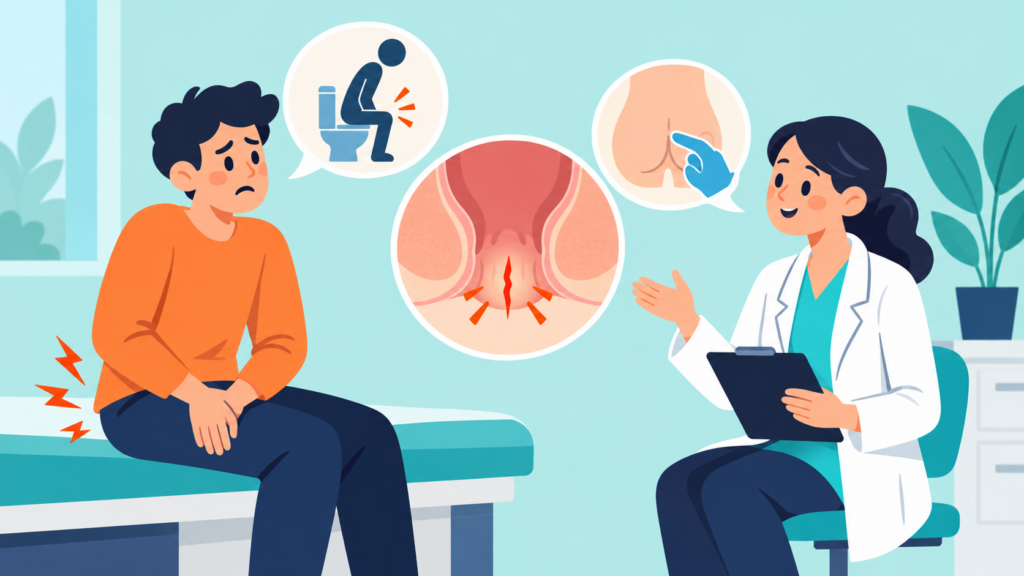
మలవిసర్జన సమయంలో కోసినట్టుగా నొప్పి, తర్వాత మంట ఎందుకు వస్తాయి? ఫిషర్, పైల్స్, ఇన్ఫెక్షన్ తేడా మరియు డాక్టర్ను ఎప్పుడు కలవాలో తెలుసుకోండి.
Chronic Fissure in Telugu: ఫిషర్ ఎందుకు మానడం లేదు?
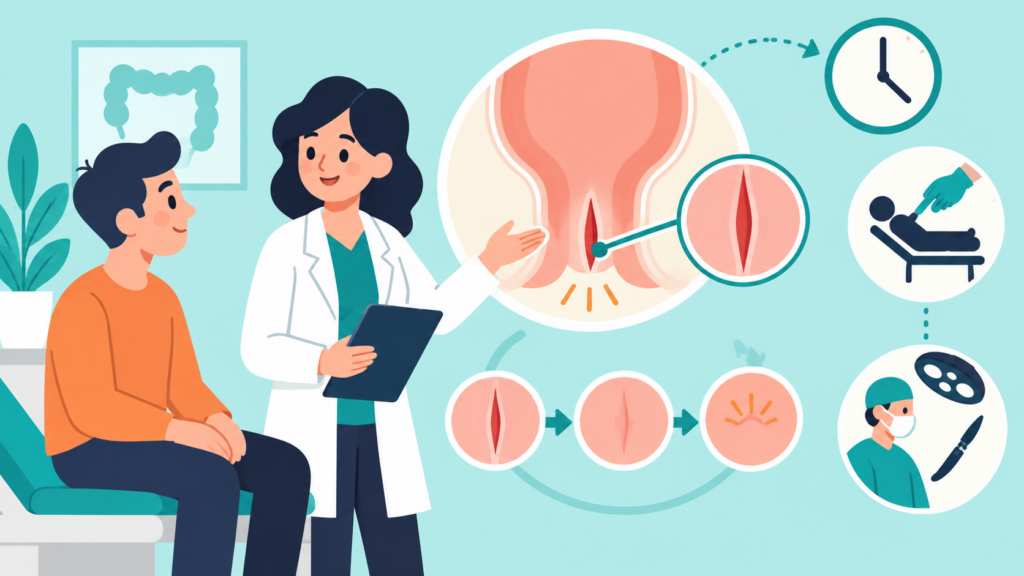
ఫిషర్ వారాలుగా ఎందుకు మానడం లేదు? మలబద్ధకం, కండర బిగుతు, చర్మపు మడత, చికిత్స ఎంపికలు మరియు ఆపరేషన్ ఎప్పుడు అవసరమో తెలుసుకోండి.
Anal Abscess vs Fistula in Telugu: చీము గడ్డ, ఫిస్టులా తేడా
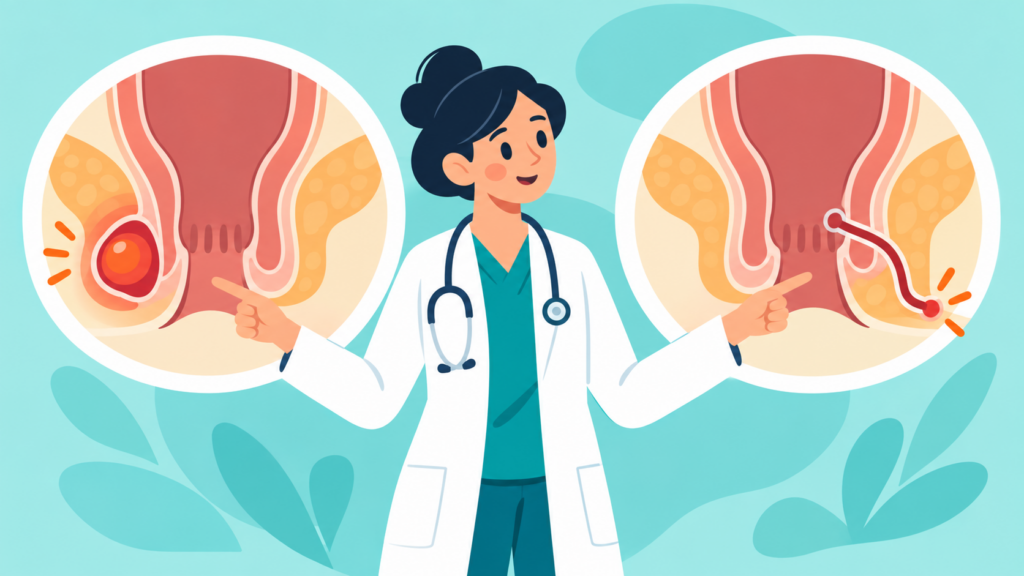
మలద్వారం దగ్గర నొప్పితో కూడిన వాపు, జ్వరం లేదా చీము ఉంటే abscessనా fistulana? చీము తొలగింపు, MRI మరియు చికిత్స గురించి తెలుసుకోండి.
Anal Fistula Surgery: Types, Recovery Time and Risk of Recurrence
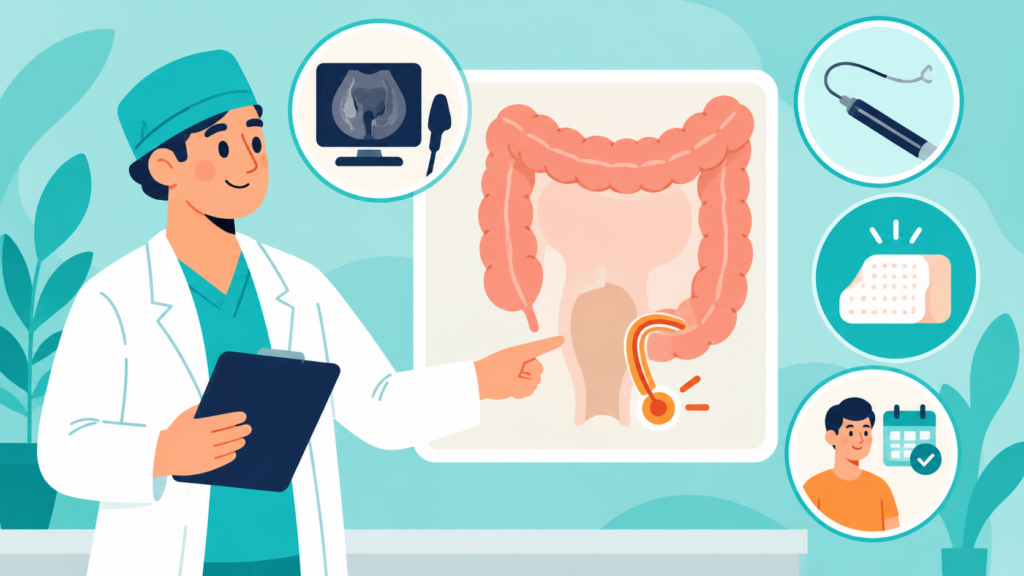
Anal fistula surgery is selected according to tract anatomy and sphincter involvement. The central goal is to heal the fistula while protecting bowel control.
Recurrent Anal Fistula: Why It Returns and When MRI Is Needed
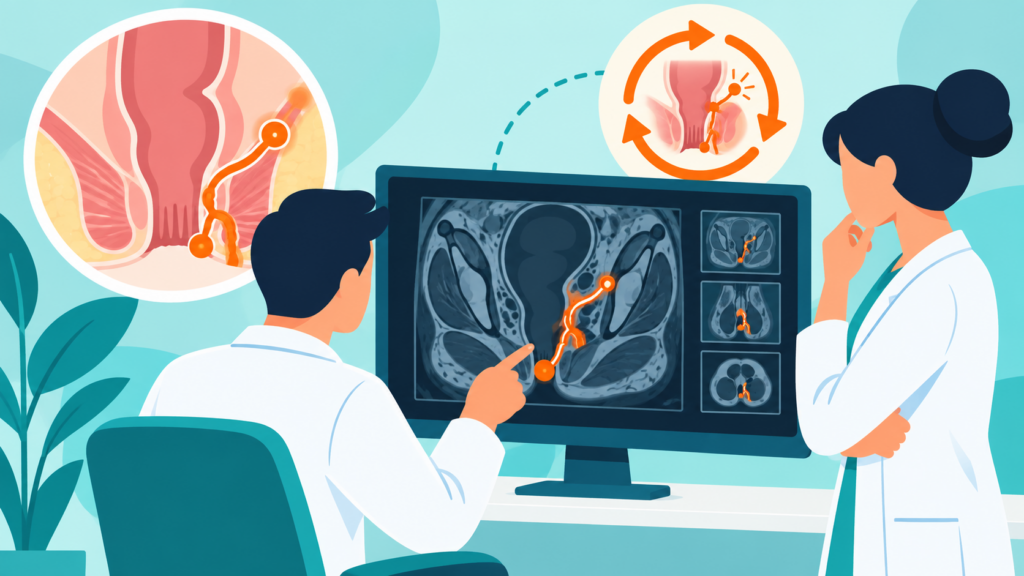
A recurrent anal fistula may result from a hidden branch, persistent internal opening, new abscess or underlying bowel inflammation. MRI often helps map altered anatomy before repeat surgery.
Inguinal Hernia: Groin Swelling, Symptoms and Surgery
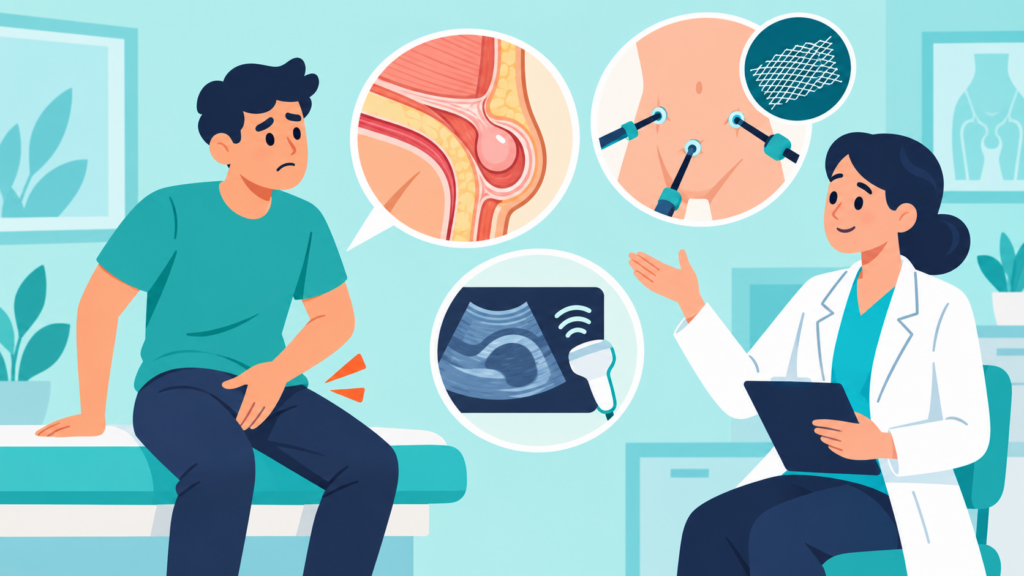
An inguinal hernia often appears as a groin swelling that becomes more noticeable with standing, coughing or lifting. Sudden pain with vomiting or an irreducible lump needs urgent care.
Hernia Mesh Surgery: Is Mesh Safe and Is It Always Required?

Mesh reinforces a hernia repair and can reduce recurrence in many settings, but it is not automatically required for every defect. Choice depends on anatomy and individual risk.
Hiatal Hernia and Acid Reflux: Symptoms, Tests and Treatment
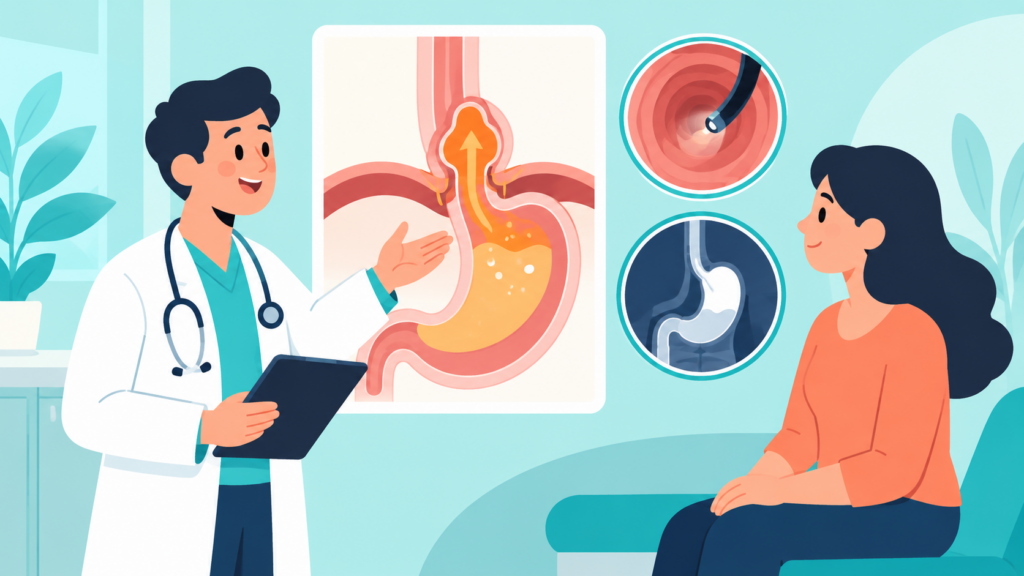
A hiatal hernia occurs when part of the stomach moves through the diaphragm. It may contribute to reflux but does not explain every episode of chest discomfort or indigestion.
Stomach Ulcer Symptoms: Pain Location, Bleeding Signs and Tests

A stomach or duodenal ulcer may cause upper abdominal pain, but some first present with bleeding. Black stool, vomiting blood or sudden severe pain requires urgent care.
Endoscopy vs Colonoscopy: Differences, Preparation and When Each Test Is Needed
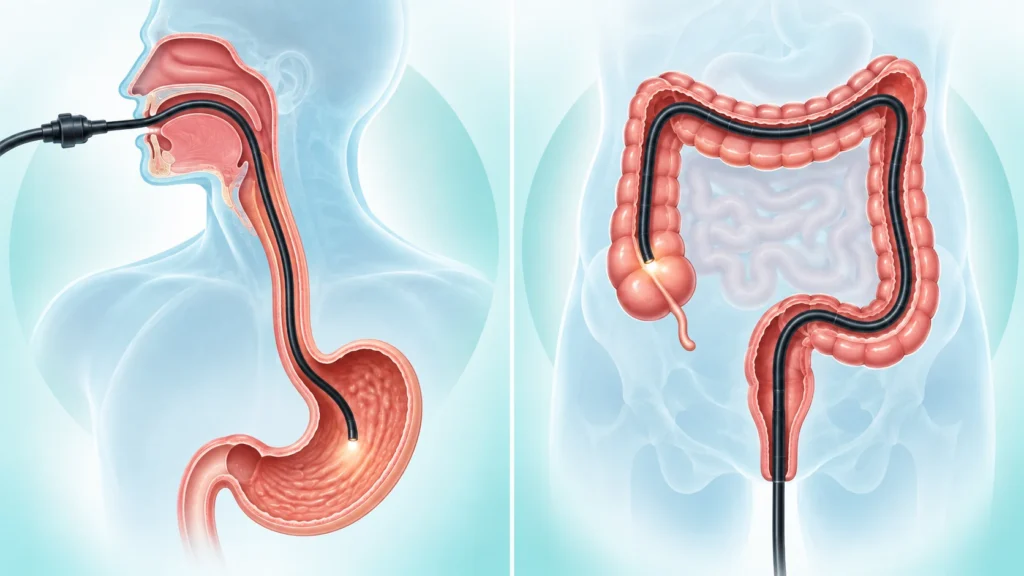
Upper endoscopy examines the food pipe, stomach and duodenum; colonoscopy examines the rectum and colon. Symptoms and the clinical question determine which test is appropriate.