Many children with inward-pointing feet improve as they grow. Pain, stiffness, one-sided changes and difficulty joining everyday activities deserve an individual assessment.
Your child runs across the room with their toes pointing inward. You may notice occasional trips or hear a suggestion to buy corrective shoes. Before choosing a treatment, it helps to understand where the inward turn comes from and whether it affects comfortable movement.
Intoeing describes the direction the feet point during walking. It is a description of a walking pattern, not a diagnosis made from a photograph. A child’s age, development, symptoms and examination help distinguish common variation from a problem needing further care.
The direct answer
Many children with intoeing improve naturally as they grow and do not need corrective treatment. A child who walks and plays comfortably with a stable, age-appropriate pattern can often be observed after assessment.
Pain, stiffness, progressive change, a marked difference between the two sides or repeated tripping that limits participation should be reviewed. A sudden new limp or refusal to bear weight should not be attributed to an old walking pattern without medical assessment.
Why can the feet turn inward?
The direction of the foot during walking reflects the alignment of the foot, shin and thigh. An inward curve of the front of the foot is one possible contributor. An inward twist of the shin or the orientation of the thigh bone can also produce intoeing.
These patterns are noticed at different stages of childhood and may run in families. The same appearance can come from different levels of the leg. That is why treating the shoe or foot position alone may not address what is actually being observed.
Intoeing and flat feet are different features. A low arch does not by itself explain an inward walking direction. Our child flat-foot guide addresses arch flexibility and pain as a separate question.
What should parents tell the clinician?
Describe when you first noticed the pattern, whether it affects one or both feet and whether it has changed. Explain where pain occurs and what the child avoids: running, playground games, longer walks or other usual activities.
Mention previous injury, a limp, delayed walking, muscle stiffness or other developmental concerns. Bring the shoes usually worn. A short existing video of ordinary walking may help describe an intermittent concern, but do not make a child walk through pain to obtain one.
What does the examination involve?
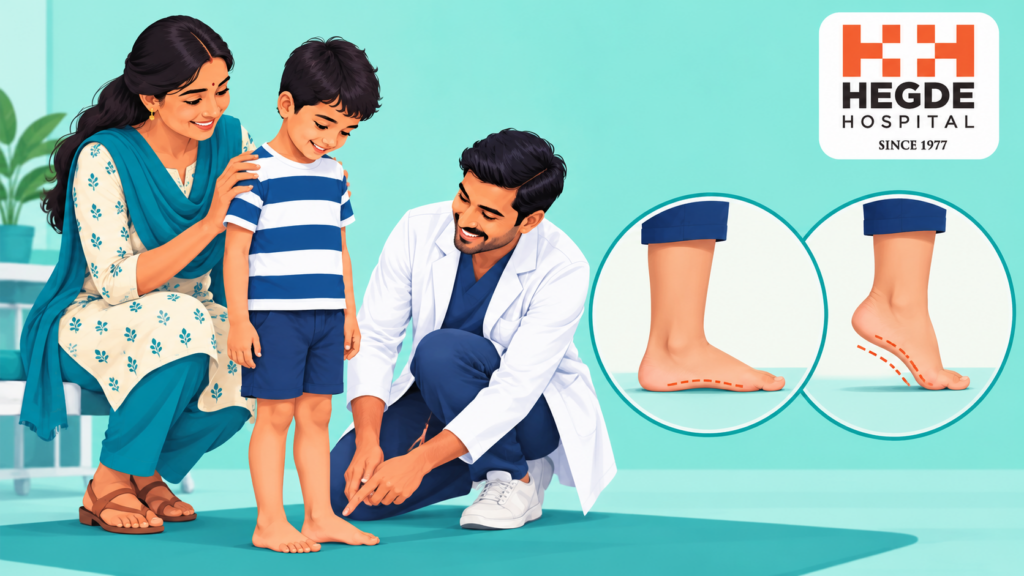
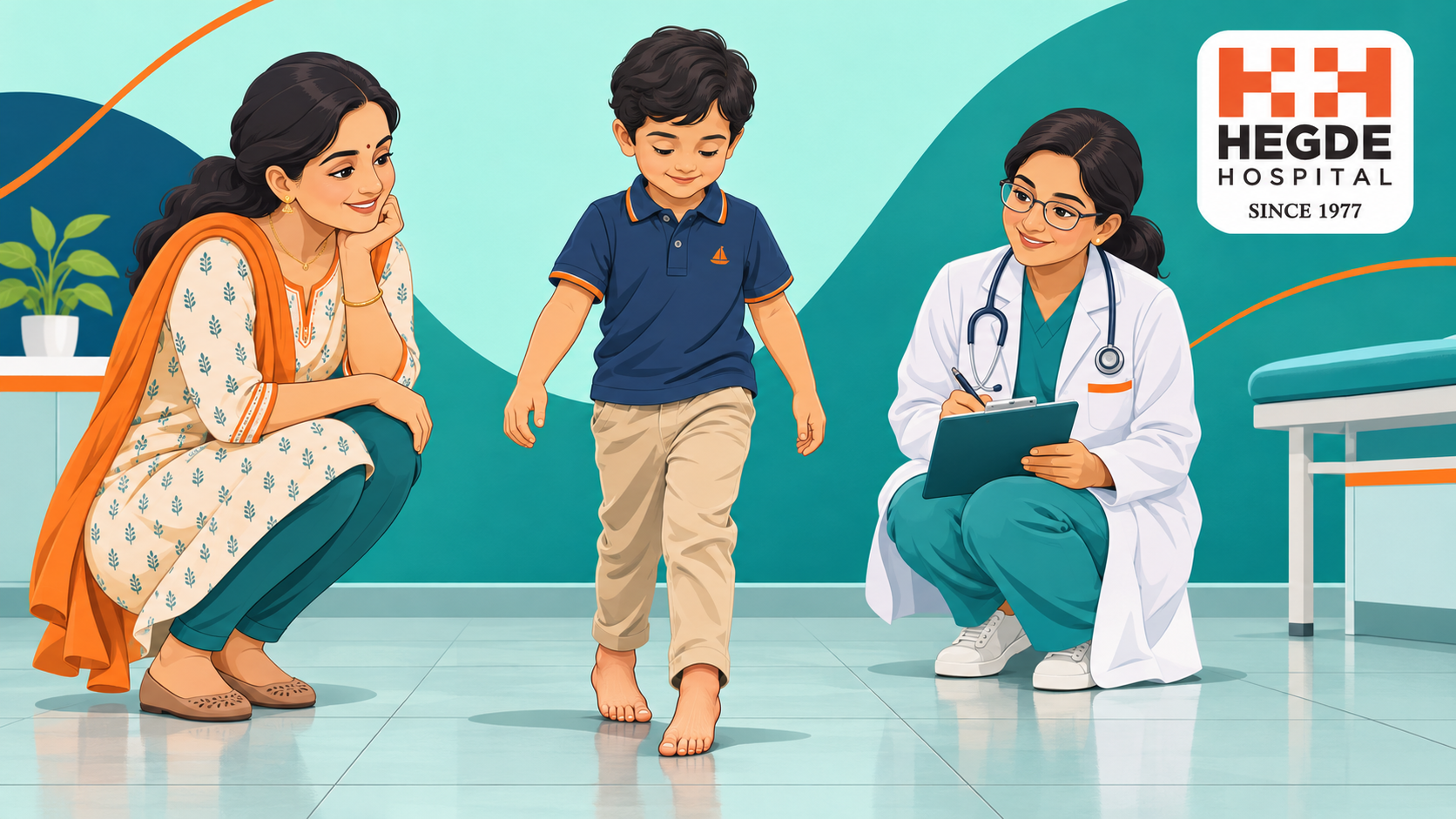
The clinician watches the child stand and walk, then examines foot shape and flexibility, shin alignment and hip movement. The knees, muscle tone and neurological findings may be assessed when relevant. The examination should be gentle and appropriate for the child’s age.
The aim is to locate the source of the inward turn and understand function. Shoe wear or a footprint alone cannot supply that information. Parents should not forcefully rotate the child’s legs or try to measure angles at home.
Does every child need an X-ray or corrective shoes?
No. Typical painless developmental intoeing is usually assessed clinically. Imaging is selected when symptoms or an unusual examination raise another question, or for specialist planning in a severe persistent case.
Special shoes, inserts and braces do not routinely speed correction of common developmental shin or thigh rotation. Generic exercise programmes should not be sold as a guaranteed way to straighten the legs. Ask what an intervention is intended to change and how benefit will be reviewed.
An infant with a rigid or marked foot curve needs individual assessment; advice for a flexible walking-age variation should not be applied to every newborn foot. Rare severe persistent cases affecting function may need specialist treatment. Surgery is not decided by appearance or an age threshold alone.
What is a sensible follow-up plan?
Discuss comfortable activity, whether observation is appropriate and which changes should trigger another appointment. A child confirmed to have a painless normal variation can generally continue ordinary play. New pain or loss of participation should change the plan.
Repeated tripping in a school-age child, progressive asymmetry or stiffness warrants review rather than repeated reassurance from online photographs. The clinician may arrange paediatric orthopaedic assessment when needed. Confirm referral availability rather than assuming a particular specialist attends every site.
Seek urgent medical assessment for sudden inability to walk, significant injury or a painful swollen joint with fever. These are separate from routine intoeing follow-up.
The paediatric service can discuss the initial assessment; use the appointment page to arrange a review and describe the child’s symptoms.
Frequently asked questions
Is intoeing the same as flat feet?
No. Intoeing describes walking direction; flat feet describe the arch. They can coexist, but they need different assessments.
Will every child grow out of it by the same age?
No. Timing depends on the source of the turn and the child’s development. Symptoms and function matter more than a single deadline.
Do corrective shoes always help?
No. They do not routinely correct common developmental shin or thigh rotation. A device should have a clear individual indication.
Should a child stop sport because the toes point inward?
Usually not when examination confirms a painless normal variation. Pain, limping or difficulty keeping up warrants an individual review.
When is a specialist opinion useful?
It may be appropriate for severe, progressive, asymmetric or painful intoeing, stiffness, unusual examination findings or persistent functional difficulty.