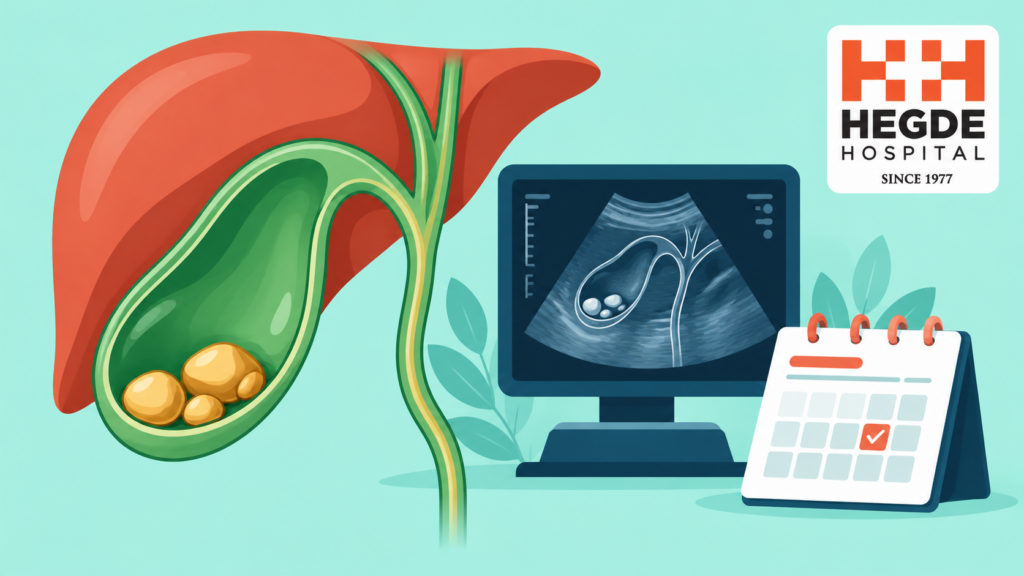

A planned gallbladder operation starts with a review of your health, reports and individual preparation needs. Every patient does not need the same tests.
Your surgeon has recommended gallbladder removal, and the next appointment is described as a preoperative assessment. You may wonder whether this means another scan, a large package of blood tests or a decision about whether surgery can go ahead.
This visit brings your gallbladder findings together with your general health and the anaesthetic plan. It is a chance to ask questions and leave with clear instructions for your own operation.
The direct answer
Before planned laparoscopic gallbladder surgery, the team reviews your symptoms and existing reports, medical history, current treatments, allergies and previous experiences with anaesthesia. They assess which further tests would change your care, explain individual preparation and check practical support after discharge.
There is no single compulsory test list for every patient. A normal result also does not make an operation risk-free. The purpose is to recognise relevant issues and make an appropriate plan with you.
What should I bring and explain?
Bring your ultrasound and other reports, previous operation details and an accurate list of everything you take. Include non-prescription products, but do not start or stop anything using an internet checklist. Tell the team about allergies, bleeding problems, diabetes, heart or breathing conditions and any difficulties during a previous anaesthetic.
Describe how active you normally are and any recent change in your health. If pregnancy is possible, raise this privately with the team; any testing should be explained and consented to. A family member can help you remember questions, but decisions and consent remain yours.
Why are the gallbladder reports reviewed again?
The team confirms what the scan shows, where the stones are and whether the findings fit the reason for your planned operation. A stone in the gallbladder and a suspected stone in a bile duct can lead to different further assessments.
Additional imaging is considered when it would answer a particular question. Every patient does not need advanced imaging or an endoscopic procedure. If a report is unclear, ask what uncertainty remains and whether it changes the operation plan. Our guide to silent gallstones discusses the separate question of when surgery is considered.
Which checks may be appropriate?
| Review or test | What it may help clarify |
|---|---|
| Examination and health history | Current health and issues relevant to anaesthesia |
| Selected blood tests | Blood count, kidney function, glucose or other concerns relevant to the individual |
| Liver-related results and ultrasound | Gallbladder findings and whether bile-duct assessment is needed |
| Heart tracing or further specialist review | A specific cardiovascular concern or relevant health history |
The choice depends on the proposed procedure, your health and available recent results. Routine chest X-rays and heart scans are not automatically necessary. Ask whether an existing report can be used and what a new test would change. The general surgical and laparoscopic service can help you arrange the appropriate review.
What should the anaesthesia discussion cover?
The anaesthesia team considers your medical history and examination alongside the operation. Explain previous problems with anaesthesia and ask how your health conditions affect the plan. Consent includes a discussion of expected benefits, relevant risks and alternatives, with time for questions.
Ask about the possibility of changing from keyhole to open surgery if that becomes the safer approach. This is a consent discussion rather than a prediction that it will happen. The expected stay and recovery support can vary with the findings and your health.
How should I prepare without guessing?
Obtain written instructions covering arrival, eating and drinking, and what to do with your usual treatments. These instructions must come from your own surgical and anaesthesia team. There is no universal fasting duration or treatment-stopping rule suitable for every reader.
Arrange transport and the support requested for after discharge. Discuss work, caring responsibilities and who to contact if instructions are unclear. Preparing these details early can make the day easier without promising a particular discharge time.
What if my health changes before the date?
Tell the team about a new illness, worsening symptoms or a treatment change rather than waiting until admission. Severe persistent abdominal pain, fever, yellowing of the eyes or repeated vomiting needs prompt medical assessment. Do not wait for a routine preoperative appointment when you are acutely unwell.
Bring your questions and reports to an appointment. Before leaving, check that you know the next step, the preparation instructions and whom to contact.
Frequently asked questions
Does everyone need an ECG before gallbladder surgery?
No. The decision depends on health, relevant history and the proposed operation. Ask why it is recommended in your case.
Should I arrange an MRI before the assessment?
Do not arrange extra imaging simply to complete a checklist. Bring existing reports and let the team decide whether another investigation would answer a useful question.
Can I stop my regular treatment before the operation?
Do not change it independently. Ask the surgical or anaesthesia team for a written individual plan.
Does a satisfactory assessment guarantee keyhole surgery?
No. It helps planning, but findings during the operation may require a change of approach for safety.
What should I confirm before leaving the visit?
Confirm any outstanding tests, written preparation instructions, arrival arrangements, home support and a contact for new symptoms or questions.