Feeling full after a small meal or having recurring upper-abdominal discomfort can have several causes. Functional dyspepsia is considered when appropriate assessment finds no structural explanation for the symptoms.
You sit down to eat but feel full after a few mouthfuls. On other days, the upper part of your abdomen burns or feels uncomfortable long after a meal. If an endoscopy has been normal, you may wonder why the symptoms continue or whether they are being taken seriously.
Functional dyspepsia is one possible explanation for this recurring pattern. The symptoms are real. A normal test does not mean that discomfort is imaginary, but it also does not allow every new symptom to be dismissed without review.
The direct answer
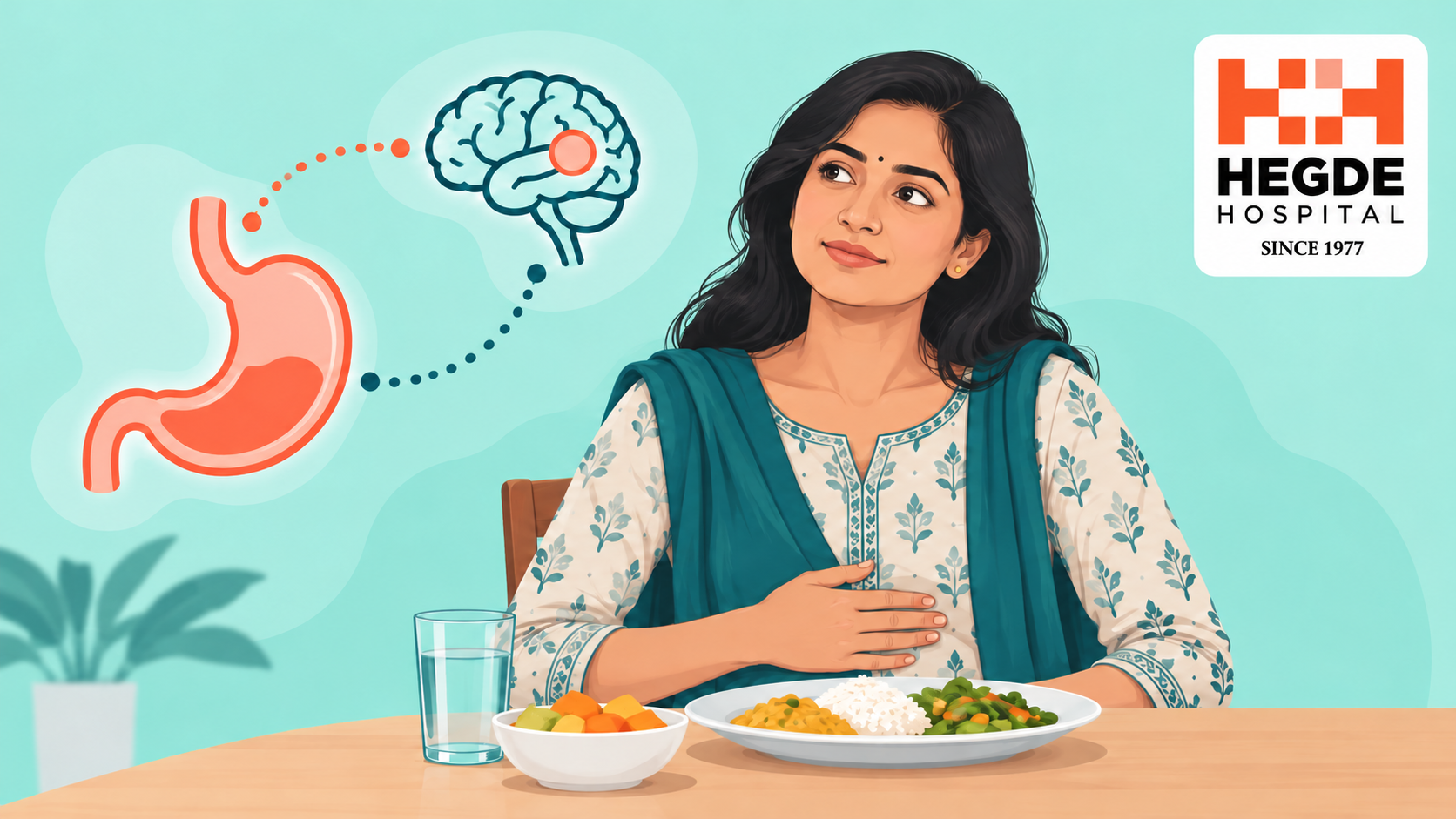
Functional dyspepsia is a disorder of gut-brain interaction associated with recurring upper-abdominal pain or burning, getting full unusually early, or uncomfortable fullness after meals. A clinician considers it after a suitable assessment finds no structural disease that explains the pattern. It is different from automatically calling every stomach symptom “gas” or an ulcer.
Which symptoms fit the pattern?
The main symptoms are discomfort or burning in the upper central abdomen, early fullness while eating, and bothersome fullness after meals. Some people also have bloating, belching or nausea. The balance of symptoms varies; not everyone has pain and meal-related fullness together.
Symptoms alone do not confirm the cause. Reflux, ulcers, an infection of the stomach lining and other conditions can overlap. Bowel symptoms may coexist, but pain mainly associated with changes in stool is a different pattern, discussed in our IBS guide.
How is it different from reflux, gastritis or an ulcer?
| Condition | Useful distinction |
|---|---|
| Functional dyspepsia | Recurring upper-abdominal symptoms without an identified structural explanation after appropriate assessment |
| Reflux | Stomach contents move into the food pipe; heartburn and regurgitation are typical |
| Gastritis | Inflammation of the stomach lining; symptoms alone cannot establish it |
| Peptic ulcer | A sore in the stomach or first part of the small intestine that requires its own evaluation |
These conditions can coexist. A symptom improving with one treatment does not reliably prove a diagnosis. Our stomach-ulcer article explains why an ulcer cannot be diagnosed from the timing of pain alone.
Why can symptoms occur when an endoscopy is normal?
An endoscopy examines the lining of the upper digestive tract. It does not measure every aspect of how the stomach accommodates a meal or how its nerves respond to stretching. Altered sensitivity, movement and gut-brain communication can contribute to functional symptoms.
Stress may influence symptoms, but functional dyspepsia should not be reduced to “just stress.” Symptoms can affect sleep, work and eating, and deserve a clear explanation and a follow-up plan. Different mechanisms may contribute in different people; no single food or test explains every case.
How do doctors decide which tests are useful?
The starting point is the location, duration and pattern of symptoms, associated weight changes, medical history, current medicines and family history. Depending on those findings, a clinician may consider a test for H. pylori, blood tests or an upper endoscopy. Endoscopy uses a thin camera tube to examine the food pipe, stomach and first part of the intestine.
Not everyone needs an endoscopy or repeated scans. Age at symptom onset, persistent symptoms, warning features and individual risk affect the decision. A previous normal test is useful information, but new weight loss, swallowing difficulty or persistent vomiting changes the assessment. Our endoscopy and colonoscopy comparison explains why these tests answer different questions.
What does an individual care plan involve?
Care aims to reduce symptoms and maintain nutrition and normal activities. The clinician may address a confirmed underlying infection or other overlapping condition, review food-related patterns and consider symptom-directed treatment. The specific plan depends on the main symptom, other health conditions and response over time.
Smaller manageable meals may be more comfortable for some people. A short record of food, timing and symptoms can help identify patterns without eliminating many food groups at once. Evidence does not support one restrictive diet for every person with functional dyspepsia. If eating becomes difficult or weight is falling, seek nutritional assessment rather than progressively restricting intake.
Regular activity, sleep routines and appropriate gut-brain behavioural support may form part of care. Such support addresses symptom processing and coping; it does not imply that the illness is imagined. There is no guaranteed single cure or fixed recovery deadline. Review progress using eating comfort, symptom burden and daily functioning.
When is reassessment needed?
Arrange a routine appointment for recurring symptoms affecting meals or everyday life. Seek prompt review for unintentional weight loss, difficulty swallowing, persistent vomiting, unexplained anaemia or a relevant family history. Vomiting blood, black tarry stools or sudden severe pain requires immediate medical evaluation. These features should not be attributed to functional dyspepsia without assessment.
Frequently asked questions
Does a normal endoscopy mean nothing is wrong?
No. Endoscopy looks for visible or biopsy-detectable problems in the lining. Symptoms involving stomach function and sensitivity can persist even when that assessment finds no structural explanation.
Is functional dyspepsia the same as GERD?
No. GERD mainly concerns reflux into the food pipe, often with heartburn or regurgitation. Functional dyspepsia focuses on upper-abdominal discomfort and meal-related fullness, although both can occur together.
Do I have to wait several months before seeing a doctor?
No. Duration helps clinicians describe recurring symptom patterns, but it is not an instruction to delay assessment. Persistent discomfort, reduced intake or warning features should be reviewed when they occur.
Will avoiding all spicy food solve the problem?
Not necessarily. Triggers and tolerance differ. Review a repeated pattern with the clinician or dietitian and avoid broad restrictions that reduce nutrition without improving symptoms.
Should I repeat every scan if symptoms return?
No. Bring previous reports and describe what has changed. The clinician decides whether reassessment or another test is useful, especially if new warning symptoms are present.
Plan the next review
Bring earlier reports, a short symptom record and your current medicine list to a Hegde Hospital appointment. The doctor directory can help identify relevant care. Ask what supports the diagnosis, which changes should prompt reassessment, and how progress will be reviewed.