
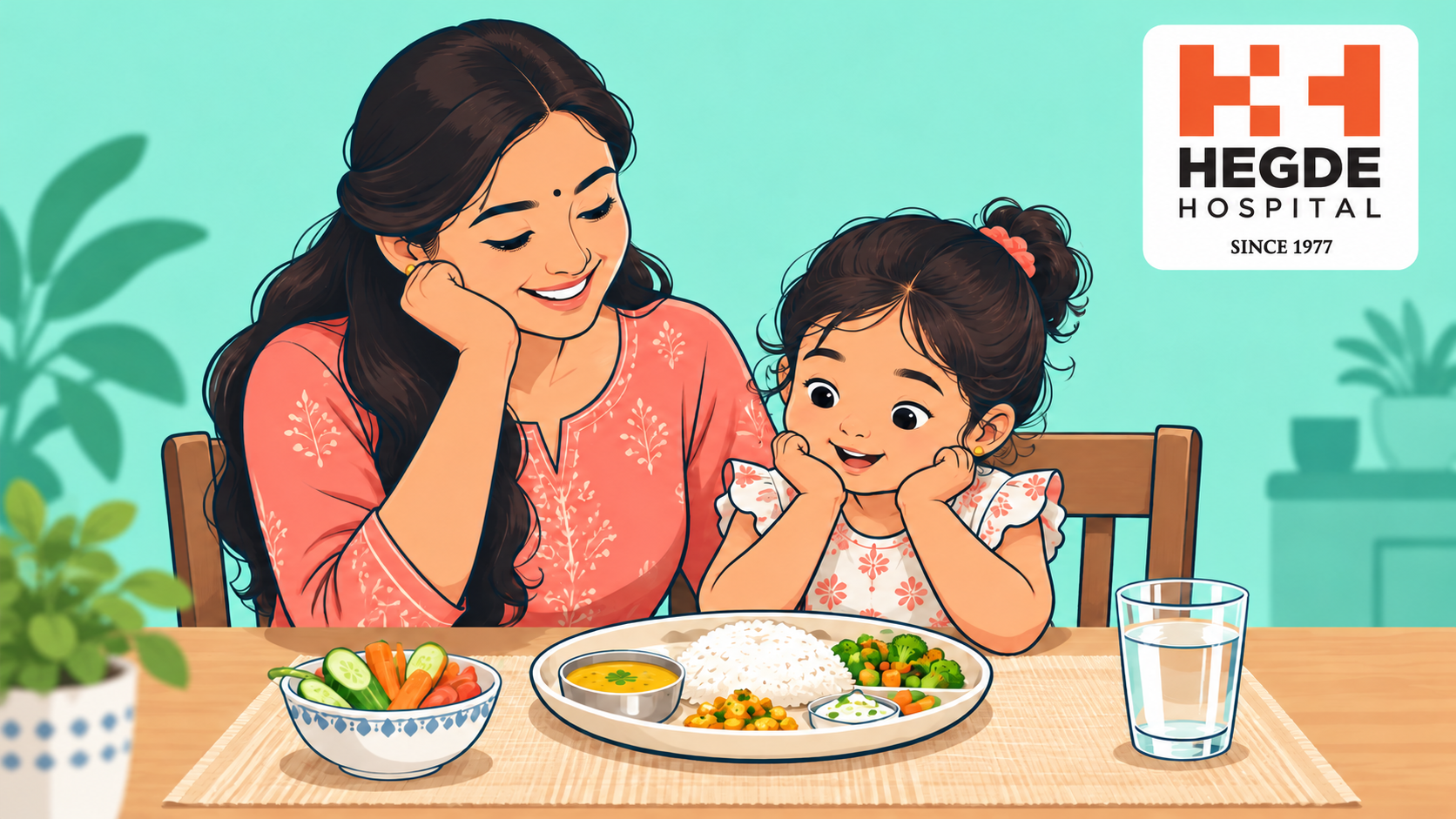
Refusing unfamiliar foods is common in young children. The range of accepted foods, swallowing comfort, growth and family mealtime stress help distinguish selective eating from a feeding difficulty.
Your child eats rice but leaves every vegetable, or accepts yesterday's favourite food and refuses it today. Meals start with encouragement and end in a struggle. It is understandable to worry about nutrition, but one unfinished plate does not tell you whether a child is unwell.
This guide is for toddlers and older children with an ongoing pattern of selective eating. A baby who is feeding poorly needs an individual assessment; advice for a preschool child should not replace infant feeding guidance.
The direct answer
Picky eating often involves reluctance to try unfamiliar foods while a child remains active and follows their growth pattern. Persistent food refusal, a rapidly shrinking food range, pain, difficulty chewing or swallowing, or growth concerns need a paediatric review. A calm meal structure can support eating, but it does not treat an underlying swallowing or medical problem.
Why might a child refuse food?
Appetite can vary with age, activity, tiredness and recent illness. A toddler's growth usually slows compared with infancy, so their appetite may not look the same. Some children are particularly sensitive to a food's texture, smell or appearance. Frequent grazing or filling drinks between meals can also affect appetite at the table.
Other children avoid eating because it is uncomfortable. Constipation, dental or mouth pain, reflux and difficulties coordinating chewing or swallowing may contribute. These possibilities are assessed from the child's history and examination rather than assumed from food refusal alone. See our guide to constipation in children if painful or withheld stools are part of the pattern.
Selective eating and feeding difficulty: what is the difference?
| Pattern | What to look at next |
|---|---|
| Refuses some new foods but eats a varied familiar range | Follow growth and offer low-pressure opportunities to explore foods |
| Accepts fewer and fewer foods or avoids whole food groups | Arrange a nutrition and paediatric review |
| Coughs during meals, holds food in the mouth or struggles to swallow | Seek prompt professional assessment of feeding safety |
| Refusal occurs with pain, persistent vomiting or weight loss | Ask a clinician to look for an underlying cause |
A child can have feeding difficulties even when their weight appears normal. Nutrition, eating skills and the effect on daily family life also matter. Conversely, a naturally small child is not automatically a picky eater or undernourished. Growth assessment considers repeated measurements, not comparison with classmates.
How can families make mealtimes calmer?
Offer predictable meals and age-appropriate planned snacks rather than continuous grazing. Sit together where possible and reduce television or phone distractions. Start with manageable portions, include a familiar accepted food, and offer a small amount of another family food alongside it. Keep textures and pieces suitable for the child's age and eating skills, with adult supervision.
The caregiver chooses what foods are available and when they are offered; the child can respond to hunger and fullness within that supportive structure. Avoid force-feeding, threats, using sweets as payment for eating, or making a child go hungry to compel acceptance. New foods may need repeated calm introductions. Looking, touching or smelling a food can be an early step, rather than a demand to finish it immediately.
These are general feeding practices, not a treatment plan for a child with poor growth or swallowing difficulty. Do not remove a child's few accepted foods while waiting for advice. If their intake is very restricted, arrange support rather than intensifying pressure.
What should you record before a visit?
Note accepted foods, refused textures, meal and drink timings, whether refusal happens at home and school, and any pain, constipation, coughing or vomiting. Bring earlier height and weight records. A short food record is more useful than repeatedly weighing the child or counting every bite.
A paediatrician assesses growth, nutrition, development and the mouth or digestive symptoms. Tests are chosen when the findings suggest a need; every selective eater does not need a standard blood-test package. Dietetic or feeding and swallowing support may be appropriate. The Hegde Hospital doctor directory can help identify available paediatric care.
When should you seek medical review?
Book a routine visit if mealtimes remain persistently difficult, food variety is very limited, or you are unsure about growth. Seek prompt assessment for weight loss, poor growth, pain with meals, persistent vomiting, or repeated coughing or choking while eating. Sudden breathing difficulty or inability to swallow requires immediate medical evaluation. Do not treat a swallowing problem as ordinary fussiness.
Frequently asked questions
Is refusing vegetables enough to diagnose a feeding disorder?
No. A clinician looks at overall intake, growth, nutrition, eating skills and how much daily life is affected. Refusing one food group is a reason to discuss variety, not a diagnosis by itself.
Should I force my child to finish the plate?
No. Pressure can increase conflict and avoidance. Offer suitable foods in a predictable routine, allow hunger and fullness cues, and seek assessment if intake or growth is concerning.
Can constipation reduce appetite?
It can contribute to discomfort and reduced interest in food. Hard or painful stools and withholding should be discussed with the paediatrician rather than assuming food refusal is only behavioural.
Does every picky eater need blood tests?
No. History, examination, growth and dietary variety guide testing. A clinician may investigate particular nutritional or medical concerns, but routine testing is not required for every child.
Can a child with normal weight still need feeding help?
Yes. A very narrow food range, swallowing difficulty or severe mealtime distress can deserve support even when weight is in an expected range. Review should consider more than the scale.
A practical next step
Choose one calm, consistent mealtime routine and keep a brief record of the feeding pattern. If concerns persist, book an appointment with the child's growth records and your main questions. The aim is safe, adequate nutrition and a workable family routine, not winning a battle over each plate.