
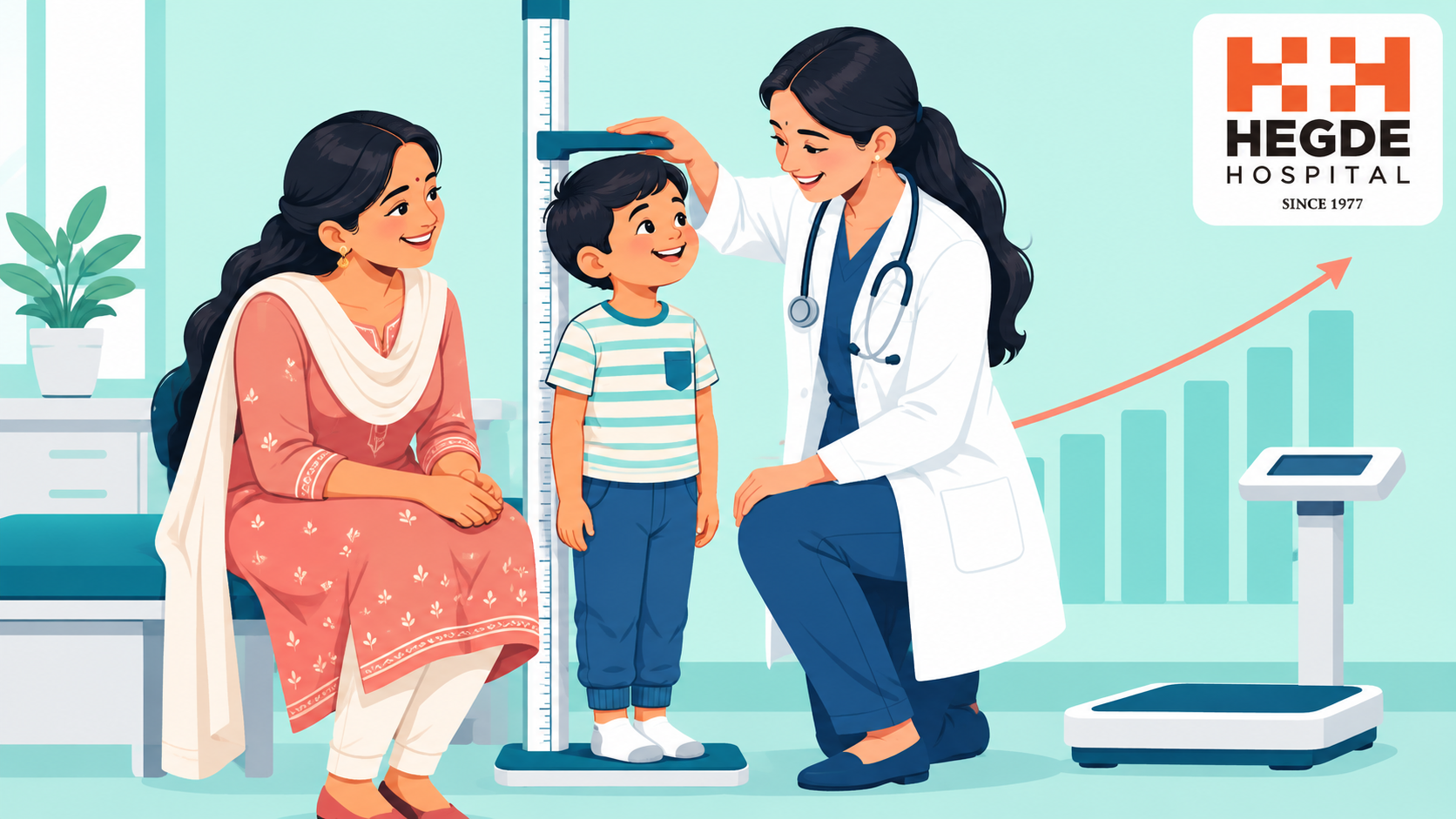
A child who looks small is not automatically undernourished. Repeated weight and height measurements, feeding history and overall development help identify whether growth needs support.
Your child seems slimmer than classmates, or the number on the weighing scale has barely changed. Family members may suggest bigger portions, while you wonder whether a medical problem is being missed. The useful first question is whether your child's own growth has slowed over time—not whether they match another child.
Poor weight gain, sometimes called faltering growth, describes a pattern that needs assessment. It is not one diagnosis. Feeding difficulties, insufficient intake and illnesses can contribute, but a naturally small child may follow a steady growth pattern and be well. A paediatrician can distinguish these situations using measurements and a careful history.
The direct answer
If your child is not gaining weight as expected, arrange a growth review with previous weight and height records. A single reading cannot establish the cause. The doctor considers age, sex, birth history, length or height, feeding and development together. The aim is steady healthy growth and comfortable eating, rather than rapid weight gain or reaching an arbitrary number.
What does a growth chart actually show?
A growth chart compares measurements with an age-appropriate reference. The lines show how a child's size compares with other children of the same age and sex. The middle line is not a target that every child must reach. A child can be small and healthy, while a child who previously tracked higher may need review after a sustained fall in their growth pattern.
Interpretation also depends on measurement quality. Different scales, clothing and an inaccurate height measurement can alter a result. Length, weight and their relationship help a clinician understand the pattern. In older children, an age- and sex-specific body mass index may be useful; adult BMI cut-offs should not be applied to children.
Babies, preschool children and adolescents grow at different speeds. Premature birth may affect how early measurements are interpreted. Bring the growth record rather than using an internet age-to-weight table to diagnose your child.
Why might weight gain slow down?
There are several possibilities, often acting together. A child may not be taking in enough nourishment because feeds are difficult, portions are small or eating becomes stressful. Persistent vomiting or diarrhoea may affect intake or absorption. Some ongoing illnesses increase energy needs. The history helps narrow these possibilities without assuming a rare disease.
| Pattern you notice | What to discuss at the appointment |
|---|---|
| Feeds are long, tiring or frequently interrupted | Feeding technique, swallowing comfort and whether feeds are effective |
| Meals are replaced by frequent drinks or grazing | The whole day's intake, appetite and meal routine |
| Poor gain accompanies continuing loose stools | Duration, stool changes and possible digestive causes |
| Weight and height growth both slow | The full growth pattern, family height and health history |
| Small size with steady growth and good energy | Whether this is an expected individual pattern |
Food access, family stress and practical caregiving difficulties also matter. Discussing them is part of helping the child, not assigning blame. Avoid labelling a child lazy or a parent careless. If painful bowel movements reduce appetite, mention this too; our guide to constipation in children explains that separate problem.
Do babies need a different assessment?
Yes. In infants, the doctor may ask about feeding frequency, how feeds are going, birth weight, wet nappies and whether the baby seems alert between feeds. A trained professional may observe a feed. This can be more informative than immediately ordering a large group of tests.
Do not independently dilute, concentrate or change an infant's feeds to alter weight. Feeding decisions need to reflect the baby's age and clinical situation. An infant who is feeding poorly should be assessed sooner rather than waiting to see whether the next monthly weight improves.
What will the paediatrician check?
The consultation usually includes repeated measurements, a physical examination and review of development. The doctor asks about birth and family history, recent illness, stool pattern, vomiting, swallowing, daily food and drink, and any treatments already being used. Where helpful, a short record of meals and feeding difficulties provides context.
Tests are chosen to answer specific questions. Blood, urine or stool investigations may be appropriate when the history or examination suggests a cause. A child who appears well and has no other concerning findings does not automatically need every available investigation. Ask what a proposed test would change in the care plan.
If there are concerns about talking or other developmental progress, share those separately. The care team can help arrange an appropriate assessment in your preferred language. Growth and development may need coordinated review rather than treating each concern in isolation.
How is a care plan made?
The plan addresses the reason growth has slowed. It may include skilled feeding support, a paediatric dietitian's advice, help with swallowing or food textures, or care for an underlying condition. The team agrees realistic goals and a review date. Ordinary food choices and portions should suit the child's age, abilities, family circumstances and nutritional needs.
For children eating family foods, a calm meal setting and an age-appropriate routine can support the agreed plan. Pressure, punishment and constant comparisons can make eating harder. Increasing only sweets or fried snacks does not produce a balanced growth plan. Broad food exclusions can also reduce intake and should be discussed before being introduced.
Progress includes energy, feeding comfort, height and development as well as weight. The pace varies with the cause; a promise of a particular number of kilograms in a week is not a useful medical goal. Frequent weighing at home may add anxiety without clarifying the trend. Follow the monitoring interval agreed with the clinician.
When should the child be seen?
Book a routine assessment for persistent concern about small size, slow growth or difficult mealtimes. Seek an earlier review if weight is actually falling, feeding becomes difficult, vomiting or diarrhoea continues, or energy and developmental progress change. If the child is very unwell, unusually difficult to wake, unable to drink or struggling to breathe, seek immediate medical evaluation.
What should you bring to the visit?
Bring dated weight and height records, birth details, available reports and a brief account of typical meals or feeds. Note when the concern started and what changed around that time. Record symptoms without changing several foods at once to test a theory.
At Hegde Hospital's paediatric service, the team can guide you to the appropriate clinician. Use the appointment page to arrange a visit and discuss a clear follow-up plan.
Frequently asked questions
Does a thin child always have poor growth?
No. Body build alone cannot diagnose a growth problem. Previous measurements, height, energy and development help show whether a small child is following an expected pattern or needs further assessment.
My child eats but is not gaining weight. Why?
What appears to be a reasonable amount may not meet that child's needs, but intake is only one possibility. Feeding difficulty, digestive problems or increased needs from an illness can contribute. A review of the full growth and eating history is more useful than guessing.
Should every child have blood tests?
No. The clinician chooses tests when they are likely to explain the growth pattern or change care. A feeding assessment and reliable measurements may be the most useful starting point.
How quickly should weight improve?
There is no single safe target for every child. The cause, age and degree of growth concern determine the plan. Ask the doctor what progress to look for and when measurements should be repeated.
Can I stop foods to see if an intolerance is causing this?
Discuss this first, especially for an infant or a child already growing slowly. Removing important foods without nutritional replacements can worsen intake and make it harder to interpret symptoms.