
A shorter child may be healthy, while slowing height growth can need review. Learn how reliable measurements guide assessment and follow-up.
Your child is wearing the same trouser length as last year, or seems shorter than friends. It is understandable to wonder whether growth is slow. Comparing classmates, however, is less useful than checking your child's own dated height measurements.
Short stature describes height well below the expected range for age and sex. It does not name the cause. Many shorter children are healthy, while a child whose height growth is slowing may need assessment even before they appear very short.
In simple terms
A growth review looks at height over time, weight, family height, puberty and general health together. One measurement cannot predict the final adult height or diagnose a hormone problem. Start with a paediatric assessment and existing records; further tests are selected when they can answer a specific question.
What does a growth chart show?
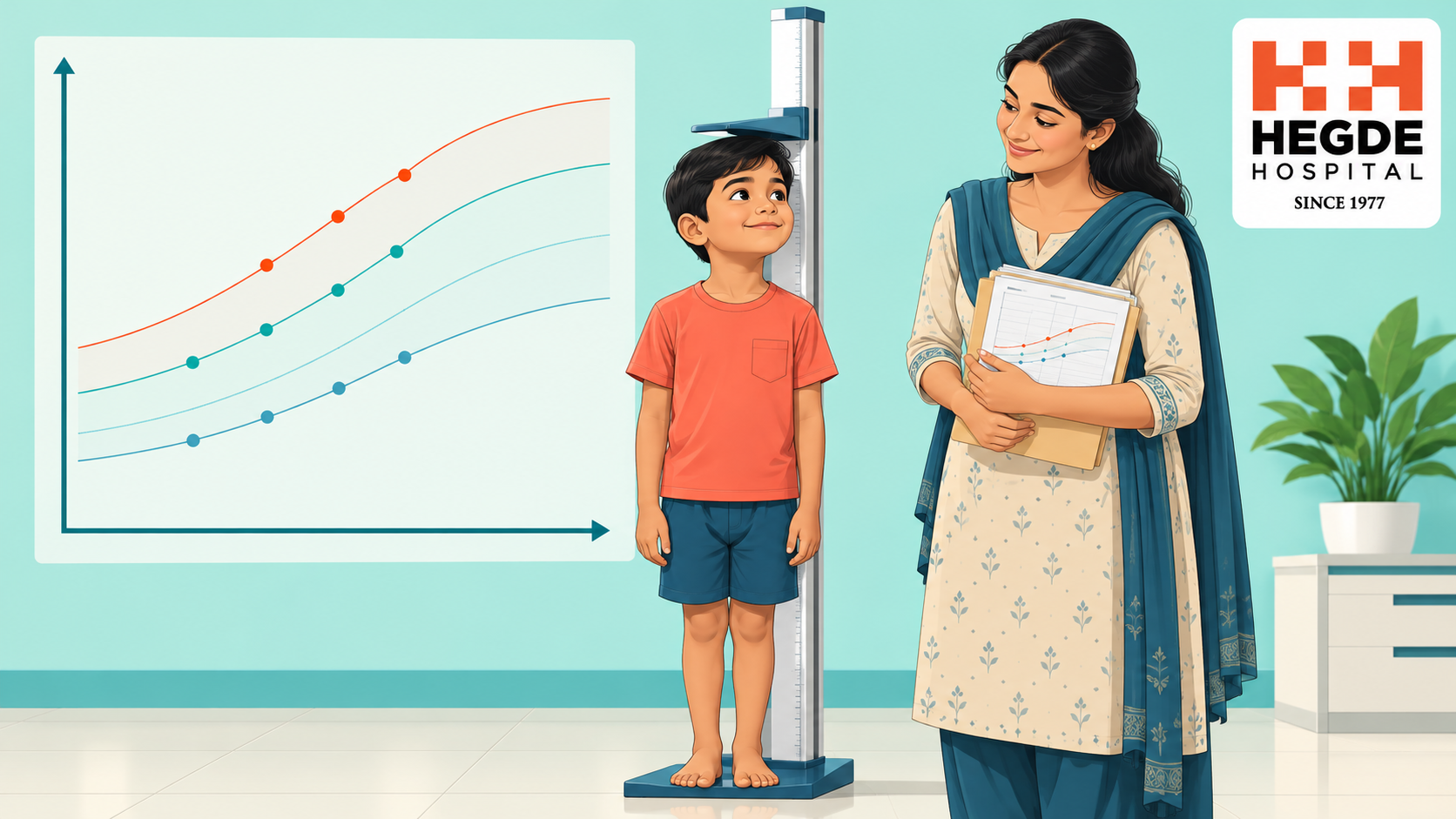
A growth chart compares measurements with an age- and sex-appropriate reference. Its percentile lines describe a range, not a target that every child should reach. A child near a lower line who grows steadily can be different from a child moving down across lines over time.
Clinicians commonly use height below the third percentile as one reason to assess short stature. Interpretation also considers family height and growth velocity, meaning the rate at which height increases. A percentile is not a score for health, intelligence or future achievement.
How can measurement errors be avoided?
Reliable measurements matter. Shoes, posture, a tilted head or different measuring methods can create an apparent change. Babies have length measured lying down; older children usually have standing height measured with suitable equipment. The clinician chooses the appropriate chart and method for age and circumstances.
Bring dated measurements from clinic, school or earlier records, noting how they were obtained. Daily home measurements are unlikely to clarify growth. A planned interval between reliable readings is more useful, and the doctor decides whether observation is suitable or testing should start sooner.
Is short height the same as poor weight gain?
No. Height and weight provide related but different information. Some children follow a family pattern of shorter height; others develop later and have later puberty. Nutrition, chronic illness, hormonal conditions or genetic differences can also affect growth.
| Pattern | What to discuss |
|---|---|
| Shorter height with steady growth | Family heights and previous measurements |
| Height growth slows over time | Timing, puberty and accompanying symptoms |
| Weight gain also falters | Eating, digestion and general health |
| Body proportions or mobility differ | Examination and whether specialist assessment is needed |
The poor weight gain guide covers a separate starting concern. Extra food is not automatically the answer to slow height growth, especially if weight is already appropriate or increasing.
What will the paediatrician ask and examine?
Expect questions about birth size, prematurity, previous growth, appetite, bowel symptoms, sleep, ongoing illness and treatments. The heights of both parents and the family's puberty history can help. A late-growing parent is useful context but does not prove that every slow-growing child should simply wait.
Examination includes reliable height and weight, body proportions and general health. Pubertal development is assessed sensitively when relevant. Children should be included respectfully; avoid calling them abnormal or discussing their body as a failure.
When do blood tests or a bone-age X-ray help?
Some healthy children with a steady growth pattern need monitoring without a broad test panel. When the pattern is concerning, selected blood tests may investigate thyroid function, anaemia, inflammation, absorption problems or other conditions suggested by the history. Our coeliac testing guide explains one possible digestive cause; it is not a diagnosis for every short child.
A bone-age X-ray, usually of the hand and wrist, can help assess skeletal maturity. It contributes to the overall picture but does not promise an exact future height. Hormonal or genetic investigations are considered by the appropriate specialist when indicated. A random single hormone measurement is not an all-purpose growth test.
What happens after the assessment?
The plan may be reassurance with a review date, nutritional assessment, care for an identified condition or referral to a paediatric specialist. Ask which finding led to the recommendation, what will be monitored and when the decision will be revisited.
Do not start products advertised to increase height or follow stretching programmes promising extra centimetres. They cannot establish why growth is slow. This article does not prescribe a medicine or growth treatment. Healthy routines support wellbeing, while treatment decisions depend on a confirmed clinical problem.
Support also includes school and family life. Encourage activities the child enjoys and address teasing. The aim is to identify health needs and support the child, not to make every child reach the same height.
When should review be earlier?
Arrange a planned visit for persistent height concern, falling growth percentiles or puberty that seems delayed. Earlier assessment is appropriate when growth concern accompanies weight loss, persistent digestive symptoms or low energy. New severe headache with vision changes or a very unwell child requires urgent medical evaluation rather than waiting for a growth appointment.
Frequently asked questions
Does being shorter than classmates prove a problem?
No. Children differ in family height and puberty timing. Their own growth record and examination are more useful than comparison with friends.
Are short parents enough to explain slow growth?
Family height is relevant, but a child whose growth rate is falling still deserves review. Several causes can coexist with a shorter family pattern.
Can a single scan tell us the exact adult height?
No. Bone age can help assess maturity, but adult height estimates remain uncertain and depend on the overall growth pattern.
Should every short child have hormone tests?
No. The paediatrician decides whether tests or referral are useful after reviewing reliable measurements and health history.
Is it safe to wait for puberty to fix the problem?
Do not assume this without assessment. Some children develop later, but slowing growth or delayed puberty may need investigation before more time passes.
Take the child's dated growth records to the paediatric service. Use the appointment page to arrange a review and agree on a clear follow-up date.