
Looking for Expert Pancreatitis Treatment in Hyderabad?
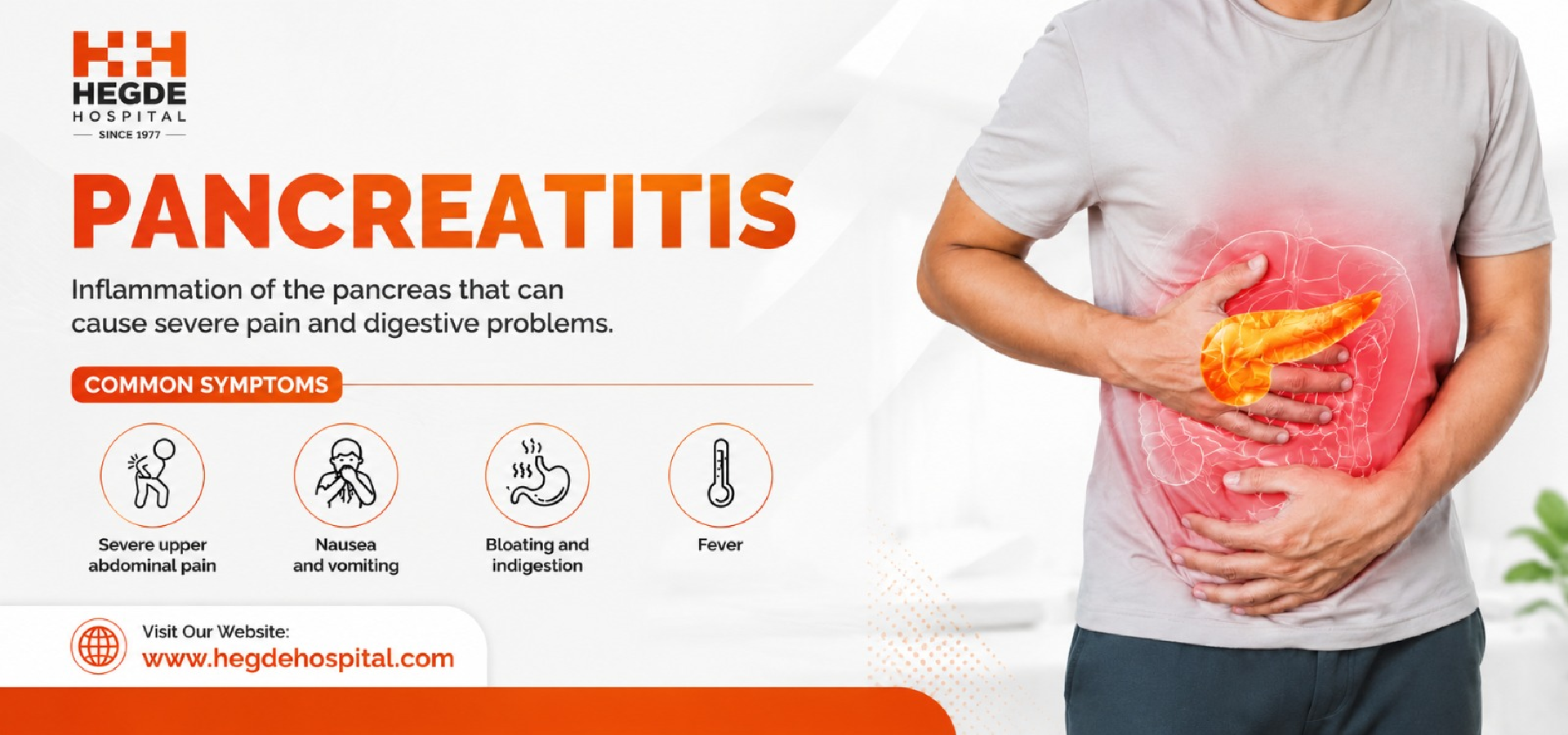
Pancreatitis is inflammation of the pancreas, an important organ that helps with digestion and blood sugar regulation. It can develop suddenly as acute pancreatitis or persist over time as chronic pancreatitis. Symptoms may include severe upper abdominal pain, nausea, vomiting, fever, and digestive problems.
At Hegde Hospital, our Gastrointestinal and General Surgery team provides comprehensive evaluation and treatment for pancreatitis. Our specialists focus on identifying the underlying cause, managing symptoms, preventing complications, and providing personalized treatment based on the severity of the condition.
Whether you are experiencing symptoms for the first time or have been diagnosed with recurrent or chronic pancreatitis, timely medical evaluation is important for appropriate care and long-term digestive health.
Call Us: +91 7780747474Comprehensive Pancreatitis Care
Pancreatitis can range from a mild condition that improves with treatment to a serious illness requiring hospital care. Gallstones and heavy alcohol use are among the common causes, although other factors can also contribute.
At Hegde Hospital, our medical team evaluates the cause and severity of pancreatitis and develops an appropriate treatment plan. Management may include hospital monitoring, fluids, pain control, nutritional support, treatment of the underlying cause, and procedures or surgery when necessary.
What is Pancreatitis?
Pancreatitis occurs when the pancreas becomes inflamed. The pancreas produces digestive enzymes and hormones such as insulin that help regulate blood sugar.
Acute pancreatitis develops suddenly and may improve with appropriate medical treatment. Chronic pancreatitis causes ongoing or repeated inflammation that can lead to permanent damage and affect digestion and blood sugar control.
Diagnosis may involve blood tests, ultrasound, CT scans, MRI, or other investigations depending on the patient's symptoms and clinical condition.
Who Should Consult Our Pancreatitis Treatment Department?
- Severe or persistent upper abdominal pain
- Abdominal pain that may radiate toward the back
- Nausea or repeated vomiting
- Fever associated with abdominal pain
- Abdominal tenderness or swelling
- Digestive problems after meals
- Unexplained weight loss
- Recurrent episodes of pancreatitis
- History of gallstones associated with abdominal pain
- Patients previously diagnosed with pancreatitis
Severe abdominal pain, persistent vomiting, fever, weakness, or worsening symptoms require prompt medical assessment, as acute pancreatitis can sometimes become serious.
Why Choose Hegde Hospital?
- Experienced Gastrointestinal & General Surgery Specialists
- Advanced Diagnostic Facilities
- Comprehensive Pancreatic Evaluation
- Personalized Treatment Plans
- Modern Imaging & Diagnostic Support
- Advanced Endoscopic & Surgical Options When Required
- Comprehensive Hospital-based Care
- Patient-Centered and Compassionate Treatment
Frequently Asked Questions (FAQs)
1. What causes pancreatitis?
Common causes include gallstones and heavy alcohol use. Other causes can include certain medications, high triglyceride levels, abdominal injury, and some medical conditions.
2. What are the symptoms of pancreatitis?
Common symptoms include upper abdominal pain, nausea, vomiting, fever, abdominal tenderness, and pain that may radiate to the back.
3. Is pancreatitis a serious condition?
Pancreatitis can range from mild to severe. Acute pancreatitis may require hospital treatment, while severe cases can lead to complications and need close medical monitoring.
4. How is pancreatitis diagnosed?
Doctors may use blood tests, ultrasound, CT scans, MRI, and other diagnostic tests along with a clinical examination to determine whether pancreatitis is present and identify its possible cause.
5. Why choose Hegde Hospital for pancreatitis treatment?
Hegde Hospital provides experienced specialists, advanced diagnostic facilities, individualized treatment plans, hospital-based care, and endoscopic or surgical treatment when clinically appropriate.