
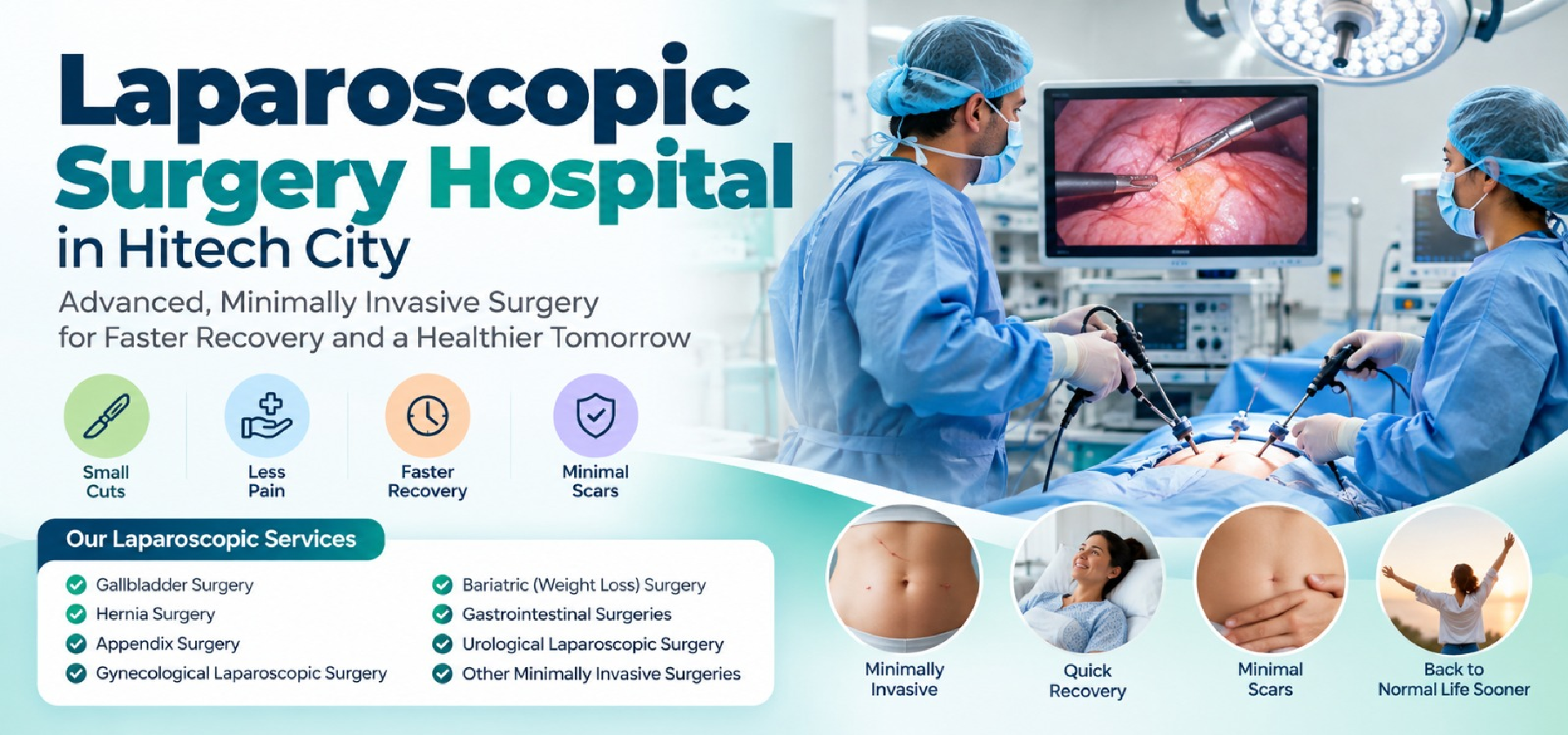
Laparoscopic Surgery Hospital in Hitech City
Laparoscopic surgery is a minimally invasive surgical technique that allows surgeons to perform selected procedures through small incisions using a camera and specialized instruments. It may offer benefits such as smaller scars, reduced postoperative discomfort and a shorter hospital stay compared with open surgery in suitable cases.
Hegde Hospital provides General Surgery and Laparoscopy services for patients with conditions that may require surgical treatment. Patients from Hitech City and surrounding areas of Hyderabad can consult the surgical team for diagnosis, treatment planning and postoperative care.
Call +91 7780747474Advanced Laparoscopic Surgery for Patients in Hitech City
Modern laparoscopic techniques are used for a range of abdominal and other surgical conditions. The choice between laparoscopic and open surgery depends on the diagnosis, complexity of the condition, medical history and overall health of the patient.
At Hegde Hospital, the surgical team evaluates each patient and recommends an appropriate treatment approach based on clinical findings. Patients receive guidance before surgery and during the recovery period.
Not every condition or patient is suitable for laparoscopic surgery. A consultation with a qualified surgeon helps determine the most appropriate and safe approach for an individual case.
What Is Laparoscopic Surgery?
Laparoscopic surgery, also called keyhole surgery, is a minimally invasive technique. Instead of making one large incision, the surgeon usually makes several small incisions to insert a camera and specialized instruments.
The camera displays images of the operating area on a monitor, allowing the surgeon to perform the procedure with visual guidance. The number and size of incisions depend on the operation being performed.
Common Conditions Treated with Laparoscopic Surgery
- Gallstones and selected gallbladder conditions
- Appendicitis requiring surgical treatment
- Selected types of hernia
- Gastroesophageal reflux disease (GERD) in suitable cases
- Selected abdominal and gastrointestinal conditions
- Some gynaecological conditions requiring minimally invasive surgery
- Other conditions assessed by the surgical team
The availability and suitability of a specific laparoscopic procedure depend on the patient's diagnosis and the treating specialist's assessment.
Benefits of Minimally Invasive Surgery
When clinically appropriate, laparoscopic surgery may offer several advantages compared with conventional open surgery.
- Smaller surgical incisions
- Less visible scarring
- Potentially reduced postoperative pain
- Reduced blood loss in many procedures
- Lower risk of certain wound-related complications
- Potentially shorter hospital stay
- Earlier return to daily activities for suitable patients
These benefits vary according to the type of operation, the patient's condition and whether complications occur. Laparoscopic surgery also carries risks, which should be discussed with the surgeon before treatment.
General Surgery and Laparoscopy Services
Hegde Hospital's General Surgery and Laparoscopy Department evaluates conditions that may require surgical treatment. The team considers diagnostic findings, symptoms, medical history and individual treatment needs before recommending a procedure.
Gallbladder Surgery
Gallstones that cause repeated symptoms or complications may require gallbladder removal. Laparoscopic cholecystectomy may be recommended for suitable patients after clinical evaluation.
Appendix Surgery
Appendicitis may require prompt surgical assessment. Laparoscopic appendectomy is an option for many patients, although the surgical approach depends on the severity of inflammation and other clinical factors.
Hernia Surgery
Hernias may require surgical repair when symptoms, size or complications make an operation appropriate. Depending on the type of hernia and the patient's condition, the surgeon may discuss laparoscopic or open repair.
Gastrointestinal Surgery
Certain gastrointestinal conditions may be treated using minimally invasive techniques. The recommended procedure depends on the diagnosis and the results of specialist evaluation.
How Is a Patient Prepared for Laparoscopic Surgery?
Before surgery, the doctor reviews the patient's medical history, current medications, allergies and previous operations. Blood tests, imaging, an anaesthesia assessment or other investigations may be requested based on the procedure.
- Attend the preoperative consultation
- Share previous medical reports and medication details
- Follow instructions about fasting before surgery
- Discuss allergies and existing medical conditions
- Ask the surgeon about risks, benefits and alternatives
- Arrange assistance for the initial recovery period if needed
Follow the hospital's specific preoperative instructions. Do not stop prescribed medicines unless the treating doctor advises you to do so.
Recovery After Laparoscopic Surgery
Recovery varies depending on the operation, the patient's health and whether the procedure was uncomplicated. Some patients can return to routine activities relatively quickly, while others need a longer recovery period.
The surgical team will explain wound care, medication, diet, activity restrictions and follow-up appointments. Patients should gradually resume activity according to their surgeon's instructions.
Contact your medical team if you develop fever, worsening pain, persistent vomiting, increasing redness or discharge from a wound, or other unexpected symptoms after surgery.
Why Choose Hegde Hospital for Laparoscopic Surgery?
- General Surgery and Laparoscopy services
- Experienced General and Laparoscopic Surgeons
- Advanced laparoscopic equipment
- Evaluation of a range of surgical conditions
- Individualized treatment planning
- Preoperative assessment and patient counselling
- Postoperative care and recovery guidance
- Modern operation theatre facilities
Dr. Prashant Hegde is listed by Hegde Hospital as Medical Director – General & Laparoscopic Surgeon, with training in Surgical Gastroenterology and Advanced Laparoscopy.
When Should You Consult a Laparoscopic Surgeon?
Consider a surgical consultation if you have been diagnosed with gallstones, appendicitis, a hernia or another condition that may require an operation. A surgeon can explain the available treatment options and whether minimally invasive surgery is appropriate.
Seek urgent medical attention for severe or rapidly worsening abdominal pain, persistent vomiting, fainting, fever with severe abdominal pain, or other potentially serious symptoms.
Frequently Asked Questions (FAQs)
1. What is laparoscopic surgery?
Laparoscopic surgery is a minimally invasive technique that uses small incisions, a camera and specialized instruments to perform selected surgical procedures.
2. Is laparoscopic surgery better than open surgery?
Laparoscopic surgery may offer smaller incisions, less postoperative discomfort and a shorter recovery for suitable patients. Open surgery may be more appropriate for certain conditions or complications.
3. Which conditions can be treated laparoscopically?
Depending on the clinical situation, laparoscopic procedures may be used for gallstones, appendicitis, selected hernias and certain gastrointestinal or gynaecological conditions.
4. How long does recovery take after laparoscopic surgery?
Recovery depends on the type of operation, the patient's health and the presence of complications. Your surgeon will advise when you can return to work, exercise and normal activities.
5. Is laparoscopic surgery suitable for every patient?
No. Suitability depends on the condition, previous surgeries, overall health and other clinical factors. The surgeon will discuss the benefits, risks and alternatives before recommending treatment.
6. Where can I consult a laparoscopic surgeon near Hitech City?
Hegde Hospital provides General Surgery and Laparoscopy services for patients from Hitech City and surrounding areas of Hyderabad. Call +91 7780747474 to enquire about an appointment.