
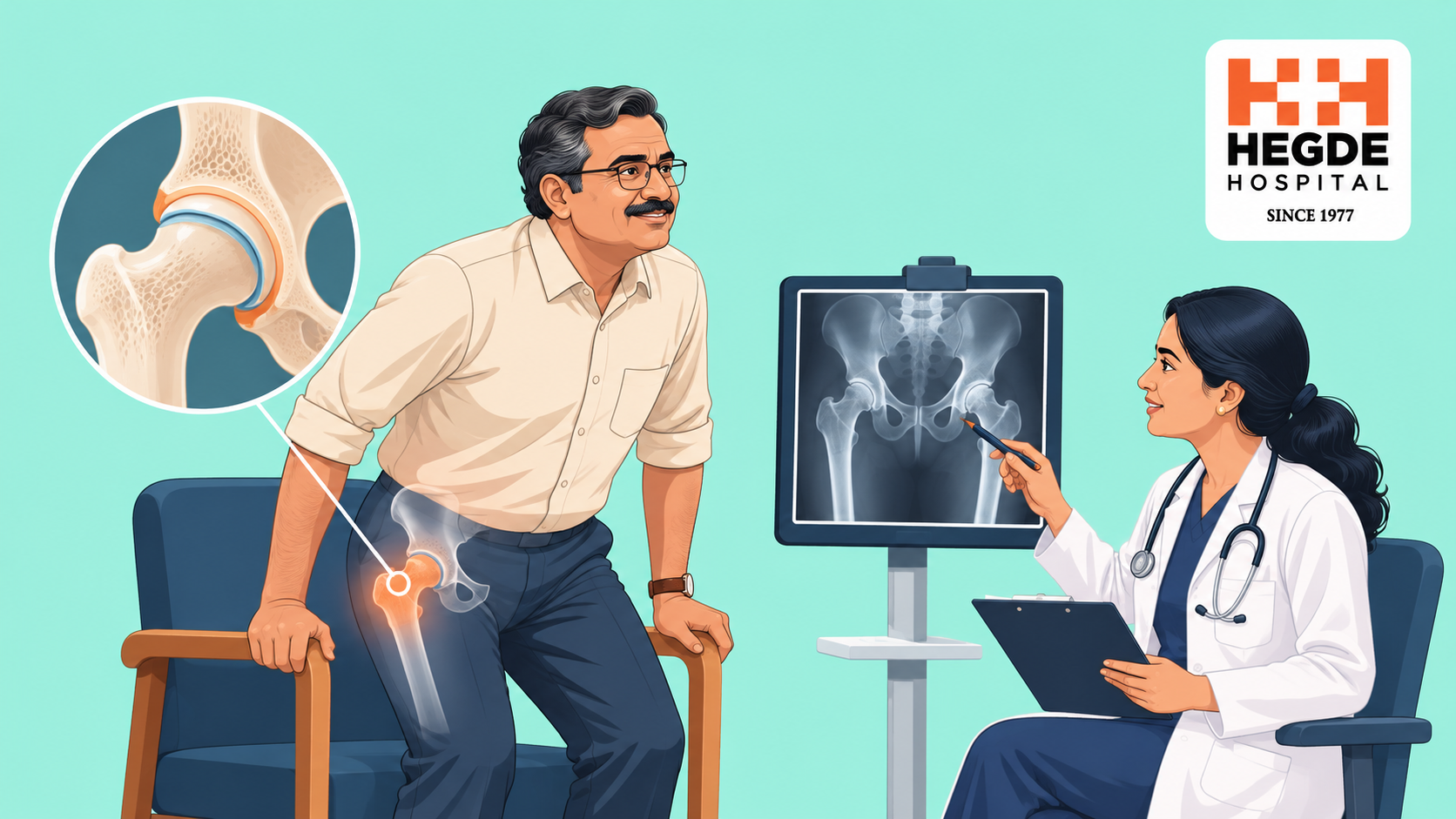
Hip arthritis may be felt in the groin, thigh or even the knee. Symptoms and daily function matter alongside examination and any imaging.
Putting on socks takes longer, getting out of a chair feels stiff and a familiar walk now brings pain near the groin. Because the discomfort is not always on the outside of the hip, it may be mistaken for a pulled muscle or a knee problem.
Hip osteoarthritis is one possible explanation for a gradual pattern of pain and reduced movement. An examination helps distinguish it from other causes and identify what would make everyday life easier.
In simple terms
Osteoarthritis affects the hip joint, including its cartilage, bone and surrounding tissues. It is often called joint wear, but symptoms are influenced by more than simple rubbing between bones. A report alone does not describe how well you walk or how much pain you have.
Care usually begins with a suitable non-surgical plan. Hip replacement may be discussed when pain or loss of function substantially affects quality of life and appropriate non-surgical care has not helped enough or is unsuitable.
Why can the pain be in the groin or knee?
The hip is a ball-and-socket joint joining the thigh bone to the pelvis. Pain from this joint is often felt in the groin and can extend to the thigh, buttock or knee. Its location does not by itself establish the diagnosis.
Stiffness after rest, reduced rotation and difficulty with shoes, stairs or walking can be useful clues. Tell the clinician if pain interrupts sleep, makes you limp or limits a particular task. A painful knee may sometimes need a hip examination as well; the existing knee osteoarthritis guide addresses the separate knee condition.
What else may need considering?
Groin and hip-area pain can arise from several tissues, and back problems can refer pain into the leg. Inflammatory joint conditions, tendon problems, previous injury and other explanations may need assessment. A groin lump is another reason to avoid assuming that all discomfort is arthritis.
The pattern over time matters. Prolonged morning stiffness, several affected joints, rapid worsening or an injury may change the investigation plan. Do not force movements to test the diagnosis yourself.
What happens during the consultation?
The clinician asks when pain started, where it is felt and what brings it on. Previous injury, operations, current treatment, other health conditions and your activity goals help guide the discussion.
Examination may include watching your walking pattern, assessing hip movement and strength, and checking the knee or back when appropriate. Bring old reports and describe a concrete limit, such as the distance you can walk or whether you need help dressing.
Does everyone need an X-ray or MRI?
Typical osteoarthritis can sometimes be diagnosed from history and examination without imaging. An X-ray can help when the diagnosis is uncertain, features are atypical or an intervention is being planned. It may show joint-space narrowing or changes in bone.
An MRI is not a routine requirement for every painful hip. It is considered when it could clarify another suspected problem. Imaging and symptoms do not always match closely, so treatment should not be chosen by the apparent severity of one picture alone.
What can non-surgical care involve?
Therapeutic exercise tailored to your ability is a core part of care. A physiotherapist can help choose and progress suitable movement and strengthening work. This is different from following a generic internet exercise challenge when the cause of pain is uncertain.
Support with weight management may help when excess weight adds load to the joint. A walking aid can be considered if appropriate, with guidance on its use. Pain-relief options may support rehabilitation, but their suitability depends on your health; this article does not select a medicine, injection or regimen.
Agree how improvement will be judged. Walking more comfortably, dressing independently or sleeping better can be meaningful goals. If the plan is not helping, return for reassessment rather than buying repeated tests or devices without advice.
When is replacement worth discussing?
The discussion considers pain, stiffness, daily function, previous treatment, imaging when needed and your preferences. It includes expected benefits, individual risks, preparation, rehabilitation and the support you would need afterwards.
Age or an X-ray grade alone should not decide the answer. Replacement does not promise the same recovery date or result for every person. A consultation can explain the options without committing you to an operation.
When should I seek earlier review?
Arrange a routine appointment for persistent symptoms or increasing activity limits. Seek earlier review for rapid worsening or persistent unexplained night pain. Inability to bear weight after injury, or a suddenly very painful joint with fever, needs urgent medical assessment.
Use the doctor directory to arrange the appropriate assessment or request a consultation. Bring previous reports and two or three activities you would most like to improve.
Frequently asked questions
Can hip arthritis cause knee pain?
Yes, hip pain can be referred towards the knee. Examination helps determine whether the hip, knee or another source explains the symptoms.
Does a clicking hip prove arthritis?
No. Sounds alone do not establish a diagnosis. Persistent pain or restricted movement is a reason for assessment.
Do I need an MRI before seeing the doctor?
Usually not for a typical pattern. Bring existing reports so the clinician can decide whether further imaging would help.
Should I stop all walking?
Not automatically. Ask for activity guidance suited to your symptoms and diagnosis, especially if walking is painful or you feel unstable.
Does severe joint-space narrowing always mean replacement?
No. The decision also depends on symptoms, function, previous care, overall health and your preferences.