
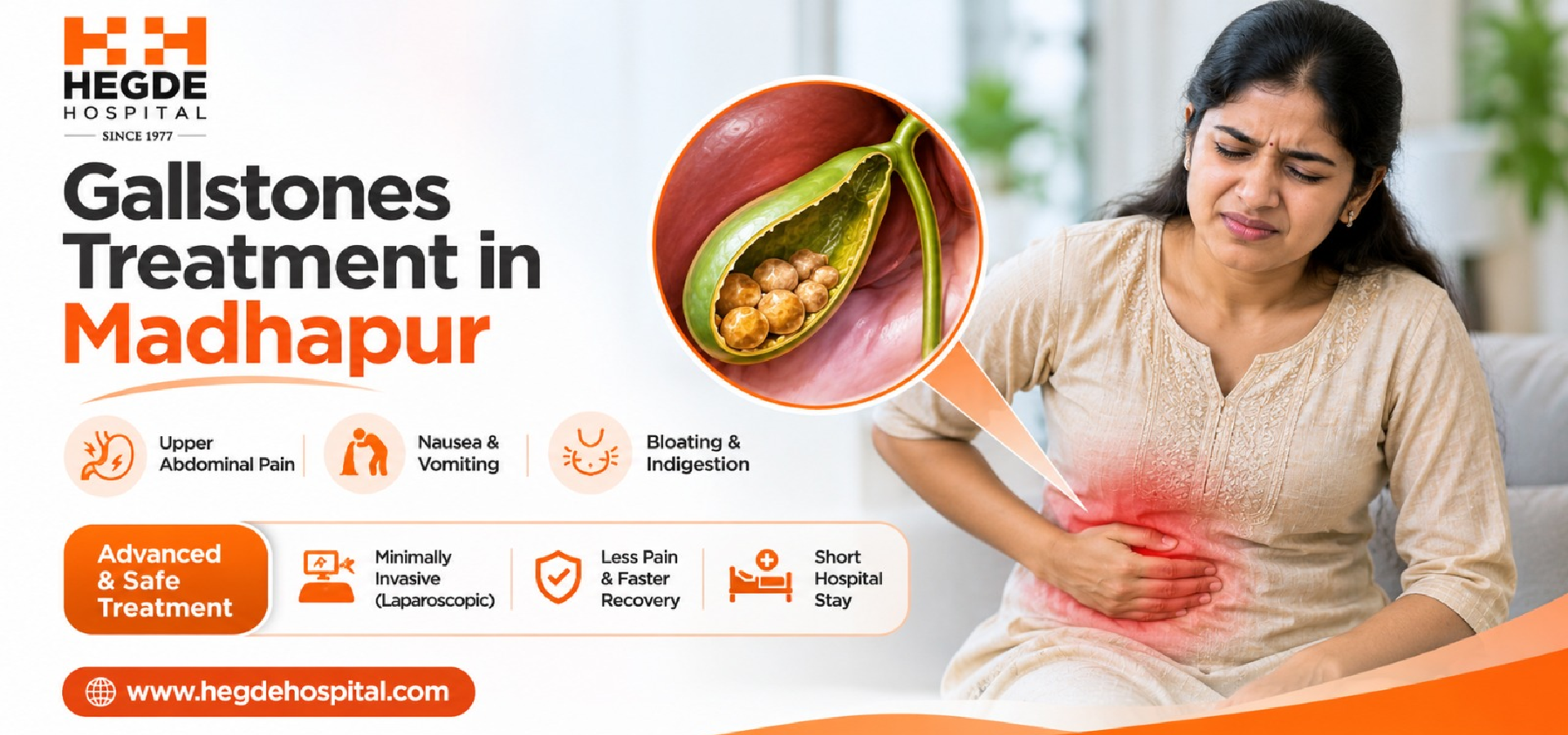
Best Gallstones Treatment in Madhapur
If you are searching for the Best Gallstones Treatment in Madhapur, timely medical evaluation can help identify the cause of your symptoms and determine the appropriate treatment. Gallstones are hard deposits that form inside the gallbladder. They may be made of cholesterol or other substances found in bile. Some people have gallstones without experiencing any symptoms, while others may develop abdominal pain and digestive discomfort.
Gallstones can cause pain in the upper right side or middle of the abdomen, nausea, vomiting, and discomfort after meals. If a stone blocks a bile duct, it may lead to complications such as gallbladder inflammation, jaundice, or pancreatitis. Medical assessment is important when symptoms occur.
Hegde Hospital can be contacted to enquire about evaluation and treatment options for gallstone-related conditions. The appropriate treatment depends on the patient's symptoms, scan findings, the location of the stones, and overall health.
Call Us: +91 7780747474Gallstones Treatment for Better Digestive Health
Gallstones may remain inside the gallbladder without causing problems. However, when they block the flow of bile, they can cause painful episodes and sometimes lead to inflammation or infection.
Treatment planning depends on whether the gallstones are causing symptoms or complications. A doctor may recommend observation for silent gallstones, while symptomatic gallstones may require surgery to remove the gallbladder. Stones in the common bile duct may require an additional endoscopic procedure.
What Are Gallstones?
Gallstones are solid deposits that develop inside the gallbladder, a small organ located below the liver on the right side of the abdomen. The gallbladder stores bile, a digestive fluid produced by the liver that helps the body digest fats.
Gallstones can vary in size and number. Some may be very small, while others can become larger. The two main types are cholesterol stones and pigment stones. Their presence does not always cause symptoms or require immediate treatment.
Common Symptoms of Gallstones
Gallstones may not cause symptoms in many people. When a stone blocks a bile duct, symptoms may include:
- Pain in the upper right side of the abdomen.
- Pain in the middle or upper part of the stomach.
- Abdominal pain that may last for more than 30 minutes.
- Pain that may spread towards the back or right shoulder.
- Nausea or vomiting.
- Abdominal discomfort after eating.
- Indigestion or bloating in some patients.
- Yellowing of the skin or whites of the eyes in cases of jaundice.
- Dark urine or unusually pale stools if bile flow is blocked.
Sudden severe abdominal pain, fever, chills, persistent vomiting, or yellowing of the skin or eyes requires urgent medical attention. These symptoms may indicate a serious gallstone-related complication.
What Causes Gallstones?
Gallstones can form when the substances in bile become imbalanced. Bile may contain too much cholesterol or bilirubin, or the gallbladder may not empty properly. These changes can cause solid particles to form and gradually develop into stones.
Several factors may increase the likelihood of developing gallstones. These include age, excess body weight, rapid weight loss, certain medical conditions, and dietary or lifestyle factors. However, gallstones can also develop in people without obvious risk factors.
Types of Gallstones
Gallstones are generally classified according to the substances from which they form.
- Cholesterol gallstones: These are usually yellowish-green stones formed mainly from hardened cholesterol. They are the most common type of gallstone.
- Pigment gallstones: These stones are usually darker and contain bilirubin, a substance produced when the body breaks down red blood cells.
The type, size, and location of gallstones may influence the treatment approach. Your doctor will assess the findings and explain the appropriate management options.
How Are Gallstones Diagnosed?
Gallstone diagnosis involves reviewing the patient's symptoms, medical history, and physical examination findings. Doctors may recommend imaging and laboratory investigations to identify stones and check for complications.
- Ultrasound scan: An abdominal ultrasound is commonly used to detect gallstones and examine the gallbladder.
- Blood tests: Blood investigations may help identify signs of inflammation, infection, or problems involving the liver and pancreas.
- Liver function tests: These tests may help assess whether a gallstone is affecting bile flow.
- MRCP: Magnetic resonance cholangiopancreatography may be recommended when doctors need a more detailed view of the bile ducts.
- Endoscopic ultrasound: In selected cases, this investigation may help identify stones in the bile ducts.
Gallstones Treatment Options
The appropriate treatment depends on whether gallstones are causing symptoms, whether the gallbladder is inflamed, and whether stones have entered the bile ducts. A doctor will review the investigation results before recommending a treatment plan.
- Observation and follow-up: Gallstones that do not cause symptoms may not require immediate treatment. Your doctor can advise whether monitoring is appropriate.
- Laparoscopic cholecystectomy: This is a keyhole surgical procedure to remove the gallbladder. It is a common treatment for symptomatic gallstones.
- Open cholecystectomy: In selected cases, the surgeon may remove the gallbladder through a larger abdominal incision.
- ERCP: Endoscopic retrograde cholangiopancreatography may be used to remove stones that are lodged in the common bile duct.
- Medicines: Certain medicines may dissolve selected cholesterol stones in specific situations. They are not suitable for everyone, and treatment may take a long time.
Diet changes and medicines may help manage some symptoms, but they do not reliably remove established gallstones. Your doctor will explain whether observation, surgery, or an additional procedure is appropriate for your condition.
What Is Laparoscopic Gallbladder Removal Surgery?
Laparoscopic cholecystectomy is a minimally invasive procedure used to remove the gallbladder. The surgeon makes several small incisions in the abdomen and inserts a laparoscope, a thin instrument with a camera, to view the surgical area.
Special surgical instruments are used to separate and remove the gallbladder. The small incisions are then closed using suitable methods. The procedure is commonly performed under general anaesthesia.
Laparoscopic surgery may offer smaller incisions and a shorter recovery period compared with open surgery for suitable patients. The surgical approach depends on the patient's condition and the surgeon's assessment.
What Is ERCP for Bile Duct Stones?
Gallstones can sometimes move from the gallbladder into the common bile duct and cause a blockage. ERCP is an endoscopic procedure that may be used to locate and remove stones from the bile duct.
During ERCP, a flexible endoscope is passed through the mouth into the digestive tract to access the opening of the bile duct. Special instruments can then be used to help clear the blockage. The need for ERCP depends on the location of the stones and the patient's clinical condition.
Why Consider Hegde Hospital for Gallstones Treatment?
Choosing a hospital for gallstone-related care involves considering medical evaluation, diagnostic facilities, surgical assessment, treatment planning, and follow-up. Patients can contact Hegde Hospital to enquire about consultation and the availability of relevant services.
- Medical evaluation of gallstone-related symptoms.
- Assessment of abdominal pain and digestive discomfort.
- Diagnostic investigations when clinically indicated.
- Review of gallbladder and bile duct findings.
- Discussion of suitable surgical treatment options.
- Pre-operative guidance when surgery is recommended.
- Post-treatment instructions and follow-up guidance.
- Individualized care based on the patient's condition.
Recovery After Gallbladder Removal Surgery
Recovery after gallbladder removal depends on the surgical method, the patient's general health, and whether complications were present. Many patients who undergo laparoscopic surgery can return home relatively soon, depending on their recovery and medical team's advice.
Some patients may experience temporary abdominal discomfort, nausea, bloating, or changes in bowel habits after surgery. The healthcare team may provide instructions about wound care, medicines, food, physical activity, and follow-up appointments.
Contact your healthcare team if you experience increasing abdominal pain, fever, persistent vomiting, wound redness, pus discharge, or yellowing of the skin or eyes after surgery.
Diet and Lifestyle After Gallstones Diagnosis
Dietary changes may help some people manage symptoms while awaiting treatment. However, food changes cannot reliably dissolve or remove existing gallstones. Your doctor can recommend a suitable eating plan based on your symptoms and overall health.
- Identify foods that appear to trigger your symptoms.
- Consider smaller meals if large meals cause discomfort.
- Include fibre-rich foods such as vegetables and whole grains.
- Maintain a healthy body weight through gradual changes.
- Avoid rapid weight-loss diets.
- Follow medical advice about diet and physical activity.
When Should You Seek Medical Attention?
Seek medical assessment if you experience repeated upper abdominal pain, nausea, vomiting, or discomfort that may be related to gallstones.
Sudden severe abdominal pain, pain spreading to the back with vomiting, high fever, chills, or yellowing of the skin or eyes may indicate a serious complication. Seek urgent medical attention rather than waiting for a routine appointment.
Frequently Asked Questions (FAQs)
1. What is the best treatment for gallstones in Madhapur?
The appropriate treatment depends on whether the gallstones cause symptoms or complications. Symptomatic gallstones are commonly treated with gallbladder removal surgery, while silent gallstones may not require immediate treatment. A doctor should assess your condition before recommending treatment.
2. What are the common symptoms of gallstones?
Common symptoms include pain in the upper right abdomen, abdominal discomfort, nausea, and vomiting. Some people may also develop fever or jaundice if complications occur. Gallstones can also remain symptom-free.
3. Can gallstones go away without surgery?
Most established gallstones do not disappear through diet changes alone. Some selected cholesterol stones may be treated with medicines, but this approach is not suitable for everyone and stones may return. Surgery is a common treatment for symptomatic gallstones.
4. Is laparoscopic gallbladder removal surgery safe?
Laparoscopic cholecystectomy is a commonly performed procedure. Like all surgeries, it carries potential risks, including infection, bleeding, bile leakage, or injury to nearby structures. Your surgeon will explain the benefits and risks based on your health.
5. Can a person live without a gallbladder?
Yes. The gallbladder is not an essential organ. After it is removed, bile flows directly from the liver into the small intestine. Most people can continue to live normally without a gallbladder.
6. How long does recovery take after gallbladder surgery?
Recovery varies depending on the type of surgery and the patient's health. Many people return to normal activities within a few weeks after laparoscopic surgery. Recovery may take longer after open surgery or when complications occur.
7. Can gallstones cause jaundice?
Yes. If a gallstone blocks the common bile duct, bile may build up and cause jaundice. Symptoms can include yellowing of the skin or eyes, dark urine, and pale stools. This requires prompt medical assessment.
8. What is ERCP and when is it needed?
ERCP is an endoscopic procedure that may be used to remove gallstones from the common bile duct. It is considered when stones have moved out of the gallbladder and are causing a blockage. Your doctor will determine whether it is necessary.
9. Do all gallstones require treatment?
No. Gallstones that do not cause symptoms may not need immediate treatment. However, symptomatic stones or stones causing complications may require medical or surgical management. Follow your doctor's advice.
10. How can I book an appointment at Hegde Hospital?
To enquire about an appointment for gallstone evaluation and treatment, call Hegde Hospital at +91 7780747474. The hospital team can guide you regarding consultation availability and the next steps.