
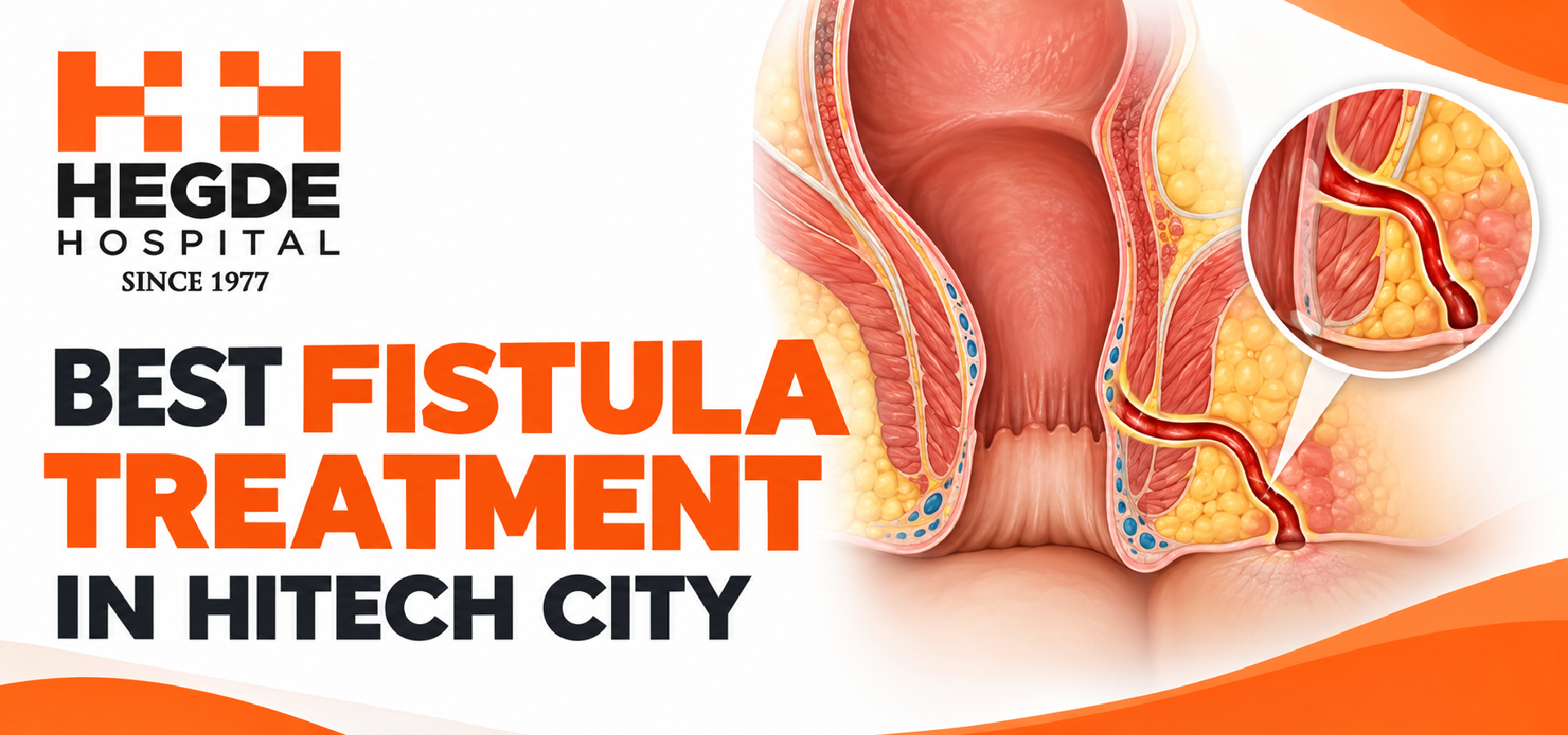
Fistula Treatment in Hitech City
If you are searching for the Best Fistula Treatment in Hitech City, timely medical evaluation can help identify the cause of your symptoms and determine the appropriate treatment. An anal fistula is an abnormal tunnel connecting the anal canal or rectum to the skin around the anus. It commonly develops following an anal abscess or infection that does not heal completely.
An anal fistula may cause persistent discharge, pain, swelling, irritation, and recurring infections. These symptoms can affect everyday activities and may require specialist evaluation. Treatment depends on the location and complexity of the fistula and its relationship to the anal sphincter muscles.
Hegde Hospital provides evaluation and treatment options for anal fistula through its general and colorectal surgical services. Depending on the patient's condition, treatment may include conventional surgical techniques or minimally invasive options, including laser treatment in suitable cases.
Call Us: +91 7780747474Advanced Fistula Treatment for Better Recovery
Persistent fistula symptoms can be uncomfortable and may return if the underlying tract does not heal properly. A medical examination helps the surgeon assess the fistula and determine the most appropriate treatment approach.
At Hegde Hospital, treatment planning considers the location, complexity, previous treatment history, and involvement of surrounding muscles. The goal is to treat the fistula while preserving normal anal function and supporting recovery.
What Is an Anal Fistula?
An anal fistula is an abnormal passage between the inside of the anal canal and the skin near the anus. It often develops after an anal abscess, which is a collection of pus caused by an infection. If the area does not heal properly, a fistula tract may remain.
Some fistulas are relatively simple, while others have complex pathways or involve the anal sphincter muscles. The type of fistula helps determine which treatment is most appropriate.
Common Symptoms of Anal Fistula
Symptoms that may indicate an anal fistula include:
- Persistent pus or fluid discharge near the anus.
- Pain or swelling around the anal area.
- Recurring anal abscesses or infections.
- Blood or discharge from a small opening near the anus.
- A wound near the anus that does not heal.
- Skin irritation or discomfort in the affected area.
- Difficulty sitting because of anal pain.
- Recurring symptoms after previous fistula surgery.
If you experience persistent discharge, recurrent swelling, fever, or increasing pain, seek medical evaluation promptly.
What Causes an Anal Fistula?
Most anal fistulas develop after an anal abscess or infection. When the infected area does not heal completely, an abnormal passage may form between the anal canal and the surrounding skin.
Certain intestinal conditions, including Crohn's disease, can also be associated with fistula formation. A doctor can assess your medical history and symptoms to help identify the likely cause.
Fistula Treatment Options
The appropriate treatment depends on the fistula's location, complexity, and involvement of the anal sphincter muscles. A surgeon will assess the condition before recommending a suitable procedure.
- Fistulotomy: A surgical procedure that opens a suitable fistula tract to help it heal. It is generally considered for selected fistulas where the procedure can be performed safely.
- Fistulectomy: A procedure that removes the fistula tract in selected cases. Suitability depends on the fistula's anatomy and the patient's clinical condition.
- Laser fistula treatment: A minimally invasive option that uses a specialized laser fiber to treat the fistula tract. It may be considered for suitable patients after specialist assessment.
- Seton placement: A surgeon may use a seton in selected complex fistulas to help manage drainage and infection while planning appropriate treatment.
No single procedure is appropriate for every fistula. Your surgeon can explain the expected benefits, risks, healing time, and possibility of recurrence for the recommended treatment.
What Is Laser Fistula Treatment?
Laser fistula treatment uses a specialized laser fiber to deliver energy within the fistula tract. The aim is to treat the tract while limiting damage to surrounding tissue in appropriately selected cases.
The suitability of laser treatment depends on the fistula's anatomy and complexity. It does not guarantee that the fistula will heal faster or that recurrence will be avoided. Your surgeon will discuss whether laser treatment or another technique is more suitable for your condition.
Why Consider Hegde Hospital for Fistula Treatment?
Selecting a hospital for fistula treatment involves considering the surgical team's expertise, diagnostic facilities, treatment options, and follow-up care. Hegde Hospital offers evaluation and individualized treatment planning for patients with anal fistula.
- General and colorectal surgical evaluation.
- Assessment of simple and complex fistulas.
- Diagnostic investigations when clinically indicated.
- Conventional and minimally invasive treatment options.
- Laser treatment for suitable cases.
- Pre-operative guidance and post-operative follow-up.
- Individualized care based on the patient's condition.
Recovery After Fistula Treatment
Recovery depends on the procedure performed, the complexity of the fistula, and individual health. Your surgeon may provide instructions about wound care, hygiene, medicines, diet, activity, and follow-up appointments.
Attend recommended follow-up visits so your healthcare team can monitor healing. Contact your doctor if you develop increasing pain, fever, worsening swelling, heavy bleeding, or other concerning symptoms.
Frequently Asked Questions (FAQs)
1. What is the best treatment for fistula in Hitech City?
The best treatment depends on the fistula's location, complexity, and involvement of the anal sphincter muscles. Options may include fistulotomy, other surgical techniques, seton placement, or laser treatment for selected cases. A qualified surgeon should evaluate your condition before recommending treatment.
2. Can an anal fistula heal on its own?
Anal fistulas generally do not heal completely without appropriate treatment. Persistent discharge, recurring infections, or a non-healing wound should be evaluated by a qualified surgeon.
3. What are the common symptoms of an anal fistula?
Common symptoms include pus or fluid discharge, pain, swelling, irritation, recurring abscesses, and a small opening or wound near the anus. Seek medical advice if these symptoms persist or recur.
4. Is laser fistula treatment suitable for everyone?
No. Laser treatment may be suitable for selected fistulas, but the appropriate procedure depends on the tract's anatomy and complexity. Your surgeon will explain the available options and their potential benefits and risks.
5. Is fistula surgery painful?
The amount of discomfort varies according to the fistula and the procedure performed. Anaesthesia and appropriate pain management can help manage discomfort. Your surgical team will explain what to expect during recovery.
6. How long does recovery take after fistula surgery?
Recovery time varies depending on the procedure, fistula complexity, and individual healing. Some patients return to routine activities relatively soon, while complete healing may take several weeks or longer. Follow your surgeon's instructions and attend follow-up visits.
7. Can a fistula come back after treatment?
Yes. Recurrence is possible, particularly with complex fistulas. The risk depends on the fistula's anatomy, the treatment performed, and healing. Follow-up care helps the surgeon monitor recovery and identify persistent or recurring symptoms.
8. How can I book an appointment at Hegde Hospital?
To enquire about an appointment for fistula evaluation and treatment, call Hegde Hospital at +91 7780747474. The hospital team can guide you regarding consultation availability and the next steps.