
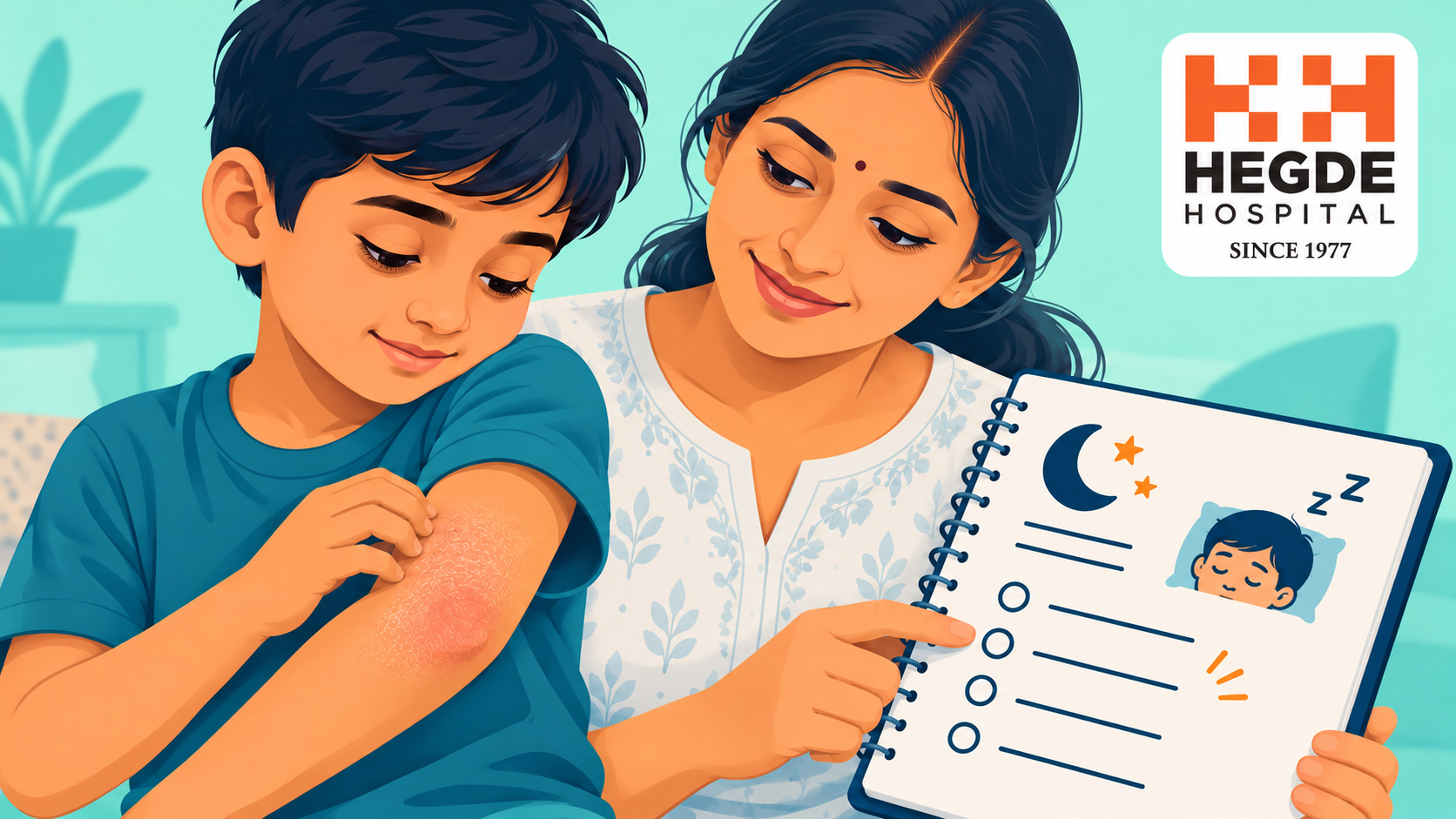
Recurring itchy patches can disturb a child’s sleep even when the rash looks small. Assessment considers the pattern, skin changes and effect on everyday life.
Your child scratches the same areas again after a few quieter days. The patches may look less red in the morning, yet the itching keeps everyone awake at night. Repeated symptoms deserve a clearer plan rather than trying a different product every time.
Eczema is one possible explanation. Not every itchy rash is eczema, and an existing diagnosis does not explain every new skin change. This guide concerns recurring symptoms and a planned assessment.
The direct answer
Book a review when itching keeps returning, disrupts sleep or school, affects large areas, or is not improving with the agreed care plan. The clinician looks at the child's history and skin and asks how family life is affected. There is no single routine blood test that confirms eczema. Allergy tests, skin samples and specialist referral are used for selected clinical questions.
What pattern can suggest eczema?
Atopic eczema is an inflammatory skin condition with an impaired protective skin barrier. Dryness and itch may come and go. Patches can affect different areas at different ages, including the cheeks in younger children and skin folds in older children. Skin can look red, darker, lighter, thickened or scratched; redness alone is not a reliable measure across skin tones.
Repeated scratching can damage the skin further. This does not mean the child is being difficult or that a parent has failed. Eczema itself is not contagious. Other conditions, including contact irritation, fungal infection or scabies, can resemble parts of the pattern and may need a different approach.
What should parents record before the appointment?
Note when the problem began, which areas itch, how often it returns and whether sleep is interrupted. Describe school concentration, play and any avoidance of activities because of discomfort or embarrassment. Photographs taken during a flare can help explain changes that are quieter on the day, but do not replace examination.
Bring information about products and treatments already used, how they were applied and what happened afterwards. Mention possible irritants, new products, recurrent skin infections and any personal or family history of asthma or nasal allergy. A diary can suggest associations; it cannot prove that a particular food or exposure is responsible.
What will the doctor assess?
The clinician examines the distribution, dryness, scratching and signs of active inflammation or infection. They also consider the child's age, growth, general health and whether the diagnosis fits the history. Severity includes discomfort and sleep loss, not just the size of the visible patch.
Questions about the current plan help distinguish a treatment that is not appropriate from a plan that was hard to understand or difficult to use. Ask for a demonstration or written instructions when needed. The purpose is a workable, age-appropriate plan, without blame or a long list of unnecessary tests.
Does every child need allergy testing?
No. Some children with eczema also have an allergy, but eczema alone does not establish a food allergy. Targeted testing may be useful when there is a convincing reaction history or persistent significant disease despite appropriate care. A positive test can show sensitivity without proving that exposure explains the child's rash.
Do not remove several foods or change an infant's feeding based only on an online list or a broad test panel. Unnecessary restriction can affect nutrition. Discuss any immediate food-related reaction separately with the clinician. Our childhood nasal allergy guide explains why allergy results also need context in nasal symptoms; it is not an eczema diagnostic tool.
How is follow-up useful?
The review should agree what improvement means: fewer itchy nights, less scratching, more comfortable skin and ordinary participation in school and play. Ask what to do when symptoms return and how to distinguish a routine flare from a change needing examination. The care plan may require adjustment as age, affected areas and severity change.
Specialist advice may be considered when the diagnosis is uncertain, symptoms remain difficult to control, infections recur or growth or family wellbeing is affected. A referral does not mean every child needs advanced treatment. Do not borrow another child's products or add home remedies to an inflamed area.
When is earlier assessment needed?
A routine appointment suits stable recurring itch, treatment questions and sleep disturbance. Seek prompt medical assessment for rapidly worsening skin, new pain, weeping or crusting with suspected infection, or fever and a child who seems unwell. Painful clustered blisters or rapidly spreading sores need same-day assessment. Severe illness or breathing difficulty needs immediate medical care.
For recurring stable symptoms, paediatric care can help choose an initial assessment or referral. Book an appointment with your symptom record and the names of products already used. No medicine names, doses or individual treatment schedules are provided here.
Frequently asked questions
Does repeated itching always mean eczema?
No. The location, time pattern, skin appearance and examination help distinguish eczema from other causes of itch.
Can eczema spread between children?
Eczema itself is not contagious. A separate infection may occur on affected skin and needs its own assessment.
Does a small rash mean mild disease?
Not always. A limited patch can still cause substantial sleep loss or distress. Describe the effect on daily life as well as its size.
Is an allergy panel necessary before the visit?
Usually not. The history and examination should guide any targeted testing, so it is reasonable to attend without ordering a panel first.
Should follow-up continue when the skin looks better?
Follow the agreed plan. Reviewing recurring symptoms, sleep and difficulties using care helps judge whether improvement is sustained.