
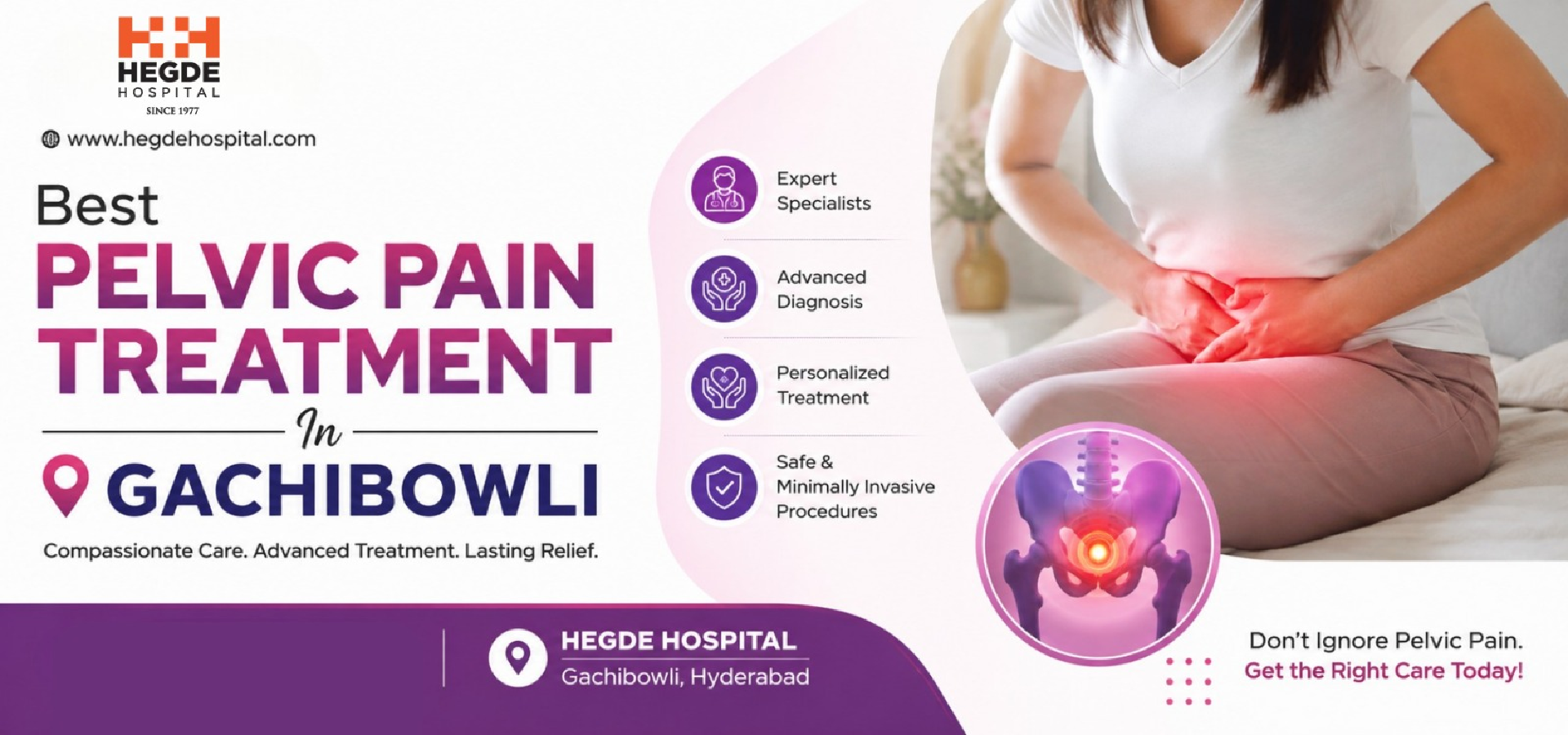
Looking For the Best Pelvic Pain Treatment in Gachibowli?
If you are experiencing persistent or recurring pelvic pain and looking for expert pelvic pain treatment in Gachibowli, getting the right medical evaluation is an important first step. Pelvic pain can have several possible causes, and identifying the underlying condition is important for choosing appropriate treatment.
Pelvic pain may be related to gynecological, urinary, digestive, muscular, or other medical conditions. It may be temporary or persistent and can range from mild discomfort to severe pain.
At Hegde Hospital, our specialists provide comprehensive evaluation for pelvic pain and work to identify the underlying cause before recommending treatment. Our multidisciplinary approach helps patients receive appropriate care for gynecological, gastrointestinal, urinary, muscular, and other conditions that may contribute to pelvic discomfort.
Whether your pelvic pain is occasional, recurring, or affecting your daily activities, timely medical evaluation can help identify the cause and guide an appropriate treatment plan.
Call Us: +91 7780747474Comprehensive Pelvic Pain Care in Gachibowli
Pelvic pain can be challenging because several different conditions can produce similar symptoms. At Hegde Hospital, our doctors evaluate your symptoms, medical history, and clinical findings to understand the possible source of your pain.
Once the underlying cause is identified, treatment can be tailored to your individual condition. Depending on the cause, treatment may include medication, lifestyle measures, physiotherapy, hormonal treatment, or surgery when clinically appropriate.
What is Pelvic Pain?
Pelvic pain refers to pain or discomfort felt in the lower abdomen or pelvic region. It may occur in one specific area or spread across the pelvis and lower abdomen.
The pain may be sharp, dull, cramping, burning, or continuous. Depending on the underlying cause, it may occur during menstruation, sexual activity, urination, bowel movements, or physical activity.
Common causes in women include menstrual cramps, ovarian cysts, endometriosis, fibroids, pelvic infections, and other gynecological conditions. Digestive and urinary disorders can also contribute to pelvic pain.
Common Symptoms Associated with Pelvic Pain
- Persistent or recurring lower abdominal pain
- Painful menstrual periods
- Pelvic pain between menstrual cycles
- Pain during sexual intercourse
- Pain while urinating
- Pain associated with bowel movements
- Pelvic pain associated with abnormal vaginal bleeding
- Pelvic discomfort associated with bloating or digestive symptoms
- Unexplained pelvic pain affecting daily activities
- Previously diagnosed pelvic conditions
These symptoms can have different causes, so proper medical evaluation is important rather than trying to self-diagnose.
What Causes Pelvic Pain?
- Menstrual Conditions: Period-related cramps and other menstrual disorders can cause pelvic discomfort.
- Endometriosis: A condition in which tissue similar to the uterine lining grows outside the uterus.
- Ovarian Cysts: Cysts developing in or on the ovaries can sometimes cause pelvic pain.
- Uterine Fibroids: Non-cancerous growths that may cause pelvic pressure or discomfort.
- Pelvic Infections: Infections affecting reproductive organs can result in pelvic pain.
- Urinary Conditions: Urinary tract and other urinary conditions can sometimes cause pelvic discomfort.
- Digestive Conditions: Constipation, IBS, and other bowel conditions may contribute to pelvic pain.
- Muscular Problems: Pelvic floor and other musculoskeletal problems can contribute to persistent pelvic discomfort.
Pelvic Pain Treatment Options
Treatment depends on the underlying cause, severity, duration, and individual medical requirements. There is no single treatment that is appropriate for every patient.
- Medicines: Depending on the cause, doctors may recommend appropriate medicines to manage pain or treat an underlying condition.
- Hormonal Treatment: Hormonal treatment may be considered for selected menstrual-related conditions and other gynecological causes.
- Physiotherapy: Pelvic floor or other physical therapy may be useful for selected muscle-related causes of pelvic pain.
- Lifestyle Measures: Appropriate physical activity, healthy lifestyle habits, and individualized measures may support symptom management.
- Surgical Treatment: Surgery may be considered when a specific condition requires surgical management.
Why Choose Hegde Hospital?
- Experienced Gynecology & General Surgery Specialists
- Comprehensive Pelvic Pain Evaluation
- Advanced Diagnostic Facilities
- Personalized Treatment Plans
- Modern Ultrasound & Diagnostic Support
- Multidisciplinary Medical Care
- Advanced Surgical Options When Required
- Comprehensive Pre & Post-treatment Support
When Should You Consult a Doctor?
You should consult a doctor if pelvic pain is persistent, recurring, severe, worsening, or interfering with your daily activities. Proper evaluation can help identify the underlying cause and guide appropriate treatment.
Sudden or severe pelvic pain, heavy bleeding, fainting, fever, persistent vomiting, or pregnancy-related pelvic pain requires prompt medical evaluation.