
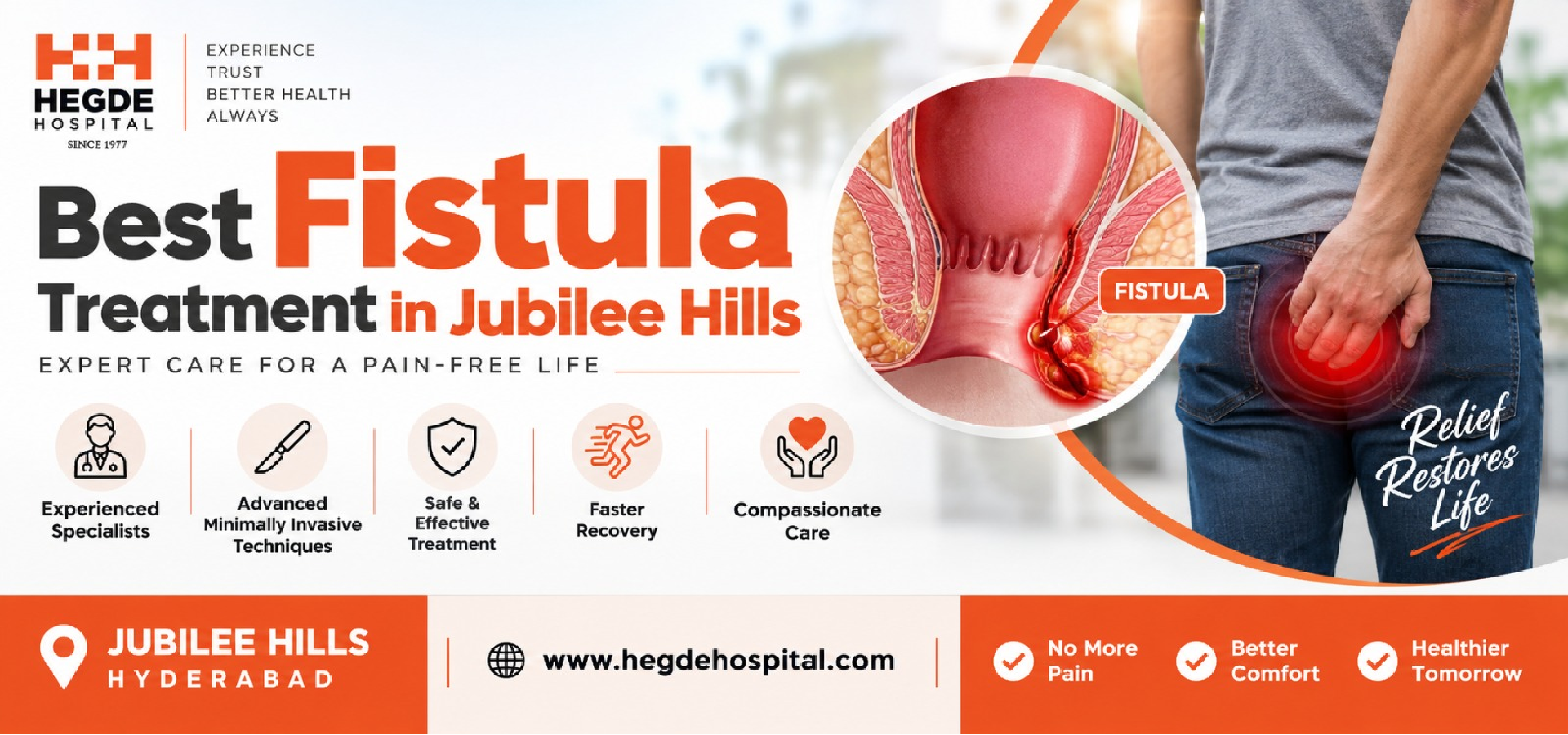
Looking For the Best Fistula Treatment in Jubilee Hills?
An anal fistula is an abnormal tunnel or passage that develops between the anal canal and the skin around the anus. It commonly develops after an anal abscess or infection and may cause persistent discharge, pain, swelling, irritation, and recurring infections.
If you are looking for expert fistula treatment in Jubilee Hills, timely evaluation by an experienced surgeon can help identify the fistula tract and determine the most appropriate treatment for your condition.
At Hegde Hospital, our General Surgery and Colorectal Surgery team provides comprehensive evaluation and treatment for anal fistula. Treatment is planned according to the location, complexity, and involvement of the anal sphincter muscles.
📞 Call +91 7780747474Advanced Fistula Treatment for Patients in Jubilee Hills
Anal fistulas usually do not heal completely on their own and may require medical or surgical treatment. The appropriate procedure depends on the location and complexity of the fistula.
At Hegde Hospital, specialists carefully evaluate the fistula tract and recommend a treatment approach based on the individual patient's condition. Minimally invasive and laser-based techniques may be considered in suitable cases.
What Is an Anal Fistula?
An anal fistula is a small abnormal passage connecting the anal canal or rectum to the skin near the anus. It often develops following an anal abscess when the infected area does not heal properly.
An anal fistula may cause persistent discharge, pain, swelling, irritation, recurrent abscesses, or a small opening or wound around the anal area.
Common Symptoms of Anal Fistula
- Persistent pus or fluid discharge near the anus
- Pus or blood coming from an opening near the anus
- Recurring anal abscesses
- Pain or swelling around the anal area
- Non-healing wound near the anus
- Persistent irritation or skin problems
- Repeated infections in the same area
- Difficulty sitting because of anal discomfort
Who Should Consult a Fistula Specialist?
You should consider consulting a qualified surgeon if you experience persistent anal discharge, recurrent swelling, a non-healing wound, repeated infections, or symptoms that return after previous fistula treatment.
Persistent anal discharge or recurrent swelling should not be treated repeatedly with home remedies. A proper clinical evaluation can help determine the cause and appropriate treatment.
How Is Anal Fistula Diagnosed?
Diagnosis usually begins with a detailed medical history and physical examination of the affected area. The surgeon evaluates the fistula opening, symptoms, previous abscesses, and any history of previous fistula surgery.
Additional imaging may be recommended in complex or recurrent fistulas to understand the fistula tract and plan treatment appropriately.
Fistula Treatment Options
Treatment depends on the location, complexity, and involvement of the anal sphincter. Your surgeon will recommend the most appropriate option after evaluating your condition.
- Conventional fistula surgery when clinically appropriate
- Minimally invasive surgical techniques
- Laser fistula treatment for suitable patients
- Management of associated infection or abscess
- Personalized pre-operative and post-operative care
Hegde Hospital also provides advanced laser fistula treatment using minimally invasive techniques in suitable cases, with the goal of treating the fistula tract while preserving healthy surrounding tissue.
Why Choose Hegde Hospital for Fistula Treatment?
- Experienced General & Colorectal Surgeons
- Advanced Diagnostic Facilities
- Modern Fistula Treatment Options
- Minimally Invasive Surgical Techniques
- Laser Treatment Options for Suitable Cases
- Personalized Treatment Plans
- Modern Operation Theatres
- Comprehensive Pre & Post-operative Care
- Patient-Centered and Compassionate Treatment
When Should You See a Doctor for Fistula?
Seek medical evaluation if you notice persistent pus or fluid discharge, repeated swelling, recurring abscesses, pain around the anus, or a wound that does not heal.
Early evaluation can help identify the fistula tract and reduce the risk of recurrent infections and other complications.
Frequently Asked Questions (FAQs)
1. What causes an anal fistula?
An anal fistula most commonly develops after an anal abscess or infection. Other conditions affecting the intestine or anus may also increase the risk.
2. Can an anal fistula heal on its own?
Anal fistulas generally do not heal completely without appropriate treatment. A surgeon should evaluate the condition and recommend the most suitable treatment.
3. What are the symptoms of an anal fistula?
Common symptoms include persistent pus or fluid discharge, pain, swelling, irritation, recurrent abscesses, and a small opening or wound near the anus.
4. Is fistula surgery painful?
The amount of discomfort depends on the type and complexity of the fistula and the procedure performed. Modern surgical techniques and appropriate pain management can help make recovery more comfortable.
5. Is laser fistula treatment available?
Laser fistula treatment is available for suitable cases. The appropriate treatment depends on the fistula's location, complexity, and individual patient factors.
6. Why choose Hegde Hospital for fistula treatment?
Hegde Hospital provides experienced surgeons, advanced diagnostic facilities, modern treatment options, personalized care, and comprehensive post-operative support for patients with anal fistula.
BOOK YOUR APPOINTMENT
Consult Our Fistula Specialists