
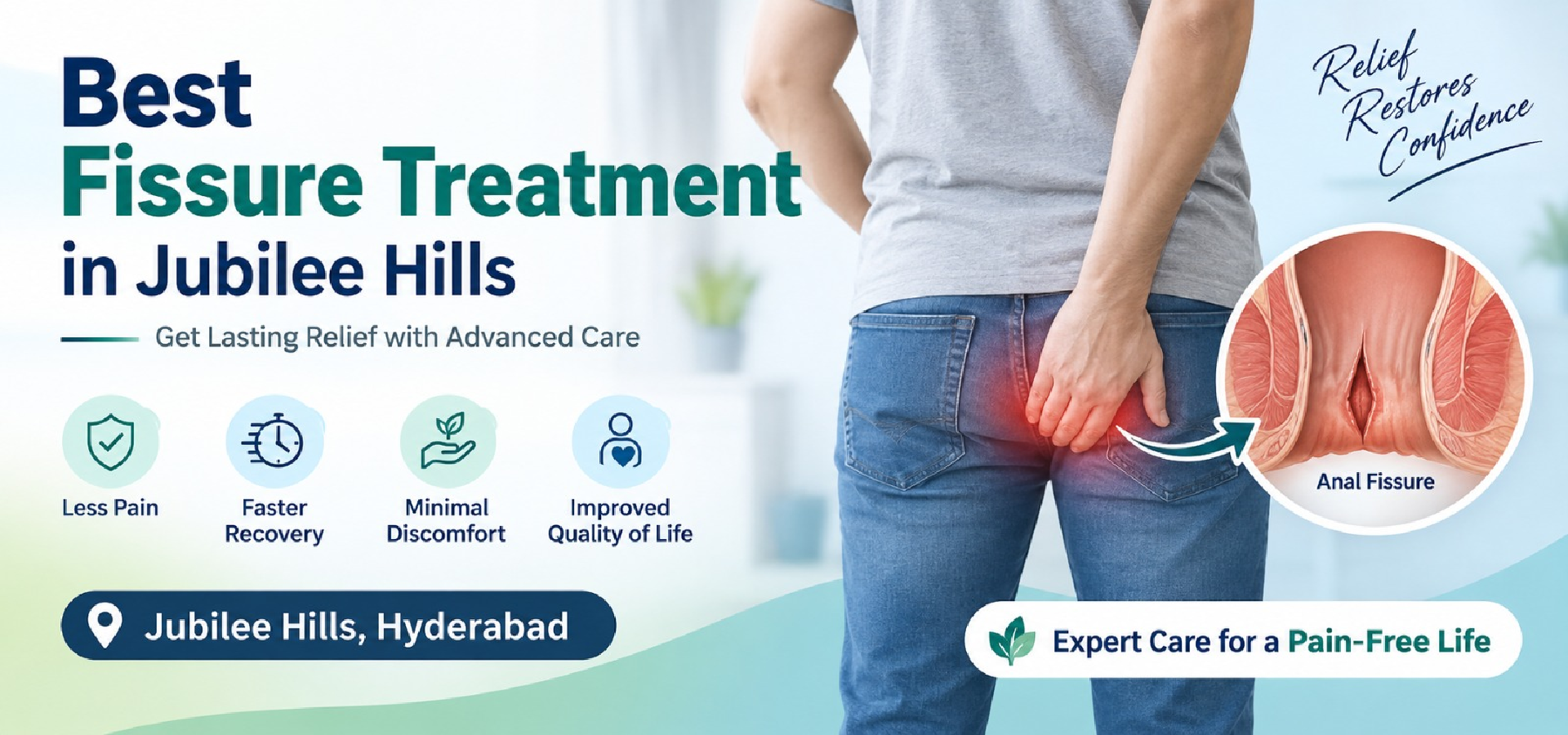
Looking For the Best Fissure Treatment in Jubilee Hills?
An anal fissure is a small tear in the lining of the anus that can cause sharp pain, burning, discomfort and bleeding during or after bowel movements. Constipation, passing hard stools and repeated straining are common causes.
Hegde Hospital provides comprehensive evaluation and treatment for anal fissures. Patients from Jubilee Hills and surrounding areas can consult experienced General Surgery and Colorectal Surgery specialists for diagnosis and personalized treatment.
Call +91 7780747474Advanced Fissure Treatment for Patients in Jubilee Hills
Anal fissures can be extremely uncomfortable and may make bowel movements difficult. Appropriate treatment can help reduce pain, improve bowel habits and support healing.
Persistent or recurring anal pain and bleeding should not be ignored. Specialist evaluation can help confirm whether the symptoms are caused by a fissure or another anorectal condition.
What Is an Anal Fissure?
An anal fissure is a tear or crack in the thin tissue lining the anus. It commonly occurs when hard or large stools cause injury to the anal lining. Chronic diarrhoea, childbirth and other conditions can also contribute to fissures.
Typical symptoms include sharp pain during bowel movements, burning pain that may continue afterwards, bright-red blood on toilet paper or the surface of the stool, and itching or irritation around the anus.
Common Symptoms of Anal Fissure
- Sharp or cutting pain during bowel movements
- Burning pain after passing stools
- Bright-red blood on toilet paper or stool
- Itching or irritation around the anus
- Chronic constipation or hard stools
- Recurring anal pain or discomfort
- Difficulty sitting because of anal discomfort
- Symptoms lasting for several weeks
- Repeated fissures despite home treatment
Who Should Consult a Fissure Specialist?
- People experiencing sharp pain while passing stools
- Patients with persistent burning after bowel movements
- People noticing bright-red rectal bleeding
- Patients with chronic constipation or hard stools
- People with recurring anal pain
- Patients experiencing persistent itching or irritation
- People with fissure symptoms lasting several weeks
- Patients whose symptoms continue despite home care
- Patients seeking treatment for chronic anal fissures
How Is an Anal Fissure Diagnosed?
Diagnosis generally begins with a detailed medical history and examination. The doctor evaluates the pattern of pain, bleeding, bowel habits and other symptoms.
A gentle examination of the affected area can often help identify an anal fissure. If symptoms are unusual, persistent or suggest another condition, additional investigations may be recommended.
Fissure Treatment Options
Treatment depends on whether the fissure is acute or chronic and on the severity of symptoms. Many acute fissures can improve with appropriate medical care and improved bowel habits.
- Dietary and lifestyle modifications
- Increasing fibre intake as advised
- Maintaining adequate fluid intake
- Stool-softening measures when recommended
- Doctor-guided medications
- Warm-water sitz care for comfort
- Procedures for selected chronic fissures
- Surgical treatment when clinically required
Advanced Laser Fissure Treatment
Hegde Hospital offers advanced laser treatment for selected chronic anal fissures. Laser treatment uses focused laser energy to treat the affected area with precision and is a minimally invasive option.
According to Hegde Hospital, laser fissure treatment is designed to minimize tissue damage and postoperative discomfort and may support faster recovery in appropriately selected patients.
The suitability of laser treatment depends on the patient's condition, fissure characteristics and clinical assessment by the treating surgeon.
Can a Fissure Heal Without Surgery?
Many acute anal fissures can improve without surgery through appropriate medical care, dietary changes, stool-softening measures and better bowel habits.
Chronic fissures that continue despite conservative treatment may require a procedure or surgery. The recommended approach depends on the duration, severity and individual characteristics of the fissure.
Why Choose Hegde Hospital for Fissure Treatment?
- Experienced General & Colorectal Surgeons
- Advanced diagnostic facilities
- Modern fissure treatment options
- Advanced laser treatment for suitable cases
- Minimally invasive treatment techniques
- Personalized treatment plans
- Modern operation theatres
- Comprehensive pre- and post-operative care
- Patient-focused and compassionate care
Recovery After Fissure Treatment
Recovery depends on the treatment performed and the individual patient's condition. Following the doctor's instructions regarding diet, bowel habits, medications, wound care and activity can support recovery.
Maintaining soft stools and avoiding excessive straining can also help reduce the risk of recurrent symptoms. Your surgeon will provide personalized instructions based on your treatment.
When Should You See a Doctor?
Consult a doctor if anal pain or bleeding persists, symptoms keep returning, bowel movements become increasingly difficult, or home measures do not provide relief.
Very heavy bleeding, black stools, fever, pus, increasing swelling, dizziness or other unusual symptoms require prompt medical evaluation.
Frequently Asked Questions (FAQs)
1. What causes an anal fissure?
Anal fissures are commonly associated with passing hard or large stools, constipation and straining. Persistent diarrhoea, childbirth and other conditions may also contribute.
2. Can an anal fissure heal without surgery?
Yes. Many acute fissures can improve with appropriate medical treatment, dietary changes and better bowel habits. Chronic fissures that do not respond to conservative treatment may require a procedure or surgery.
3. What are the symptoms of an anal fissure?
Common symptoms include sharp pain during bowel movements, burning afterwards, bright-red bleeding, itching and irritation around the anus.
4. Is laser fissure treatment suitable for everyone?
No. Laser treatment is not necessarily suitable for every patient. The appropriate treatment depends on the duration, severity and characteristics of the fissure and should be decided after specialist evaluation.
5. How long does laser fissure treatment take?
Hegde Hospital states that laser fissure treatment usually takes around 20–30 minutes, depending on the severity of the condition.
6. Where can I get fissure treatment near Jubilee Hills?
Hegde Hospital provides fissure evaluation and treatment for patients from Jubilee Hills and surrounding areas of Hyderabad. Call +91 7780747474 to enquire about an appointment.