
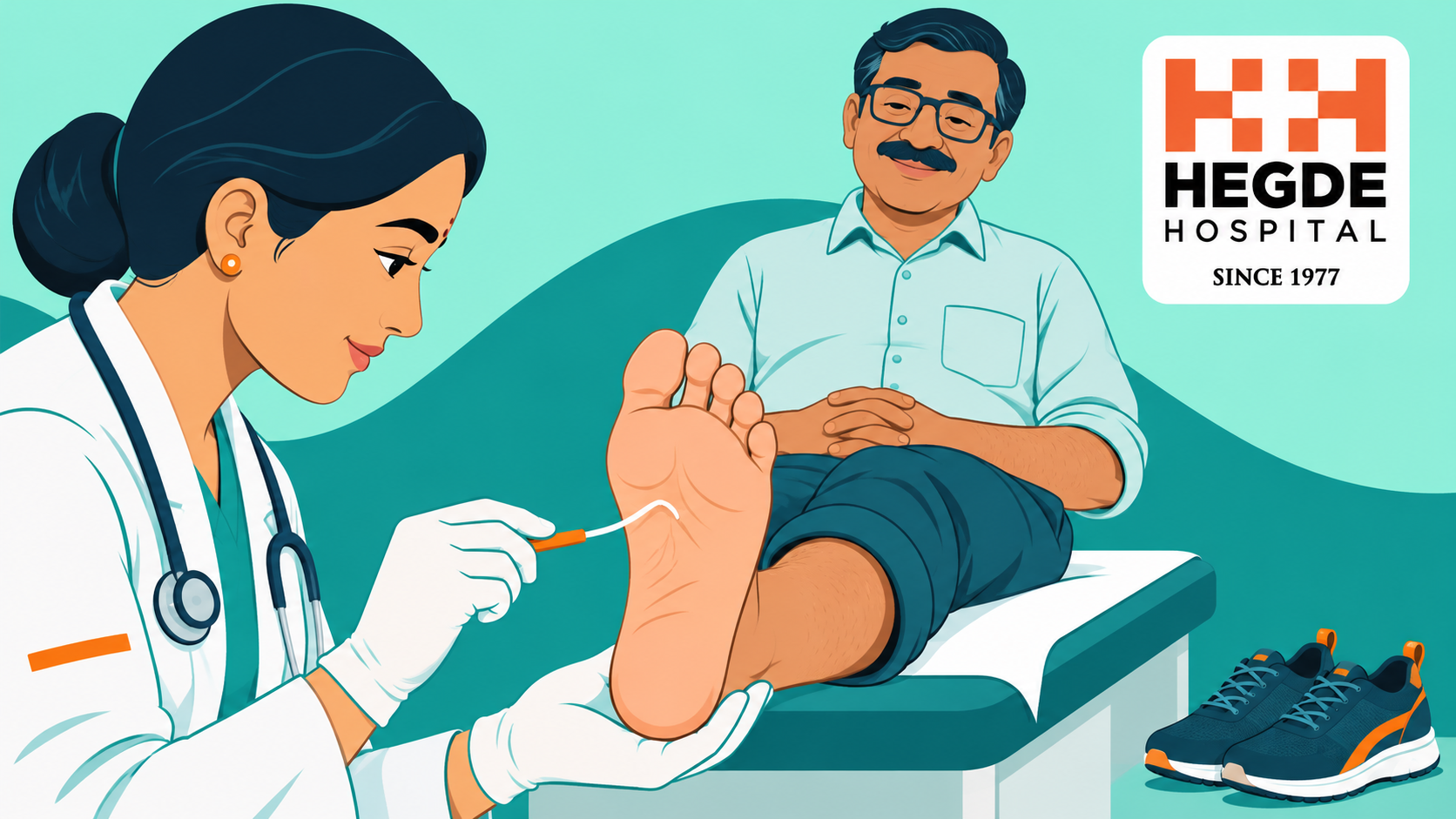
A diabetes foot examination checks more than whether your feet hurt. Skin, feeling, circulation and footwear findings help the clinician plan preventive follow-up.
Your glucose review is booked, and your feet feel comfortable. It may seem unnecessary to take off your shoes during the appointment. Yet a routine foot examination can identify changes that pain alone would not reveal.
Diabetes can affect sensation and circulation. If protective feeling is reduced, a rubbing shoe or small injury may not be noticed in the usual way. Checking the feet is therefore part of preventive diabetes care, rather than something reserved for a painful foot.
The direct answer
A comprehensive foot check reviews your history, skin and nails, foot shape, sensation and circulation. The clinician also considers footwear and any previous wound or circulation problem. The findings guide your risk assessment and the timing of the next review.
Many people need a comprehensive examination at least annually. Someone with reduced sensation, a previous ulcer or other important risk factors needs more frequent checks. The schedule should be agreed individually rather than copied from another person’s diabetes plan.
What should you bring?
Wear or bring the shoes you use most often, together with any prescribed foot support. Bring your diabetes records and a list of current treatments. Tell the clinician about previous foot wounds, operations, circulation procedures and kidney problems, even if they happened years ago.
Mention numbness, tingling, burning, changes in skin colour or discomfort in the legs while walking. Explain any difficulty seeing or reaching your feet. These details can change the support you need between appointments.
Our first diabetes review guide explains the broader assessment. A foot examination is one part of that care and does not replace kidney, eye or cardiovascular review when indicated.
What does the clinician look at?
Both shoes and socks are removed so the whole foot can be examined, including the sole, heel and spaces between the toes. The clinician looks for rubbing, pressure areas, cracks, callus, nail changes and alterations in foot shape.
Footwear is checked for fit and places that could create pressure. A shoe that feels comfortable is not necessarily free from rubbing if sensation has changed. Describe your usual work and activity so advice can fit your daily life.
How is protective feeling tested?
One commonly used tool is a monofilament, a fine flexible strand applied at selected points on the foot. It checks whether protective pressure can be felt. The clinician may also test vibration, pinprick or temperature sensation, depending on the assessment.
This is not a test of how much pain you can tolerate. Follow the examiner’s instructions and report what you actually feel. Do not practise on yourself with sharp objects or household equipment. One normal response does not replace a complete examination.
How is circulation assessed?
The clinician feels pulses in the feet and considers temperature, skin colour and other findings, alongside your symptoms and history. Weak pulses or a concerning history may lead to additional blood-flow tests or specialist review.
Specialised pressure measurements or vascular scans are selected when needed, rather than ordered for everyone. Diabetes can affect interpretation of some circulation measurements, so a report should be discussed with the clinician who requested it.
| Part of the examination | Why it matters |
|---|---|
| Skin, nails and pressure points | Finds damage or areas exposed to repeated rubbing |
| Sensation | Assesses whether injury may go unnoticed |
| Pulses and circulation findings | Identifies reasons for further blood-flow assessment |
| Foot shape and footwear | Helps assess pressure and suitable support |
| Previous wounds and medical history | Influences the risk category and review interval |
What happens after the check?
Ask what the findings mean, when you should return and whom to contact if something changes. Some people need only routine preventive review; others may need a foot-care or vascular referral, footwear advice or closer follow-up.
No single examination guarantees that a later problem cannot develop. Follow the personalised foot-care advice and report changes between visits. Do not cut away callus or treat a new wound yourself based on an online article. Confirm referral arrangements and service availability with your care team.
Which changes should not wait for the annual appointment?
A new wound, redness, warmth, swelling or a change in foot colour needs prompt clinical advice, even when there is little pain. A newly hot swollen foot can matter without an obvious skin break. A rapidly worsening change or feeling unwell requires urgent medical assessment.
This article concerns routine prevention, not treatment of an infected ulcer. To arrange a planned review, check the doctor directory or book a consultation, and explain any current foot change when contacting the team.
Frequently asked questions
Do I need a check if my feet do not hurt?
Yes. Reduced sensation can make pain an unreliable warning. Routine examination is useful even when the feet feel comfortable.
Is looking at the feet enough?
Inspection is important, but a comprehensive assessment also considers sensation, circulation, shape, footwear and relevant history.
Does every person need special shoes?
No. Footwear recommendations depend on fit, pressure, foot shape and risk. Specialised devices should address an identified need rather than a label of diabetes alone.
Can a glucose test replace the foot examination?
No. Glucose results and foot findings provide different information. Both may be needed as part of a broader diabetes review.
Should I wait until my next annual review for a new wound?
No. Contact a qualified clinician promptly about a new injury or concerning change. Lack of pain does not make a wound safe to ignore.