
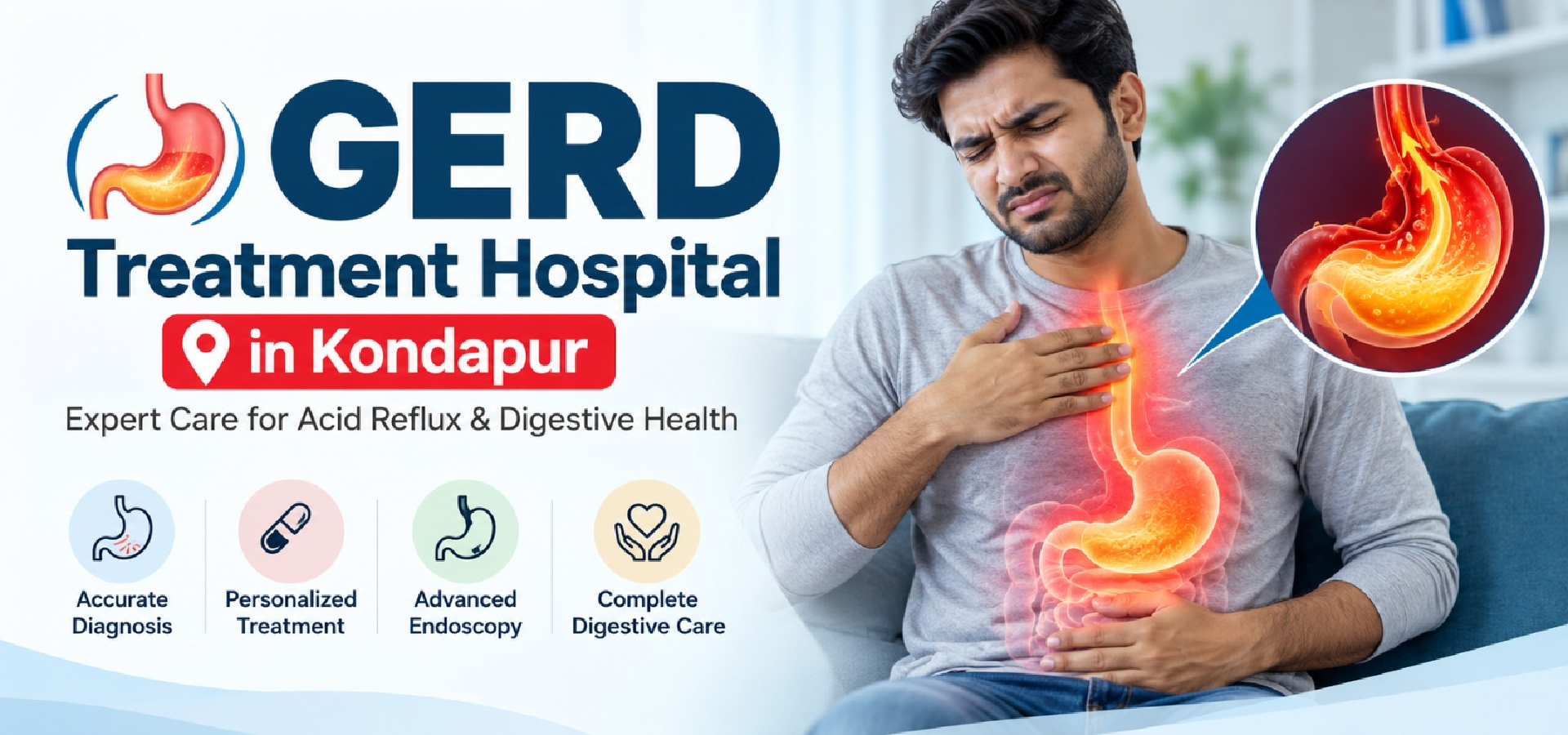
GERD Treatment Hospital in Kondapur
If you are searching for the Best GERD Treatment Hospital in Kondapur, it is important to seek medical advice when acid reflux symptoms occur frequently or interfere with everyday life. Gastroesophageal reflux disease (GERD) is a digestive condition in which stomach contents repeatedly flow back into the oesophagus, the tube that carries food from the mouth to the stomach.
Occasional acid reflux can happen to many people. However, frequent heartburn, regurgitation, sour taste, or discomfort after meals may indicate GERD. Persistent symptoms should be assessed by a qualified doctor to identify possible causes, check for complications, and discuss appropriate treatment.
Hegde Hospital in Kondapur can be contacted for guidance on consultation and evaluation of persistent acid reflux symptoms. Treatment is planned according to the patient's symptoms, medical history, examination findings, and the results of investigations when required.
Call Us: +91 7780747474GERD Evaluation and Treatment for Better Digestive Health
GERD symptoms may be triggered or worsened by certain foods, large meals, lying down soon after eating, excess body weight, smoking, or some medicines. The triggers can differ from person to person. A medical consultation can help determine an appropriate care plan rather than relying only on home remedies.
Treatment may include lifestyle changes and medicines to reduce stomach acid or manage symptoms. If symptoms continue despite treatment, a doctor may recommend further tests or discuss other treatment options based on the underlying cause and clinical findings.
What Is GERD?
Gastroesophageal reflux disease (GERD) is a condition in which acid or other stomach contents flow back into the oesophagus repeatedly. This backflow is known as reflux. When reflux happens frequently, it can irritate the lining of the oesophagus and cause troublesome symptoms.
GERD can range from mild symptoms that respond to lifestyle changes and medication to persistent reflux that requires specialist assessment. The right treatment depends on symptom frequency, severity, response to previous treatment, and whether complications are present.
Common Symptoms of GERD
Symptoms that may be associated with GERD include:
- A burning sensation in the chest, commonly called heartburn.
- Regurgitation of food or sour-tasting fluid into the throat or mouth.
- Sour or bitter taste in the mouth.
- Chest discomfort, especially after meals or when lying down.
- Difficulty swallowing or a feeling that food is sticking.
- Frequent burping or bloating.
- Persistent cough, throat irritation, or hoarseness in some people.
- Symptoms that disturb sleep or affect daily activities.
Seek prompt medical attention for difficulty or pain while swallowing, repeated vomiting, unexplained weight loss, vomiting blood, or black stools. New, severe, or unexplained chest pain needs urgent medical assessment, because it may not be caused by reflux.
What Causes GERD?
GERD commonly occurs when the lower oesophageal sphincter, a ring of muscle between the oesophagus and stomach, does not close effectively. This can allow stomach contents to move back into the oesophagus.
Factors that may contribute to or worsen reflux include excess body weight, pregnancy, smoking, large or late-night meals, certain foods and drinks, and some medicines. A doctor can review your symptoms and medical history to assess possible contributing factors.
GERD Diagnosis and Investigations
GERD is often assessed through a discussion of symptoms and medical history. Testing may not be needed for every patient. If symptoms are persistent, unusual, or do not improve with initial treatment, a doctor may recommend investigations to clarify the diagnosis or check for complications.
- Upper GI endoscopy: A flexible camera is used to examine the oesophagus, stomach, and upper digestive tract.
- Ambulatory pH monitoring: Measures acid exposure in the oesophagus over a period of time.
- Oesophageal manometry: Measures the movement and pressure of muscles in the oesophagus when clinically indicated.
- Other investigations: Additional tests may be considered depending on symptoms and the doctor's assessment.
GERD Treatment Options
GERD treatment is individualized. The choice depends on symptom severity, frequency, response to previous treatment, and investigation results. A doctor may recommend one or more of the following approaches:
- Lifestyle and dietary changes: Identifying personal food triggers, eating smaller meals, avoiding late-night meals, and not lying down soon after eating may help reduce symptoms.
- Weight management: If excess weight is contributing to reflux, a suitable weight-management plan may improve symptoms.
- Acid-reducing medicines: Antacids, H2-receptor blockers, or proton pump inhibitors (PPIs) may be advised depending on the patient's condition. Use medicines as directed by a healthcare professional.
- Further evaluation: Persistent symptoms may require additional tests to confirm the diagnosis or assess other possible causes.
- Anti-reflux surgery or procedures: These may be considered only for selected patients after specialist assessment and appropriate testing.
Do not start, stop, or change long-term acid-reducing medication without medical advice. Your doctor can explain the expected benefits, possible side effects, alternatives, and follow-up plan.
Lifestyle Changes That May Help Manage GERD
Along with the treatment recommended by your doctor, some daily habits may help reduce reflux symptoms. The most useful changes vary between individuals, so it can help to note when symptoms occur.
- Eat smaller meals and avoid overeating.
- Avoid lying down for about two to three hours after meals.
- Identify and limit foods or drinks that trigger your symptoms.
- Consider raising the head end of the bed if reflux occurs at night.
- Maintain a healthy weight where appropriate.
- Avoid smoking and discuss alcohol use with your doctor.
- Take prescribed medicines according to your doctor's instructions.
Why Consider Hegde Hospital for GERD Consultation?
Choosing a hospital for digestive health concerns involves considering access to medical consultation, appropriate investigations, treatment guidance, and follow-up. Contact Hegde Hospital in Kondapur to enquire about consultation for persistent heartburn, acid reflux, and related digestive symptoms.
- Medical evaluation of recurring heartburn and acid reflux symptoms.
- Review of medical history, symptoms, and possible triggers.
- Guidance on appropriate diagnostic investigations when indicated.
- Discussion of medication and lifestyle-based treatment options.
- Further specialist referral or treatment planning when required.
- Follow-up guidance based on the patient's condition.
When Should You See a Doctor for GERD?
Consult a doctor if heartburn or acid reflux occurs frequently, affects sleep, interferes with daily activities, or continues despite initial treatment. Medical assessment is also important if you have difficulty swallowing, persistent vomiting, unexplained weight loss, or signs of bleeding. Seek emergency care for severe or new chest pain, particularly if it occurs with breathlessness, sweating, dizziness, or pain spreading to the arm, jaw, or back.
Frequently Asked Questions (FAQs)
1. What is the best treatment for GERD in Kondapur?
The best treatment depends on the frequency and severity of symptoms, medical history, and response to previous treatment. It may include lifestyle changes, acid-reducing medicines, investigations, or other options for selected patients. A doctor should assess your condition before recommending a treatment plan.
2. What are the common symptoms of GERD?
Common symptoms include heartburn, sour-tasting fluid coming back into the mouth, regurgitation, and discomfort after meals or when lying down. Some people may also experience swallowing difficulty, cough, or throat irritation.
3. Can GERD be managed without surgery?
Many people manage GERD with lifestyle changes and medicines prescribed by a doctor. Surgery is considered only in selected cases after a detailed assessment and appropriate testing.
4. Which foods should I avoid if I have GERD?
Food triggers vary. Spicy or fatty foods, chocolate, coffee, citrus, tomato-based foods, and carbonated drinks may worsen symptoms in some people. Track your own triggers and discuss dietary changes with your healthcare professional.
5. Is GERD a serious condition?
GERD is manageable for many people, but persistent reflux can sometimes lead to inflammation or other complications in the oesophagus. Ongoing symptoms should be assessed by a doctor.
6. Which tests are used to diagnose GERD?
Diagnosis may be based on symptoms and medical history. Depending on the situation, a doctor may recommend upper GI endoscopy, ambulatory pH monitoring, or oesophageal manometry.
7. Can GERD cause chest pain?
GERD can cause a burning sensation or discomfort in the chest. However, chest pain can also have heart-related or other serious causes. New, severe, or unexplained chest pain should be assessed urgently rather than assumed to be acid reflux.
8. How can I book a GERD consultation at Hegde Hospital?
To enquire about an appointment for GERD or acid reflux evaluation, call Hegde Hospital at +91 7780747474. The hospital team can guide you about consultation availability and the next steps.