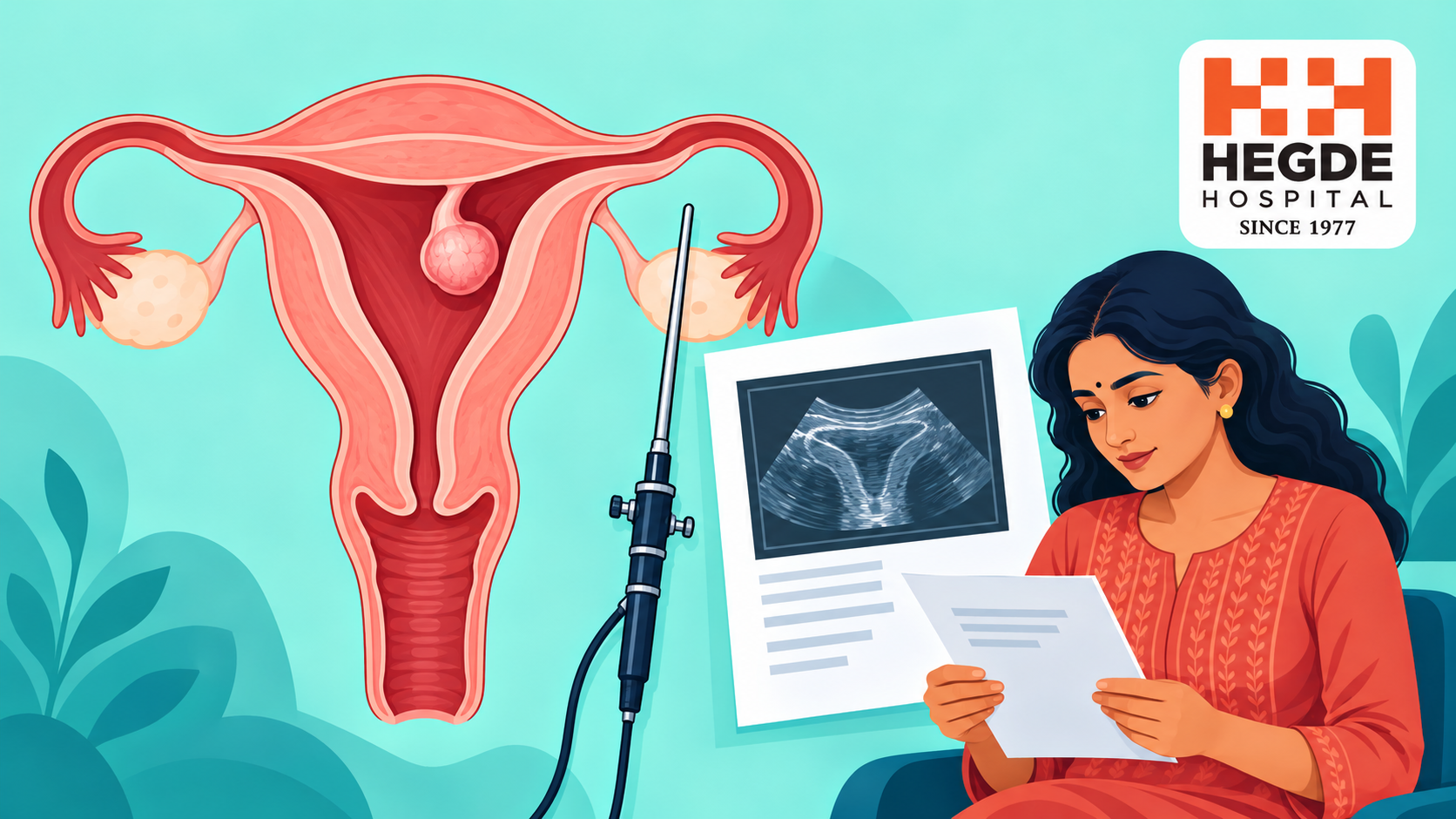
Hysteroscopy can remove selected fibroids projecting into the uterine cavity. The scan findings, symptoms and depth in the muscle help determine suitability.
A scan shows a fibroid near the inside of the womb, and the doctor mentions removing it through the cervix. You may wonder why this route suits one fibroid but not another of a similar size.
This article concerns treatment of selected fibroids associated with bleeding. Fertility and IVF decisions need a separate assessment with the fertility team.
The direct answer
Hysteroscopic myomectomy removes selected fibroids through the vagina and cervix using a thin camera and instruments. It usually targets fibroids projecting into the uterine cavity. Suitability depends on position, size, number and how much tissue lies within the uterine muscle. A fibroid measurement alone cannot select the operation.
Which positions are most suitable?
Submucosal means a fibroid lies just beneath the inner lining and projects towards the cavity. Some are almost entirely within the cavity; others extend more deeply into the muscular wall. Greater muscle involvement can make complete removal more complex.
Fibroids growing mainly on the outside of the uterus are generally approached differently. A report saying “fibroid” does not establish that hysteroscopy will reach it. The fibroid report and treatment guide explains why symptoms and location matter alongside size.
What does the assessment check?
The clinician reviews the bleeding pattern, anaemia, earlier procedures, health history and ultrasound images. The key questions are which fibroid may be contributing to bleeding, how it relates to the cavity and how much muscle surrounds it.
Additional imaging or a diagnostic hysteroscopy may clarify an uncertain finding. MRI is considered selectively; it is not automatically required. Bring previous scans so changes can be interpreted in context. A polyp and a fibroid are different findings, even when both project into the cavity.
Is looking inside the same as removing a fibroid?
No. A diagnostic examination and an operative procedure have different aims. Our diagnostic and operative hysteroscopy comparison explains consent and setting. Treatment at the same visit depends on suitability, facilities, comfort and what you have agreed to.
Discuss the proposed anaesthesia or pain-control plan, alternatives and the possibility that removal cannot be completed. Tell the team if pregnancy is possible or you have a new illness. Follow your own written preparation instructions rather than a universal fasting or treatment-stopping rule.
Why might removal need more than one procedure?
A large fibroid, deeper muscle extension, multiple findings or limited visibility may make staged treatment safer. During surgery, the team monitors the fluid used to open the cavity. Safety considerations may require stopping before all tissue has been removed.
A planned second procedure does not automatically mean the first was unsuccessful. Ask how remaining tissue will be assessed, whether symptoms will be reviewed first and what would make another operation useful. No single size cut-off applies to every patient and surgical setting.
What are the limits and follow-up questions?
Removing the selected fibroid may improve bleeding, but another cause can remain. New fibroids may develop later. Risks include bleeding, infection, injury to the uterine wall, fluid-related complications and scarring inside the cavity. Discuss individual risks without assuming that avoiding abdominal incisions removes every risk.
Recovery depends on the procedure and anaesthesia. Obtain written instructions about work, driving, activity and follow-up. Increasing pain, fever, offensive discharge or worsening bleeding needs prompt assessment; severe bleeding or faintness needs urgent medical evaluation.
Frequently asked questions
Can every small fibroid be removed this way?
No. Position and depth matter. A small fibroid outside the cavity may not be accessible through hysteroscopy.
Does this operation remove the uterus?
No. Myomectomy removes selected fibroid tissue. Hysterectomy is a different operation that removes the uterus.
Will one visit always be enough?
No. The scan and operative findings determine whether a staged procedure is safer or necessary.
Does a fibroid on a scan always need treatment?
No. Symptoms, findings and preferences guide whether observation or treatment is appropriate.
How do I know removal is complete?
Ask what was removed and how the result will be checked. Follow-up may include symptom review and selected imaging or another cavity examination.
Bring your bleeding record and scans to a gynaecology appointment. For conception or IVF questions, consult the Hegde fertility team.