Repeated sneezing with an itchy or blocked nose may be nasal allergy. The pattern, triggers and effect on sleep help doctors decide whether tests are useful.
Your child seems to have a “cold” most mornings, rubs their nose or repeatedly sneezes in one room. Another course of school days passes, yet the blocked nose keeps returning without the usual pattern of a short infection.
Nasal allergy is one possibility. Children can also have repeated infections or other causes of blockage, so the aim is to understand the pattern rather than label every runny nose as allergy.
The direct answer
Allergic rhinitis is an allergic reaction affecting the lining of the nose. Sneezing, itching, clear discharge and blockage are common, sometimes with itchy watery eyes. It can disturb sleep and concentration. A history and examination usually come first; targeted allergy tests help selected children, while a broad screening panel cannot diagnose every nasal complaint.
What patterns suggest nasal allergy?
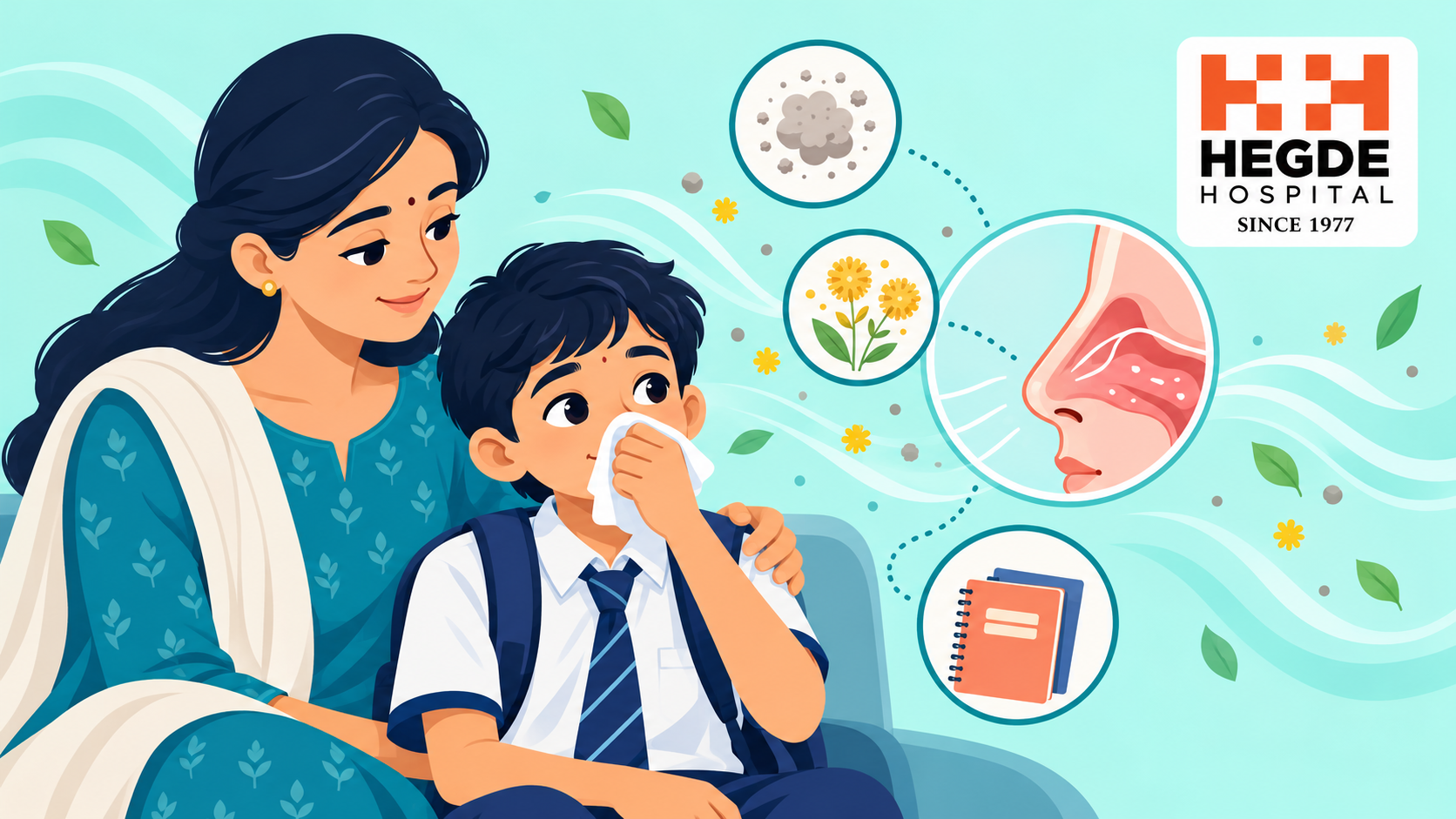
Look for bouts of sneezing, repeated nose rubbing, an itchy nose or palate, and watery eyes. Symptoms may recur around a particular exposure or continue through much of the year. Pollen can produce seasonal symptoms; dust mites, animal dander or mould may be associated with symptoms at other times.
An apparent trigger needs interpretation. Dust exposure, strong smells and smoke can also irritate the nose without proving a specific allergy. A child may have more than one cause of symptoms. Family histories of allergy, eczema or asthma are useful context but do not establish the diagnosis on their own.
Describe the effect on your child: sleep, mouth breathing, school concentration, sports and tiredness. Children do not always explain itching clearly, so repeated rubbing and patterns observed by a parent can help the consultation.
Is it allergy or a cold?
| Feature | More suggestive of allergy | More suggestive of an infection |
|---|---|---|
| Itching | Nose and eyes often itch | Itching is less prominent |
| Pattern | Recurs with exposures or persists | Often evolves over a shorter illness |
| Fever or feeling unwell | Not typical of uncomplicated nasal allergy | May occur, depending on the infection |
| Other family members | Allergy itself does not spread | A contagious illness may affect contacts |
These are clues, not a home diagnostic test. Discharge colour alone cannot decide the cause or select treatment. Persistent one-sided blockage, bleeding or an unusual discharge needs a different assessment rather than being assumed to be allergy.
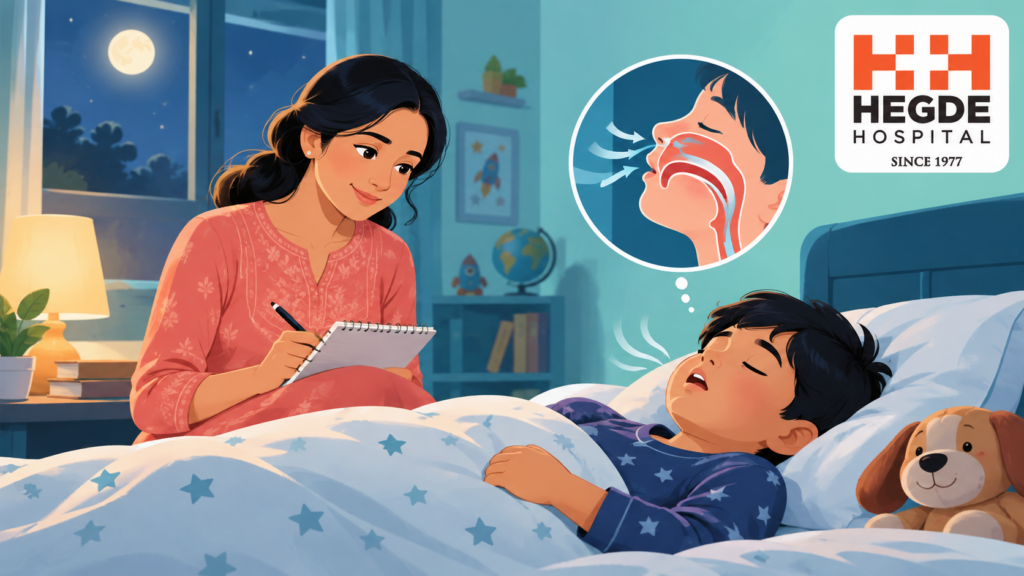
Can a blocked nose affect sleep?
It can. A child may sleep restlessly, breathe through the mouth or struggle to concentrate the next day. Nasal allergy can coexist with other conditions affecting breathing during sleep. Repeated snoring or observed pauses should be discussed, even if an allergy has already been diagnosed.
Our separate guide to snoring and sleep assessment in children explains why enlarged tissues or other causes may need evaluation. Treating an itchy nose should not replace assessment of persistent sleep-related symptoms.
What will a paediatric assessment include?
The clinician will ask about age, symptom duration, seasons, exposures and whether symptoms affect one or both sides. They may examine the nose, throat, ears and chest, and ask about eczema, cough or wheezing. They will also review earlier treatments and whether the original diagnosis was clear.
Bring a brief symptom record, earlier reports and information about sleep. A note of where symptoms happen is useful, but there is no need to deliberately expose a child to a suspected trigger. Tell the clinician about cough with activity or night-time cough because nasal and lower-airway problems may coexist.
When are allergy tests useful?
A selected skin-prick or blood test may help when identifying a likely trigger would change management, symptoms remain troublesome or the history is uncertain. The tests look for sensitivity to particular substances. A positive result is meaningful only when it fits the child's symptoms and exposure.
Broad panels can produce results that are difficult to interpret and may encourage unnecessary restrictions. Tests for environmental allergy do not automatically justify removing foods. A clinician should decide which question the test is meant to answer and explain the result in context.
Scans are not routine tests for uncomplicated nasal allergy. An ear, nose and throat assessment may be useful when persistent blockage, one-sided symptoms or another structural problem is suspected.
How is care planned without unnecessary restrictions?
The plan depends on age, frequency, severity, sleep and any associated asthma or eczema. It may include appropriate reduction of confirmed exposures and treatment selected for the child's age. Ask the clinician to explain the purpose of each part and how improvement will be judged.
Some children with persistent, significant allergy may be considered for specialist treatment aimed at reducing sensitivity to a confirmed allergen. That requires assessment and supervision; it is not suitable for every child or a promise of a permanent cure. Do not borrow another child's treatment or impose a large food restriction based on an internet checklist.
When should a child be reviewed?
Arrange a routine visit when symptoms keep returning, disturb sleep or affect school. Ask for earlier review if the current plan is not helping, there is recurrent bleeding, symptoms are mainly one-sided, or cough and wheeze are also occurring. Severe breathing difficulty needs immediate medical evaluation and is not a routine nasal-allergy consultation.
At follow-up, discuss nasal comfort, nights of disturbed sleep, school participation and any treatment difficulty. Paediatric care can help select the appropriate next step. You can book an appointment with a symptom and sleep record rather than ordering a panel beforehand.
Frequently asked questions
Is nasal allergy contagious?
No. Allergic rhinitis itself does not spread from one child to another. A child can still catch a respiratory infection separately, so a new pattern or fever deserves its own assessment.
Does daily sneezing prove a dust allergy?
No. Repeated sneezing can have several causes. The setting, itching, other symptoms and examination help determine whether a specific environmental allergy is likely.
Does every child need a blood allergy panel?
No. Targeted testing is useful when the result can answer a clinical question or change care. A broad panel without a relevant history can be misleading.
Should foods be stopped because the nose is blocked?
Not without a specific clinical reason. Nasal symptoms do not establish a food allergy, and unnecessary restrictions can complicate a child's nutrition and family routines.
Can snoring be blamed on allergy alone?
No. Allergy may contribute to nasal blockage, but persistent snoring or breathing pauses needs assessment for other sleep and airway problems as well.