
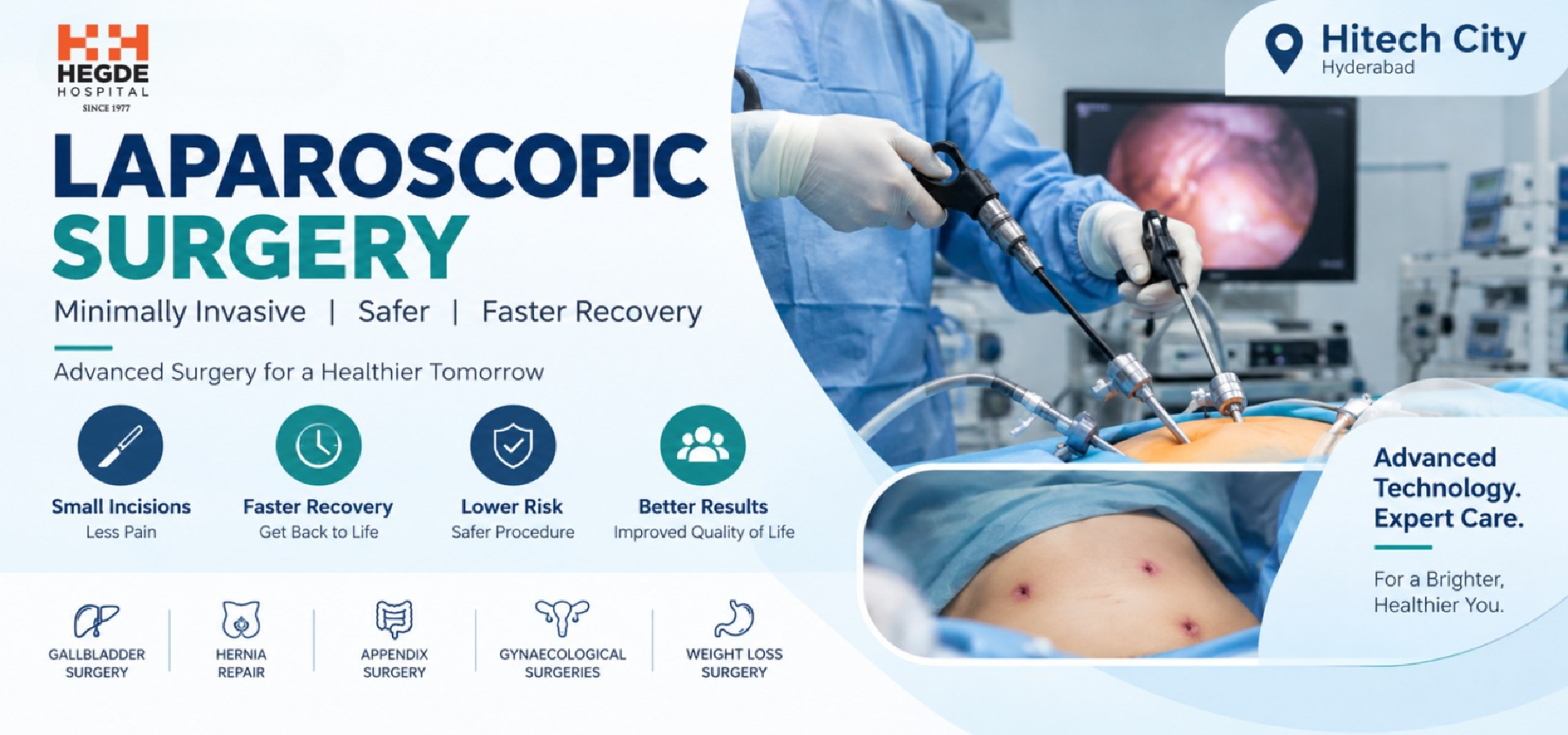
Laparoscopic Surgery Hospital in Hitech City
Laparoscopic surgery, also known as keyhole surgery, is a minimally invasive surgical technique performed through small incisions using a camera and specialized surgical instruments. It can be used for diagnosing and treating several abdominal, digestive and other surgical conditions.
If you are looking for a laparoscopic surgery hospital in Hitech City, choosing a hospital with experienced surgeons, advanced equipment and comprehensive surgical support can help ensure appropriate evaluation and treatment.
Hegde Hospital provides laparoscopic and minimally invasive surgical care for a wide range of conditions. Its surgical team evaluates each patient individually and recommends laparoscopic or open surgery depending on the condition, medical history and surgical requirements.
📞 Call +91 7780747474Advanced Laparoscopic Surgery for Patients in Hitech City
Modern laparoscopic surgery allows surgeons to perform many procedures through smaller incisions compared with traditional open surgery. Smaller incisions may result in less postoperative discomfort, reduced scarring and a shorter hospital stay in suitable patients.
Hegde Hospital uses advanced laparoscopic equipment and minimally invasive surgical techniques for selected routine and complex procedures. The surgical approach is determined after proper clinical assessment.
What Is Laparoscopic Surgery?
Laparoscopic surgery is a minimally invasive technique in which a surgeon makes small incisions and inserts a thin camera called a laparoscope. The camera provides a magnified view of the internal organs on a monitor.
Specialized surgical instruments are inserted through additional small openings to perform the required procedure. The number and location of incisions depend on the type of surgery being performed.
Common Conditions Treated With Laparoscopic Surgery
- Gallstones and gallbladder disease
- Hernia
- Appendicitis
- Selected gastrointestinal conditions
- GERD requiring surgical treatment
- Selected abdominal conditions
- Selected gynecological conditions
- Other conditions requiring minimally invasive surgery
Not every patient or condition is suitable for laparoscopic surgery. Previous surgeries, severe infection, disease extent, emergency circumstances and overall health can influence the surgical approach.
Benefits of Laparoscopic Surgery
- Smaller surgical incisions
- Minimal scarring
- Less postoperative discomfort in suitable cases
- Reduced blood loss in many procedures
- Shorter hospital stay for many procedures
- Earlier movement after surgery
- Faster recovery in selected patients
- High-definition visualization during surgery
These are potential benefits and are not guaranteed for every patient. Recovery depends on the procedure, underlying condition, surgical technique and individual health.
Who Should Consult a Laparoscopic Surgeon?
Patients diagnosed with a condition that may require surgery can consult a general or laparoscopic surgeon to determine whether a minimally invasive approach is appropriate.
Patients with gallstones, hernia, appendicitis, selected digestive disorders or other conditions requiring abdominal surgery may be evaluated for laparoscopic treatment.
How Is Laparoscopic Surgery Planned?
Before surgery, the doctor reviews the patient's symptoms, medical history, previous surgeries, medications and diagnostic reports. Physical examination and additional tests may be recommended depending on the condition.
After evaluation, the surgeon discusses the available surgical approaches and determines whether laparoscopic surgery is suitable. In some cases, open surgery may be safer or more appropriate.
Laparoscopic Surgery Procedures at Hegde Hospital
Hegde Hospital provides laparoscopic and minimally invasive surgical care across several specialties. Procedures may include:
- Laparoscopic gallbladder removal
- Laparoscopic hernia repair
- Laparoscopic appendectomy
- Selected gastrointestinal surgeries
- Selected GERD procedures
- Selected gynecological laparoscopic procedures
- Diagnostic laparoscopy when clinically indicated
Why Choose Hegde Hospital for Laparoscopic Surgery?
- Experienced General & Laparoscopic Surgeons
- Advanced Minimally Invasive Surgical Technology
- High-Definition Laparoscopic Equipment
- Personalized Surgical Treatment Plans
- Modern Operation Theatres
- Comprehensive Pre & Post-operative Care
- Advanced Anaesthesia and Patient Monitoring
- Patient-Centered Surgical Care
Hegde Hospital states that its laparoscopic surgery services cover general surgery, gastrointestinal surgery, gynaecological laparoscopy and other minimally invasive procedures. The hospital also identifies Dr. Prashant Hegde as Medical Director and General & Laparoscopic Surgeon. :contentReference[oaicite:1]{index=1}
Laparoscopic Surgery Recovery
Recovery depends on the type of procedure, the underlying condition and the patient's overall health. Many laparoscopic procedures may involve smaller wounds and shorter recovery compared with some open procedures, but recovery timelines vary.
Patients should follow their surgeon's instructions regarding wound care, walking, diet, medication, driving, exercise and follow-up appointments.
When Should You See a Doctor?
Consult a doctor if you have persistent or worsening abdominal pain, recurring digestive symptoms, a growing hernia, repeated gallstone symptoms, suspected appendicitis or any condition that may require surgical treatment.
After surgery, increasing abdominal pain, high fever, repeated vomiting, breathing difficulty, chest pain, heavy bleeding, pus from the wound or significant abdominal swelling requires prompt medical attention.
Frequently Asked Questions (FAQs)
1. What is laparoscopic surgery?
Laparoscopic surgery is a minimally invasive surgical technique performed through small incisions using a camera and specialized instruments.
2. What conditions can be treated with laparoscopic surgery?
Laparoscopy can be used for conditions such as gallstones, hernia, appendicitis and selected gastrointestinal, abdominal and gynecological conditions.
3. Is laparoscopic surgery safe?
Laparoscopic surgery is widely used and can be appropriate for many patients. Like all surgery, it carries potential risks. Your surgeon will assess your condition and determine the safest approach.
4. Is laparoscopic surgery better than open surgery?
Laparoscopic surgery can offer benefits such as smaller incisions, less postoperative discomfort and faster recovery in selected cases. However, open surgery may be more appropriate for certain patients or conditions.
5. How long does recovery take after laparoscopic surgery?
Recovery varies according to the type of surgery, the patient's overall health and the complexity of the condition. Your surgeon will provide individualized recovery instructions.
6. Why choose Hegde Hospital for laparoscopic surgery?
Hegde Hospital provides experienced laparoscopic surgeons, advanced minimally invasive technology, modern operation theatres, personalized treatment plans and comprehensive pre- and post-operative care.
BOOK YOUR APPOINTMENT
Consult Our Laparoscopic Surgeons